
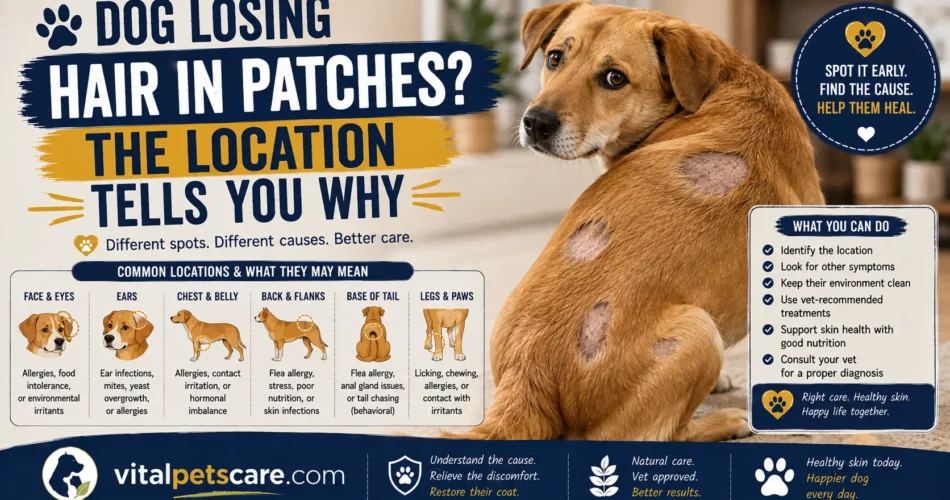
A dog losing hair in patches is one of those changes that’s hard to ignore. However, most owners don’t realize that where the hair falls out is the most important clue.
Different locations point to different causes. As a result, knowing what to look for makes finding the right solution much faster.
This guide breaks down the causes clearly — by location, by pattern, and by urgency. In addition, it covers when home care is enough and when a vet visit is needed.
Why Is My Dog Losing Hair in Patches?
There are several reasons behind dog losing hair in patches. However, the cause isn’t always obvious from the hair loss alone.
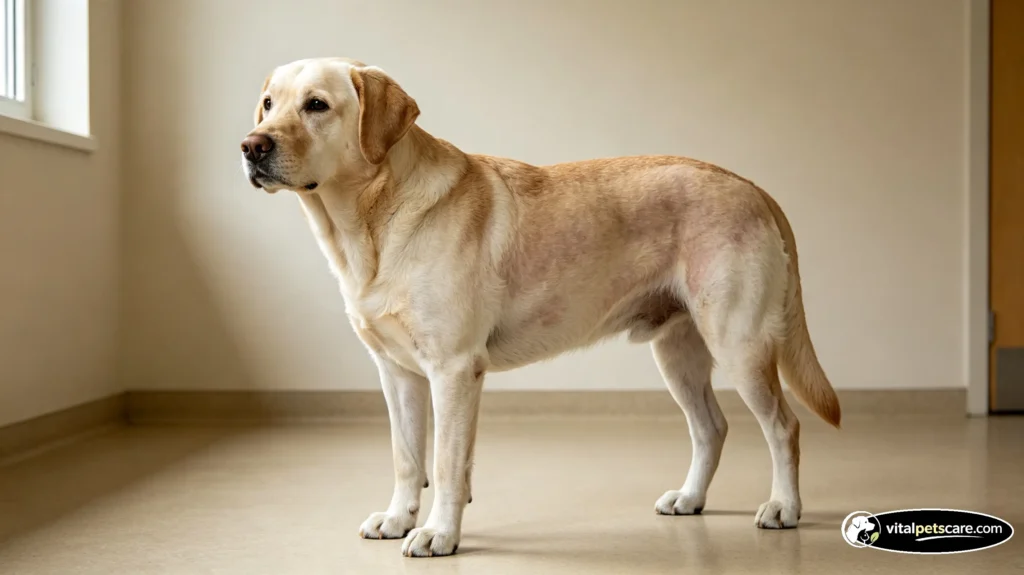
Mange (Sarcoptic and Demodectic)
Mange is one of the most common causes of patchy hair loss. In fact, it’s caused by microscopic mites that either burrow into the skin or multiply on its surface.
Sarcoptic mange causes intense itching alongside hair loss. As a result, affected dogs scratch and bite at their skin constantly. In addition, it’s highly contagious to other dogs.
Demodectic mange, on the other hand, is not contagious. However, it causes significant patchy hair loss — often without much itching. As a result, it’s frequently mistaken for a different condition entirely.
Ringworm
Despite the name, ringworm is a fungal infection — not a worm. In fact, it causes circular patches of hair loss with slightly scaly edges.
As a result, these patches look very distinctive. In addition, ringworm is contagious to both other animals and humans — so prompt treatment matters.
Allergies
Allergies cause hair loss indirectly. In fact, dogs scratch and lick allergic areas so frequently that the fur eventually thins or falls out entirely.
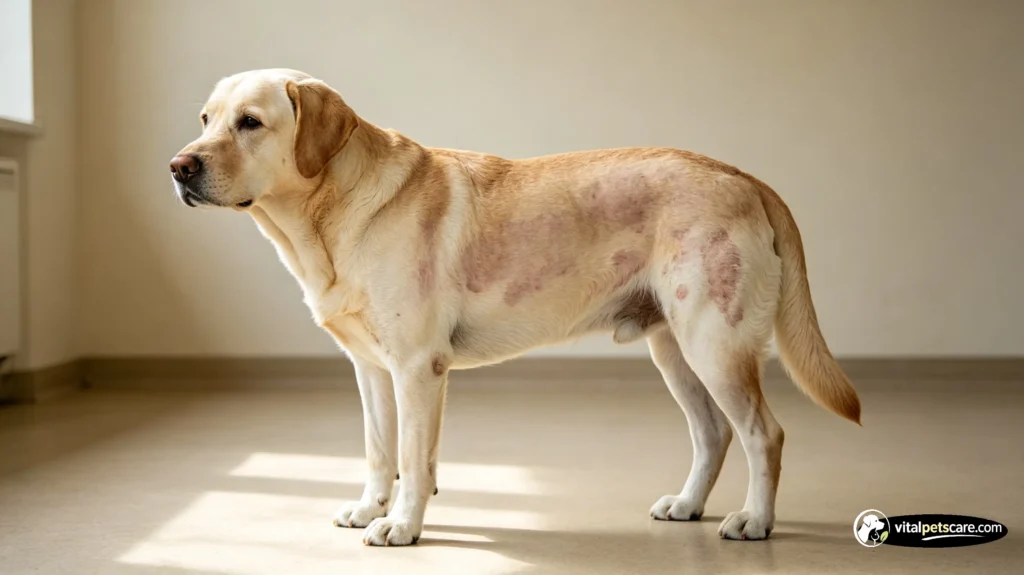
As a result, allergy-related hair loss tends to appear in areas dogs can easily reach — like paws, belly, and face. In addition, the skin underneath often looks red or irritated. For more detail, our dog itchy skin & allergies article covers this fully once published.
Hormonal Imbalances
Hypothyroidism and Cushing’s disease are two common hormonal conditions that cause hair loss. However, unlike mange or ringworm, hormonal hair loss is usually symmetrical — affecting both sides of the body equally.
As a result, this pattern is an important diagnostic clue. In addition, hormonal hair loss rarely comes with significant itching.
Bacterial or Fungal Infections
Folliculitis — infection of the hair follicles — causes patchy hair loss alongside red bumps or pustules. As a result, it often looks similar to a skin rash rather than straightforward hair loss.
In addition, seborrhea causes flaky, greasy skin alongside coat thinning. However, it can be either a primary condition or secondary to another underlying issue.
Dog Losing Hair in Patches — What the Location Tells You
Location is the single most useful clue when diagnosing hair loss. However, most owners focus on the hair loss itself rather than where it’s happening.
Dog Hair Loss Around Eyes Causes
Hair loss specifically around the eyes points to a few distinct causes. In fact, demodectic mange commonly starts around the eyes and muzzle before spreading.
As a result, this location is one of the earliest warning signs of demodex. In addition, allergies and skin fold irritation can also cause thinning around the eye area.
However, ringworm occasionally affects the face too. As a result, any circular, scaly patch around the eyes deserves a vet skin check rather than a wait-and-see approach.
Dog Losing Hair on Tail Causes
Tail hair loss has its own distinct set of causes. In fact, flea allergy dermatitis is one of the most common — since fleas congregate near the tail base.
As a result, dogs with flea allergies often scratch and bite at their tail until the fur thins significantly. In addition, a condition called stud tail — affecting the oil gland at the tail base — can cause hair loss in that specific spot.
Meanwhile, hypothyroidism often causes symmetrical tail hair loss alongside a dull, thinning coat throughout the body. As a result, tail hair loss paired with overall coat changes points toward a hormonal cause.
Patchy Hair Loss on the Body or Flanks
Random patches on the body often point to ringworm, mange, or bacterial folliculitis. However, symmetrical patches on both flanks specifically suggest a hormonal imbalance.
As a result, the pattern — random vs. symmetrical — is as important as the location. In addition, patches that spread quickly need faster veterinary attention than slow-developing ones.
Dog Bald Spots Not Itchy — What This Pattern Means
Itching usually accompanies hair loss. However, dog bald spots not itchy is a distinct pattern — and it points to a different set of causes.
When there’s no itching, parasites and allergies are less likely. As a result, the focus shifts toward hormonal conditions and other internal causes.
Hypothyroidism is one of the most common culprits. In fact, low thyroid hormone levels slow down hair growth and cause symmetrical, non-itchy bald spots. In addition, affected dogs often gain weight and feel lethargic alongside the hair loss.
Cushing’s disease is another frequent cause. As a result of excess cortisol, the skin becomes thin and fragile — leading to hair loss without significant itching. In addition, a pot-bellied appearance and increased thirst are common alongside the hair loss.
Meanwhile, alopecia X — sometimes called black skin disease — causes non-itchy hair loss in certain breeds like Pomeranians and Huskies. However, the exact cause isn’t fully understood yet.
In addition, pattern baldness is a genetic condition in some breeds. For example, Dachshunds commonly develop gradual, non-itchy hair thinning along the ears and belly. As a result, this type requires no treatment — it’s simply cosmetic.
Dog Coat Changing Color Causes
A coat that changes color alongside hair loss is worth paying attention to. However, not all color changes signal something serious.
Saliva staining is one of the most common causes. In fact, dogs that lick the same area repeatedly develop a reddish-brown stain from the porphyrins in their saliva. As a result, this is especially visible on light-colored coats and usually points to chronic licking from allergies or anxiety.
In addition, hyperpigmentation causes the skin and sometimes the overlying coat to darken. However, this darkening is usually a secondary response to chronic inflammation or infection rather than a primary condition.
Meanwhile, vitiligo causes patches of the coat or skin to lose pigment. As a result, affected areas turn white or pale — often starting on the face or nose. In addition, vitiligo is harmless and doesn’t cause hair loss or discomfort.
Hormonal changes can also affect coat color. For example, dogs with Cushing’s disease or hypothyroidism sometimes develop a duller, darker, or patchy coat alongside other symptoms. As a result, coat color changes combined with hair loss and lethargy strengthen the case for a hormonal blood panel.
Dog Hair Loss Causes and Treatment Options
Treatment depends entirely on the cause. However, a few general approaches work well across most types of dog losing hair in patches.
At-Home Care for Mild Cases
Mild hair loss without significant itching or spreading can often be managed at home initially. In fact, several simple changes make a real difference.
Regular grooming removes loose fur and stimulates healthy skin circulation. As a result, it also helps you spot new patches early before they spread.
In addition, omega-3 supplements from fish oil support skin barrier function and coat health. However, they work best as a supportive measure rather than a treatment for the underlying cause.
Meanwhile, gentle, hypoallergenic shampoos reduce skin irritation without stripping natural oils. As a result, they’re a useful first step for mild cases while the cause is being investigated.
When Treatment Needs Vet Guidance
Some causes need proper diagnosis before treatment can begin. In fact, treating the wrong cause can delay recovery and sometimes make things worse.
For example, mange needs specific antiparasitic medication — home remedies won’t resolve it. As a result, a vet skin scraping test quickly confirms which type of mange is present.
In addition, ringworm needs antifungal treatment — either topical, oral, or both. However, it also requires environmental decontamination to prevent reinfection and spread.
Meanwhile, hormonal conditions like hypothyroidism need lifelong medication to manage effectively. As a result, blood work is the only reliable way to confirm a hormonal cause.
Frequently Asked Questions
Why is my dog losing hair in patches?
The most common causes are mange, ringworm, allergies, and hormonal imbalances. However, the location and pattern of hair loss is the most useful first clue toward identifying the cause.
Is patchy hair loss in dogs serious?
It depends on the cause. In fact, some causes like pattern baldness are cosmetic and harmless. However, others like sarcoptic mange or ringworm need prompt treatment to prevent spreading.
What causes dog hair loss around the eyes?
Demodectic mange is the most common cause — it frequently starts around the eyes and muzzle. In addition, allergies and skin fold irritation can also cause thinning in this specific area.
Why is my dog losing hair on their tail?
Flea allergy dermatitis is the most frequent cause — fleas congregate near the tail base. In addition, stud tail and hypothyroidism can also cause tail-specific hair loss.
What does it mean if my dog has bald spots but isn’t itchy?
Non-itchy bald spots usually point to hormonal conditions like hypothyroidism or Cushing’s disease. As a result, a blood panel is often the most useful first diagnostic step.
Can allergies cause patchy hair loss in dogs?
Yes, but indirectly. In fact, dogs scratch and lick allergic areas so frequently that the fur eventually thins or falls out entirely. As a result, the underlying skin often looks red or irritated.
What is demodectic mange?
Demodectic mange is caused by Demodex mites that normally live on all dogs in small numbers. However, they multiply out of control when the immune system is weakened — causing patchy, non-itchy hair loss.
Is ringworm contagious from dogs to humans?
Yes, ringworm is a fungal infection that spreads between animals and humans. As a result, prompt treatment and environmental decontamination are important once it’s confirmed.
Why is my dog’s coat changing color?
Saliva staining from chronic licking causes reddish-brown discoloration. In addition, hyperpigmentation from chronic inflammation and hormonal changes from conditions like Cushing’s disease can also affect coat color.
What is alopecia X in dogs?
Alopecia X — also called black skin disease — causes non-itchy hair loss in certain breeds like Pomeranians and Huskies. However, the exact cause isn’t fully understood and it doesn’t affect the dog’s overall health.
Can I treat my dog’s hair loss at home?
Mild cases can be supported with omega-3 supplements, gentle shampoos, and regular grooming. However, causes like mange, ringworm, and hormonal conditions need proper veterinary diagnosis and treatment.
When should I take my dog to the vet for hair loss?
If hair loss spreads rapidly, comes with open sores or lethargy, or doesn’t improve within 2 weeks of home care, book a vet visit. In addition, a skin scraping or blood panel usually identifies the cause quickly.
