
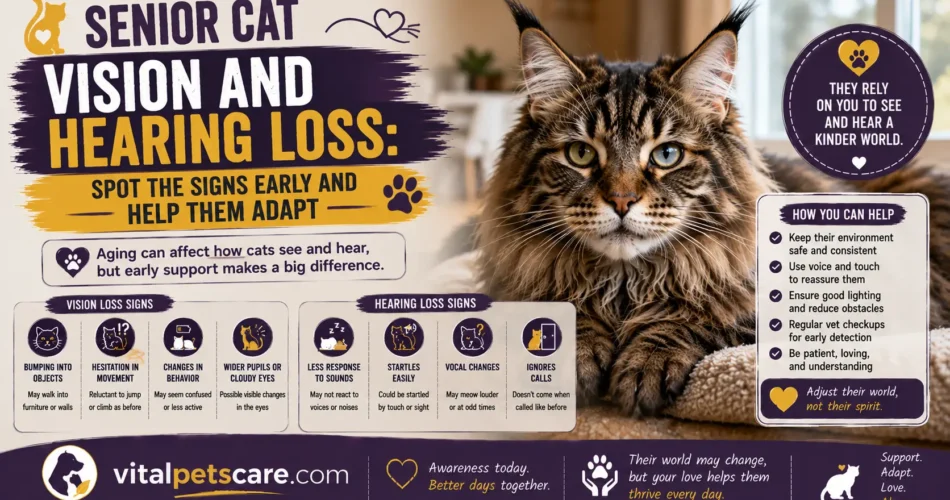
Senior cat vision loss and hearing changes often develop slowly. As a result, they’re easy to miss until they’ve progressed significantly.
However, cats adapt remarkably well to sensory loss. In fact, the right home adjustments make a real difference to their confidence and comfort.
This guide covers the signs of both vision and hearing loss clearly. In addition, it explains what to do when both happen together — and when to act fast.
Senior Cat Vision Loss Signs — What to Watch For
Vision loss in cats develops gradually. However, certain signs make it easier to spot early.
Bumping Into Furniture or Walls
This is one of the clearest signs. In fact, a cat that suddenly bumps into familiar objects is likely losing vision.
As a result, watch for hesitation around furniture edges. In addition, this often happens first in low light rather than bright rooms.
Hesitating in Low Light or at Night
Retinal degeneration often affects night vision first. As a result, cats may freeze or move very slowly in dim lighting.
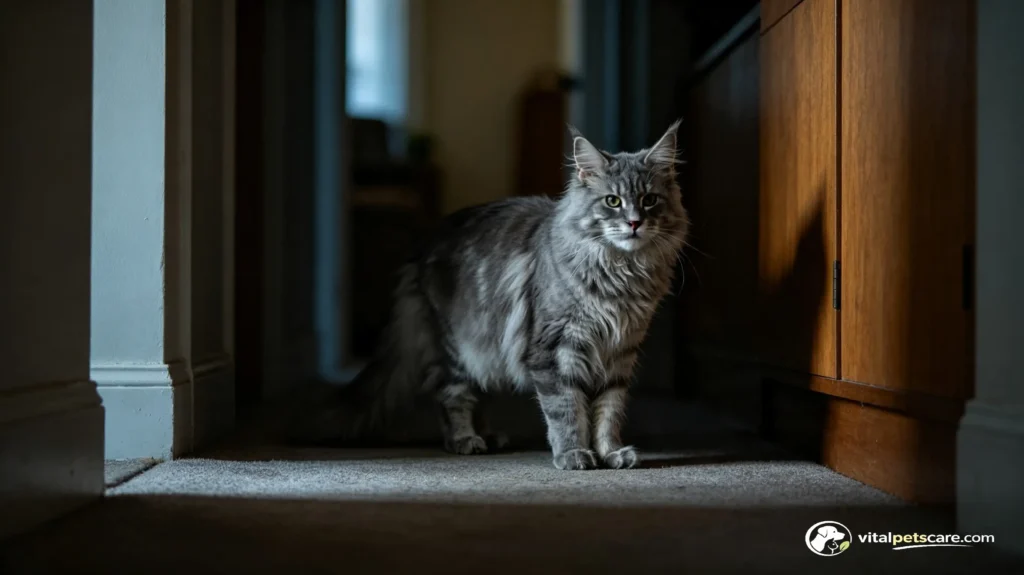
However, they may seem perfectly fine in bright daylight. In addition, this inconsistency makes early vision loss easy to overlook.
Startling Easily at Movement
A cat losing vision relies more on hearing. As a result, unexpected movement nearby can cause strong startle reactions.
In addition, this isn’t aggression — it’s simply a response to not seeing something coming. However, it’s worth noting as part of a wider pattern.
Cloudy or Changed Eye Appearance
Nuclear sclerosis causes a bluish-grey haze in aging cats. However, this is a normal aging change and rarely affects vision significantly.
Cataracts, on the other hand, cause denser cloudiness. As a result, they can lead to more noticeable vision loss over time.
Reluctance to Jump or Navigate Stairs
A cat that stops jumping to favorite spots may be struggling with depth perception. In fact, vision loss makes judging distances harder and less reliable.
As a result, previously confident jumpers become hesitant. In addition, this sign is easy to confuse with arthritis — so it’s worth checking both possibilities.
Cat Eye Emergency Signs — When to Act Immediately
Some eye changes need same-day attention. In fact, acting fast can make the difference between saving and losing vision.
Watch for sudden vision loss — a cat that seems fine one day and walks into walls the next. As a result, this pattern needs urgent veterinary attention. In addition, SARDS (Sudden Acquired Retinal Degeneration Syndrome) can cause complete blindness within days.
Meanwhile, a visibly enlarged or bulging eye signals increased pressure inside the eye. This is called glaucoma, and it’s extremely painful. As a result, it needs same-day care — not a scheduled appointment.
In addition, blood visible inside the eye is always urgent. However, thick yellow or green discharge alongside redness also needs fast attention — as it points to infection that can spread quickly.
Finally, squinting in one eye consistently often signals pain rather than a minor irritation. As a result, any squinting that lasts more than a day deserves a vet check.
Senior Cat Hearing Loss Signs — What to Watch For
Hearing loss in cats is often gradual. However, certain behavioral changes make it easier to spot early.
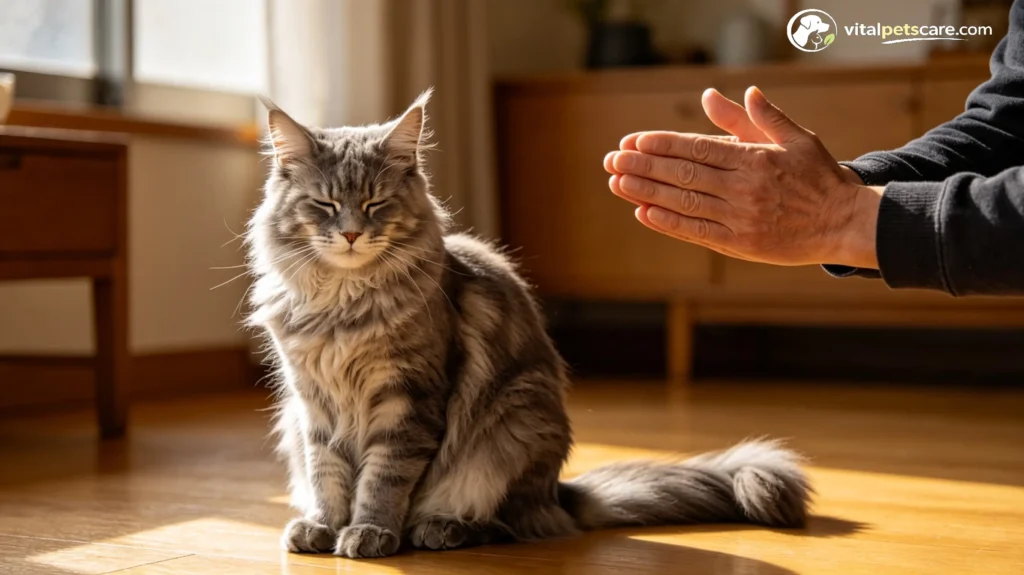
Not Responding to Name or Commands
This is usually the first sign owners notice. In fact, a cat with hearing loss may stop responding even when you’re standing directly in front of them.
However, it’s easy to mistake this for stubbornness. As a result, many owners don’t connect it to hearing loss until other signs appear too.
Sleeping Through Loud Noises
A cat that previously reacted to the doorbell or thunder but now sleeps through both is showing a clear sign. In fact, this change often happens so gradually that owners barely notice.
In addition, watch for no reaction to the sound of a treat bag or food tin. As a result, this is often one of the most telling early clues.
Startling When Touched Unexpectedly
This is one of the more surprising signs. However, it makes complete sense — a deaf cat relies heavily on touch and vibration.
As a result, being touched without warning causes a strong startle response. In addition, this isn’t aggression — it’s simply a cat responding to something they didn’t sense coming.
Increased Vocalization for No Clear Reason
Some cats become louder as hearing declines. In fact, without the ability to hear themselves, they may vocalize more than usual.
As a result, this connects to the nighttime crying pattern covered in our senior cat crying at night article. In addition, increased meowing alongside other hearing signs strengthens the case for a hearing check.
How to Tell If Your Cat Is Going Deaf — A Simple Home Test
This test takes less than a minute. However, it gives a useful first clue before a vet visit.
Stand behind your cat while they’re resting. In addition, make sure they can’t see or feel you through vibration.
Then make a sharp sound — like clapping or jingling keys. As a result, a cat with normal hearing reacts immediately.
However, a cat with cochlear degeneration shows little or no response. In addition, they may only react to the vibration of the sound rather than the sound itself.
This isn’t a replacement for a professional test. In fact, vets can confirm hearing loss through a BAER test — which measures how the brain responds to sound. As a result, this home test simply helps you decide whether a vet check is worth booking.
When Senior Cats Lose Both Vision and Hearing
Losing one sense is hard. However, losing both at the same time creates a very different challenge.
A cat without vision or hearing relies almost entirely on scent, touch, and routine. As a result, the world becomes much smaller and more uncertain for them.
In addition, anxiety often increases significantly. However, most cats adapt better than owners expect — especially with the right environmental support.
Meanwhile, owners often mistake the resulting confusion for cognitive decline. In fact, a cat that seems disoriented may simply be struggling with dual sensory loss rather than dementia.
As a result, ruling out sensory loss before assuming cognitive dysfunction is always worth doing. In addition, the practical solutions for dual sense loss — covered in the next section — often improve behavior dramatically.
How to Help a Senior Cat with Vision or Hearing Loss
1. Keep the Home Layout Consistent
Cats with vision loss rely on memory to navigate. As a result, moving furniture — even slightly — can cause significant disorientation.
In addition, avoid rearranging rooms without giving your cat time to adjust. However, if changes are necessary, guide your cat through the new layout slowly.
2. Use Scent Markers for Navigation
A small amount of a distinct scent near key locations helps vision-impaired cats find their way. For example, a drop of lavender near the water bowl or vanilla near the bed works well.
As a result, your cat builds a scent-based map of their environment. In addition, this is one of the most practical and underused strategies for vision loss support.
3. Switch to Hand Signals for Deaf Cats
Hand signals replace verbal commands effectively. In fact, most cats learn them quickly since they already watch their owner’s body language closely.
As a result, start with simple signals for feeding time or coming to you. In addition, consistency is key — use the same signal every time for the same action.
4. Add Night-Lights for Vision Loss
Low-level lighting helps cats with partial vision navigate after dark. As a result, placing a small night-light near sleeping areas and water bowls makes a real difference.
In addition, this is especially helpful for cats whose retinal degeneration affects night vision first. However, avoid very bright lights — soft, warm lighting works best.
5. Increase Physical Reassurance
Touch becomes more important when other senses decline. As a result, gentle, consistent physical contact helps your cat feel secure and oriented.
In addition, always approach from the front where possible. However, if approaching from behind is unavoidable, touch the floor first so vibration signals your arriv
When to See a Vet
Sudden vision loss always needs same-day attention. In fact, conditions like SARDS and glaucoma can cause permanent damage within hours.
Watch closely if your cat walks into walls unexpectedly. As a result of catching sudden vision loss early, some causes are treatable if addressed fast.
In addition, a bulging eye, blood inside the eye, or persistent squinting need urgent care. However, gradual vision or hearing changes — while still worth checking — are less immediately urgent.
Meanwhile, any hearing loss that appears suddenly rather than gradually also deserves prompt attention. As a result, sudden deafness can sometimes point to an underlying condition rather than simple aging.
When in doubt, an ophthalmic exam and a BAER test give your vet a clear picture of both senses. In addition, catching sensory loss early opens the door to better management and home adaptation strategies.
Frequently Asked Questions
What are the signs of vision loss in senior cats?
Key signs include bumping into furniture, hesitating in low light, startling at movement, and reluctance to jump. However, cloudy eyes don’t always mean significant vision loss.
What are the signs of hearing loss in senior cats?
Common signs include not responding to their name, sleeping through loud noises, startling when touched, and increased vocalization. As a result, behavioral changes are often the clearest clue.
Can cats lose both vision and hearing at the same time?
Yes, and it’s more common in senior cats than many owners realize. However, cats adapt well with the right environmental support and consistent routines.
How can I test my cat’s hearing at home?
Stand behind your cat and make a sharp sound — like clapping or jingling keys — outside their line of vision. As a result, little or no reaction suggests a hearing check with your vet is worth booking.
What is a BAER test for cats?
A BAER test (Brainstem Auditory Evoked Response) measures how the brain responds to sound. In fact, it’s the most reliable way to confirm hearing loss in cats.
What is SARDS in cats?
SARDS (Sudden Acquired Retinal Degeneration Syndrome) causes rapid, often complete vision loss. As a result, any sudden vision change needs same-day veterinary attention.
What is the difference between nuclear sclerosis and cataracts?
Nuclear sclerosis is a normal aging haze with minimal vision impact. However, cataracts cause denser cloudiness that can lead to significant vision loss over time.
Can scent markers really help a vision-impaired cat?
Yes, placing distinct scents near key locations — like lavender near the water bowl — gives vision-impaired cats a reliable scent-based navigation system. In addition, it’s one of the most practical and underused strategies available.
How do hand signals help a deaf cat?
Hand signals replace verbal commands effectively. As a result, most cats learn them quickly since they already watch their owner’s body language closely.
Does hearing or vision loss cause anxiety in senior cats?
Yes, both can increase anxiety and clinginess. As a result, sensory loss removes the primary ways cats monitor their environment — creating ongoing low-level stress.
Is vision loss in senior cats always permanent?
Not always. In fact, some causes — like high blood pressure affecting the retina — are treatable if caught early. However, conditions like SARDS cause irreversible vision loss.
When should I take my senior cat to the vet for vision or hearing concerns?
Sudden vision or hearing loss needs same-day attention. However, gradual changes still deserve a scheduled check — especially if behavioral shifts are appearing alongside them.

