
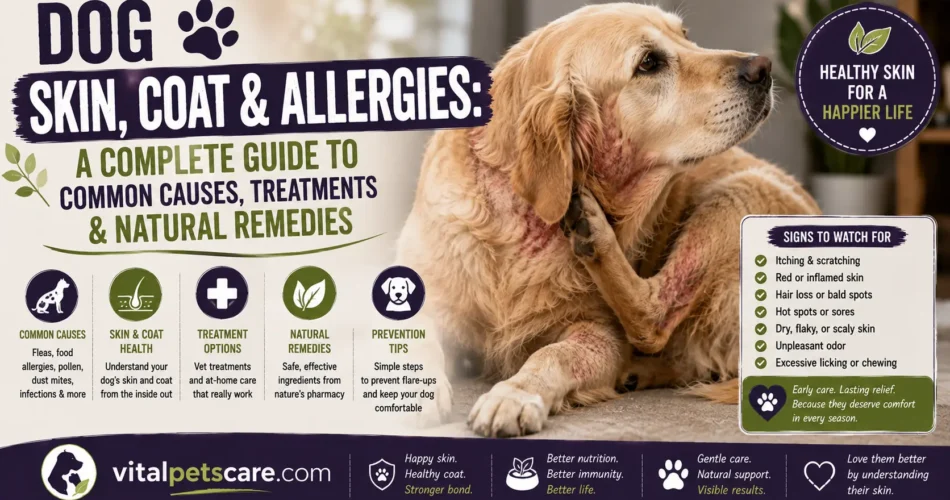
Skin and coat problems are among the most common reasons dog owners visit the vet. In fact, dog skin, coat & allergies issues affect millions of dogs every year.
However, not every skin problem looks the same. As a result, knowing what you’re dealing with makes finding the right solution much faster.
This guide covers every major skin and coat condition clearly. In addition, each section links to a full dedicated article with complete detail on that specific topic.
Dog Hair Loss & Bald Spots
Hair loss in dogs can look alarming. However, it almost always has a specific, identifiable cause.
The most common reasons include mange, ringworm, hormonal imbalances, and allergies. As a result, the location of the hair loss is often the most useful diagnostic clue.
For example, hair loss around the eyes points to a different cause than hair loss along the tail. In addition, bald spots that aren’t itchy are often hormonal rather than allergy-related.
Meanwhile, a coat that changes color alongside hair loss may signal a skin infection or metabolic condition. However, most causes respond well to treatment once properly identified.
(Internal link placeholder: Dog Hair Loss & Bald Spots — full article coming soon)
Dog Itchy Skin & Allergies
Itchy skin is one of the most frustrating conditions for both dogs and owners. In fact, constant scratching can disrupt sleep, damage skin, and lead to secondary infections.

The most common triggers are seasonal allergies, food allergies, contact irritants, and parasites. However, identifying the exact trigger takes careful observation.
For example, a dog that scratches more in spring and summer is more likely dealing with seasonal allergies than a food sensitivity. As a result, tracking when and where the itching happens helps narrow down the cause significantly.
In addition, natural remedies like oatmeal baths and coconut oil can provide temporary relief. However, persistent itching almost always needs a vet-guided approach to resolve fully.
(Internal link placeholder: Dog Itchy Skin & Allergies — full article coming soon)
Dog Paw Licking — Allergy or Anxiety?
Dogs lick their paws for many reasons. However, when it becomes constant or obsessive, it usually signals something specific.
Allergies are the most common cause. In fact, paws are often the first place allergic reactions show up — especially with grass or food sensitivities.
However, anxiety is another frequent trigger. As a result, some dogs lick their paws compulsively as a self-soothing behavior rather than a physical response.
In addition, yeast infections between the toes are a commonly missed cause. Meanwhile, the paws may look red, swollen, or smell musty — which helps distinguish yeast from anxiety-driven licking.
(Internal link placeholder: Dog Paw Licking — Allergy or Anxiety? — full article coming soon)
Hot Spots on Dogs
Hot spots develop fast. In fact, a small irritated patch can become a large, oozing wound within hours.

Hot spots — also called acute moist dermatitis — happen when a dog scratches or licks one area repeatedly. As a result, the skin becomes raw, red, and infected.
Common triggers include flea bites, allergies, matted fur, and moisture trapped against the skin. However, any trigger that causes repeated scratching or licking can start a hot spot.
In addition, thick-coated breeds like Golden Retrievers and German Shepherds are more prone to hot spots. As a result, regular grooming and coat maintenance are especially important for these breeds.
(Internal link placeholder: Hot Spots on Dogs — full article coming soon)
Dog Dry & Flaky Skin
Dry, flaky skin is uncomfortable for dogs. However, it’s also one of the most commonly overlooked skin conditions.
Dandruff in dogs looks similar to human dandruff — small white flakes along the coat. In fact, it’s often most visible along the back and near the tail base.
The most common causes include low humidity, poor nutrition, over-bathing, and underlying allergies. As a result, identifying the root cause is more important than treating the flakes themselves.
In addition, a dull, dry coat often appears alongside flaky skin. However, this combination usually responds well to omega-3 supplements and dietary improvements.
Meanwhile, oatmeal-based shampoos can soothe dry skin effectively. As a result, they’re one of the most widely recommended home remedies for this condition.
(Internal link placeholder: Dog Dry & Flaky Skin — full article coming soon)
Dog Skin Infections & Yeast
Skin infections in dogs are more common than most owners realize. In fact, they often develop as a secondary problem after allergies or injuries break down the skin barrier.
Bacterial infections cause red, inflamed skin with possible crusting or pustules. As a result, affected areas often smell unpleasant and feel warm to the touch.
Yeast infections look and smell different. However, they’re just as uncomfortable — causing dark, thickened skin alongside a distinctive musty odor.
In addition, the ears are one of the most common sites for yeast infections in dogs. As a result, a dog scratching their ears and shaking their head frequently may be dealing with an ear yeast infection rather than a general skin issue.
Meanwhile, both infection types need proper identification before treatment. However, home remedies can help manage mild cases while awaiting a vet appointment.
(Internal link placeholder: Dog Skin Infections & Yeast — full article coming soon)
Dog Rash on Belly
A rash on a dog’s belly is easy to spot. In fact, the belly is one of the most exposed and sensitive areas of a dog’s skin.
Common causes include contact allergies, heat rash, insect bites, and bacterial infections. However, the appearance of the rash — red spots, hives, or spreading redness — helps narrow down the cause.
For example, a rash that appears after walking through grass often points to a contact allergic reaction. As a result, wiping the belly after outdoor walks can reduce exposure significantly.
In addition, puppies are more prone to belly rashes than adult dogs. However, senior dogs with thinning coats are also vulnerable to skin irritation in this area.
Meanwhile, a spreading or worsening belly rash always deserves a vet check. As a result of catching infections or allergic reactions early, treatment is usually simpler and faster.
(Internal link placeholder: Dog Rash on Belly — full article coming soon)
Dog Skin Turning Black
Skin darkening in dogs is called hyperpigmentation. However, it’s not always a cause for concern — some cases are completely harmless.
Primary hyperpigmentation is genetic and common in certain breeds like Dachshunds. As a result, it doesn’t require treatment and doesn’t affect the dog’s health.
Secondary hyperpigmentation, on the other hand, develops as a response to something else. For example, chronic skin irritation, yeast infections, and hormonal imbalances like hypothyroidism or Cushing’s disease can all cause the skin to darken over time.
In addition, black skin that appears alongside hair loss or itching is more likely secondary. As a result, this combination is worth investigating rather than assuming it’s cosmetic.
Meanwhile, a coat that changes color alongside skin darkening can signal the same underlying conditions. However, not all color changes are pigmentation-related — some are simply aging.
(Internal link placeholder: Dog Skin Turning Black — full article coming soon)
Mange in Dogs
Mange sounds alarming. However, it’s a treatable skin condition caused by microscopic mites living in or on the skin.
There are two main types. Sarcoptic mange is highly contagious — it spreads between dogs and can even temporarily affect humans. As a result, it needs prompt treatment once identified.
Demodectic mange, on the other hand, is not contagious. In fact, the mites that cause it are normally present on all dogs in small numbers. However, they multiply out of control when the immune system is weakened.
Early signs of both types include patchy hair loss, red irritated skin, and intense itching. In addition, sarcoptic mange causes a particularly intense itch that worsens at night.
Meanwhile, bald spots that aren’t itchy alongside skin irritation can point to demodectic mange specifically. As a result, distinguishing between the two types matters — since treatment approaches differ significantly.
(Internal link placeholder: Mange in Dogs — full article coming soon)
Dog Food Allergies & Diet
Food allergies in dogs are less common than environmental allergies. However, they’re often harder to identify — since symptoms can take months to develop after introducing a new food.
The most common food allergens in dogs include beef, chicken, dairy, wheat, and eggs. As a result, an elimination diet is the most reliable way to confirm a food allergy.
In addition, food allergy symptoms often show up on the skin rather than the digestive system. For example, itchy skin, recurring ear infections, and paw licking are all common signs of a food sensitivity.
Meanwhile, switching to a limited ingredient diet or a hydrolyzed protein formula can bring significant relief. However, always work with your vet before making major dietary changes.
As a result of identifying and eliminating the trigger food, most dogs with food allergies see noticeable improvement within 8-12 weeks.
(Internal link placeholder: Dog Food Allergies & Diet — full article coming soon)
Best Supplements for Dog Skin & Coat
The right supplements make a real difference to skin and coat health. In fact, many skin conditions improve significantly with targeted nutritional support.
Omega-3 fatty acids from fish oil are the most widely recommended. As a result, they reduce skin inflammation and improve coat shine — often within a few weeks of consistent use.
In addition, biotin supports healthy skin cell production and coat strength. However, it works best as part of a broader nutritional approach rather than as a standalone fix.
Meanwhile, probiotics are increasingly recognized for their role in skin health. In fact, a healthy gut microbiome directly affects skin barrier function — making probiotics a useful addition for dogs with recurring skin issues.
As a result, combining omega-3s, biotin, and probiotics gives the most comprehensive nutritional support for skin and coat health. However, always check with your vet before starting a new supplement regimen.
(Internal link placeholder: Best Supplements for Dog Skin & Coat — full article coming soon)
Frequently Asked Questions
What causes skin problems in dogs?
The most common causes are allergies, parasites, infections, and hormonal imbalances. However, identifying the specific cause is the most important first step toward effective treatment.
How do I know if my dog has a skin allergy?
Key signs include persistent itching, red or inflamed skin, recurring ear infections, and paw licking. In addition, symptoms that worsen seasonally often point to environmental allergies.
Can dog skin problems be treated at home?
Mild cases can often be managed at home with oatmeal shampoos, omega-3 supplements, and dietary adjustments. However, persistent or worsening symptoms always need veterinary attention.
What is the difference between a bacterial and yeast skin infection?
Bacterial infections cause red, inflamed skin with possible crusting. However, yeast infections cause darker, thickened skin with a distinctive musty odor. As a result, treatment approaches differ significantly between the two.
Why does my dog keep licking their paws?
Paw licking is most commonly caused by allergies, yeast infections, or anxiety. In addition, the paws are often the first place allergic reactions appear — especially with food or grass sensitivities.
What causes hot spots on dogs?
Hot spots develop when repeated scratching or licking damages the skin. As a result, bacteria multiply quickly in the moist, broken skin — causing rapid spread. In addition, flea bites and allergies are the most common triggers.
Is mange contagious to other dogs or humans?
Sarcoptic mange is highly contagious to other dogs and can temporarily affect humans. However, demodectic mange is not contagious — it’s caused by mites that are normally present on all dogs.
Why is my dog’s skin turning black?
Skin darkening — called hyperpigmentation — can be genetic or secondary to conditions like yeast infections, hypothyroidism, or Cushing’s disease. As a result, darkening alongside hair loss or itching is worth investigating promptly.
What supplements help dog skin and coat health?
Omega-3 fatty acids, biotin, and probiotics are the most widely recommended. In addition, combining all three gives the most comprehensive nutritional support for skin and coat health.
Can food cause skin problems in dogs?
Yes, food allergies commonly show up as skin symptoms rather than digestive issues. In fact, beef, chicken, dairy, and wheat are the most frequent triggers in dogs.
How often should I bathe a dog with skin problems?
This depends on the condition. However, over-bathing strips natural oils and worsens dry skin. As a result, most vets recommend bathing no more than once every 2-4 weeks unless a medicated shampoo requires more frequent use.
When should I take my dog to the vet for a skin problem?
If symptoms persist for more than a week, spread quickly, or come with hair loss, bleeding, or significant behavioral changes, book a vet visit. In addition, any skin problem that doesn’t respond to home care within a few days deserves professional evaluation.

