
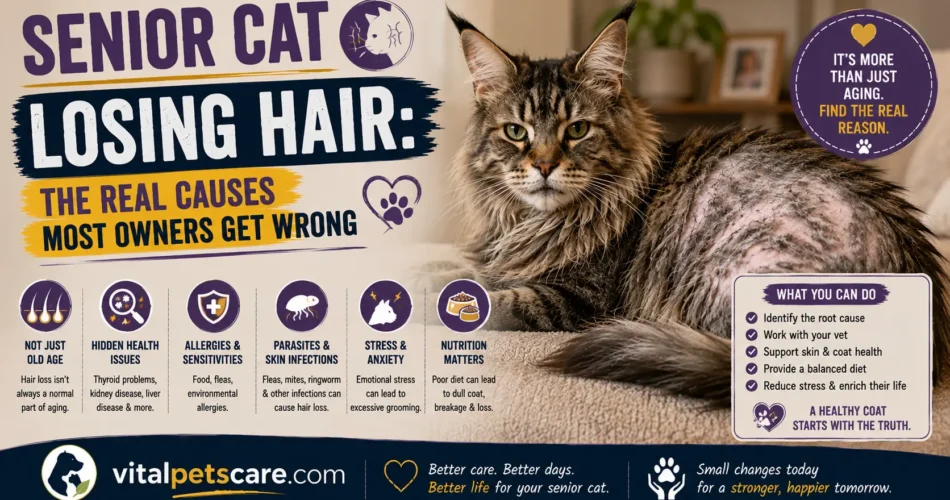
It’s easy to assume a senior cat losing hair is just normal shedding. However, in older cats, hair loss almost always has a specific reason behind it.
Some causes are simple to fix. Others, though, need a closer look from your vet.
This guide breaks down the real causes clearly. By the end, you’ll know exactly what’s happening — and what to do next.
Why Is My Senior Cat Losing Hair?
There are several reasons behind senior cat losing hair. However, not all of them are obvious at first glance.
Allergies and Skin Irritation
Allergies are one of the most common causes. They can come from food, pollen, or even your cat’s bedding.
As a result, the skin becomes irritated and inflamed. Over time, this leads to hair loss in patchy or widespread areas.
Parasites — Fleas, Mites, and Ringworm
Fleas are a surprisingly frequent culprit, even in indoor cats. In addition, mites and ringworm (a fungal infection, not an actual worm) can cause significant hair loss.
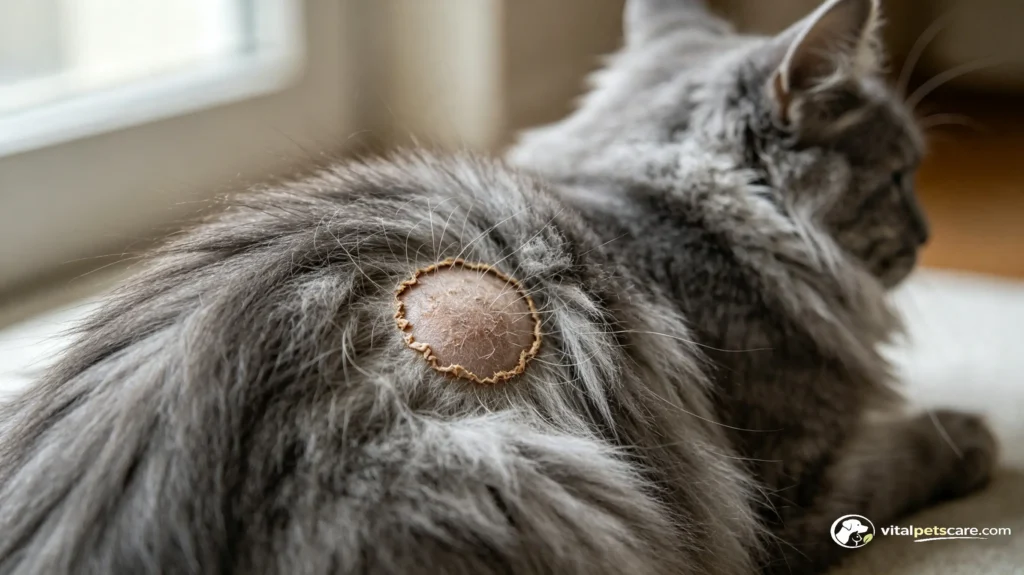
These are worth ruling out early. Because of this, a vet skin check is often the fastest way to confirm or eliminate parasites as the cause.
Stress and Over-Grooming
Cats under stress sometimes groom obsessively. This is called psychogenic alopecia — and it leads to thinning fur, especially on the belly and inner legs.
Meanwhile, the tricky part is that the cat looks like they’re just grooming normally. However, the frequency and intensity is far beyond what’s healthy.
Hormonal Imbalance
Hyperthyroidism and other hormonal shifts can affect the hair growth cycle directly. For example, elevated cortisol from stress or illness disrupts normal sebaceous gland function.
As a result, the coat becomes dull, thin, and prone to falling out. This is especially common in cats over 10.
Poor Nutrition
A diet lacking in key nutrients affects coat quality over time. In addition, poor protein intake can trigger telogen effluvium — a condition where hair follicles prematurely enter the shedding phase.
The good news is that nutritional hair loss often improves quickly once diet is corrected.
Senior Cat Not Grooming Anymore — When Hair Loss Starts There
Sometimes hair loss doesn’t start with a skin condition. Instead, it starts with a cat that has simply stopped grooming.
Senior cat not grooming anymore is often linked to arthritis, dental pain, or cognitive decline. As a result, areas the cat can’t comfortably reach — like the back and base of the tail — become matted and start to thin.
This type of hair loss looks different from allergy or parasite-related loss. For example, it tends to concentrate in specific hard-to-reach spots rather than spreading across the whole body.
If you’ve already read our guide on cat arthritis, you’ll recognize this as part of the same chain reaction covered there. In addition, our Senior Cat Care Guide covers the broader grooming picture across different causes.
Where the Hair Falls Out Matters
Location is one of the most useful clues in figuring out what’s going on. However, most owners focus on the hair loss itself rather than where it’s happening.
Cat Losing Fur on Back — What It Usually Means
Hair loss along the back is often linked to flea allergy dermatitis. This is because fleas tend to congregate near the base of the tail and along the spine.
As a result, the skin in these areas becomes inflamed and itchy. Over time, scratching and biting leads to visible hair loss on the back.
In addition, arthritis-related grooming failure often shows up in the same area. However, with arthritis the fur looks more matted and unkempt, rather than broken or patchy.
Cat Losing Tufts of Fur — Stress or Parasite Pattern
Tufts of fur coming out in small clumps often point to one of two things. Either the cat is over-grooming from stress, or a parasite is causing localized irritation.
Meanwhile, ringworm specifically causes circular patches of thinning fur. These patches often look slightly scaly around the edges, which helps distinguish them from stress-related loss.
If tufts are appearing suddenly, that’s worth a vet visit soon. Because of this pattern, early diagnosis usually means faster and simpler treatment.
Cat Losing Chunks of Fur — When to Act Fast
Losing large chunks of fur is different from gradual thinning. In fact, this pattern is more likely to point to a serious underlying condition.
Possible causes include severe allergic reactions, autoimmune conditions, or advanced hormonal imbalance. As a result, this pattern should never be watched and waited on.
See your vet within the week if chunks are falling out. The sooner the cause is identified, the better the outcome.
Senior Cat Matted Fur — How It Connects to Hair Loss
Matted fur and hair loss often go hand in hand. However, they’re not quite the same thing — and understanding the difference helps.
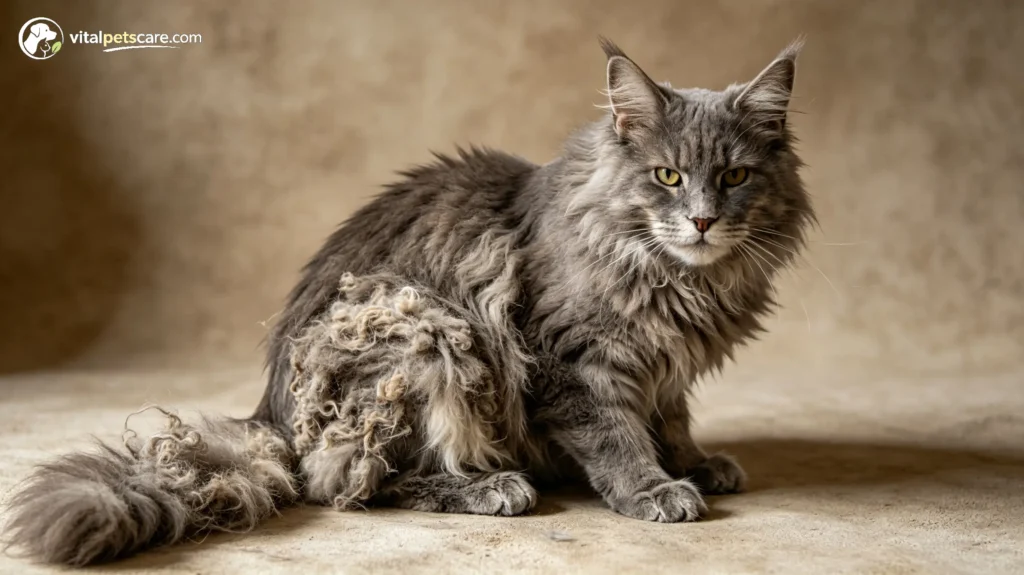
Senior cat matted fur happens when loose hairs tangle together instead of shedding normally. As a result, the coat looks clumped, dull, and unkempt rather than evenly thin.
This is most common in cats that have reduced grooming due to arthritis or pain. In addition, long-haired cats are far more prone to matting than short-haired ones.
Left untreated, mats pull on the skin underneath. Because of this, they can cause real discomfort — and in severe cases, even skin sores beneath the surface.
The solution starts with addressing the root cause. For example, if arthritis is stopping your cat from grooming, treating the joint pain often leads to gradual coat improvement on its own.
Cat Hair and Weight Loss Together
This combination is worth paying close attention to. When a senior cat is losing hair and weight at the same time, the two symptoms are usually connected.
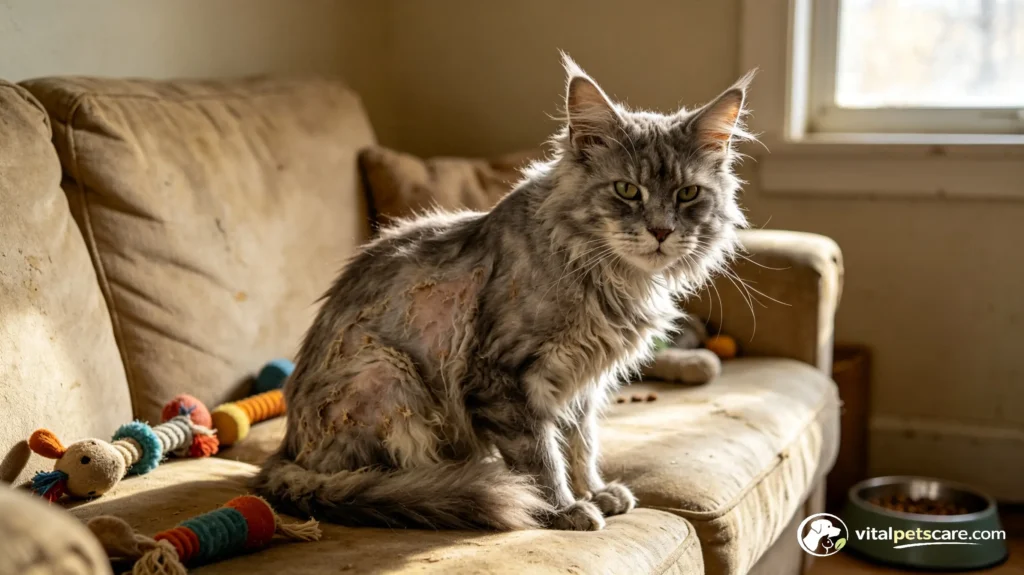
Hyperthyroidism is the most common link. As a result of the overactive thyroid, metabolism speeds up dramatically — burning through both body weight and affecting the normal hair growth cycle.
In addition, chronic kidney disease can cause both weight loss and coat deterioration over time. However, kidney-related hair loss tends to be more gradual and subtle than thyroid-related loss.
Meanwhile, poor nutrition can cause both symptoms simultaneously. For example, a diet lacking in protein affects both body weight and coat quality at the same time.
If your cat is losing both hair and weight together, don’t wait it out. Our Senior Cat Losing Weight article covers the weight side of this combination in more detail. In addition, a full blood panel is usually the most useful first step your vet will recommend.
Hair Loss in Older Cats vs. Kittens — Is It Different?
Yes — the causes are quite different between the two age groups. However, a few causes do overlap.
In older cats, hair loss is most commonly linked to hormonal changes, arthritis-related grooming failure, or underlying illness. As a result, blood work is often part of the diagnostic process for elderly cats.
Kittens losing fur, on the other hand, are more likely dealing with ringworm, parasites, or a nutritional deficiency. Because of this, treatment is usually simpler and faster in younger cats.
In addition, kittens sometimes lose fur naturally during the transition from kitten coat to adult coat. This is normal and temporary — however, it should be even and gradual rather than patchy or sudden.
When in doubt, both age groups benefit from the same first step — a vet skin check to rule out parasites and infection before assuming anything else.
What Helps Senior Cat Hair Loss
H3: 1. Address the Root Cause First
No topical treatment fixes hair loss long-term without tackling the underlying cause. For example, treating fleas stops flea-allergy hair loss far more effectively than any shampoo alone.
In addition, treating arthritis often leads to gradual coat improvement as grooming resumes. Because of this, the root cause always comes first.
2. Switch to a High-Protein Diet
Nutrition plays a direct role in coat health. As a result, switching to a high-protein, named-protein-source diet often improves coat quality within a few weeks.
Look for wet food options with real meat listed first. In addition, omega-3 supplements like fish oil support skin and coat health from the inside out.
3. Brush Regularly to Prevent Matting
Gentle, regular brushing removes loose fur before it tangles. However, be careful around sensitive areas — a cat with arthritis may find certain positions uncomfortable.
Short brushing sessions work better than long ones. In addition, a wide-toothed comb works well for cats already developing mats.
4. Reduce Stress Where Possible
If psychogenic alopecia is the cause, reducing stress is the most direct solution. For example, adding vertical spaces, hiding spots, and consistent routines all help lower anxiety levels.
Meanwhile, pheromone diffusers like Feliway can support calm in cats prone to stress-related over-grooming.
5. Ask Your Vet About Parasite Prevention
Year-round parasite prevention eliminates one of the most common causes of hair loss entirely. In addition, it protects against reinfestation after treatment.
Even indoor cats benefit from regular prevention. Because of this, it’s worth discussing with your vet at every checkup.
When to See a Vet
If hair loss appears suddenly or spreads quickly, don’t wait. In fact, fast-spreading hair loss is more likely to point to something that needs prompt treatment.
Watch closely if hair loss comes with weight loss, skin sores, excessive scratching, or lethargy. These combinations suggest something beyond normal shedding.
In addition, chunks or tufts falling out rather than gradual thinning always deserve a vet visit. As a result of catching it early, most causes respond well to treatment.
Meanwhile, if your senior cat has stopped grooming entirely, that’s worth a separate conversation with your vet too. Because of this, don’t focus only on the hair loss — the grooming behavior behind it matters just as much.
Frequently Asked Questions
Why is my senior cat losing hair?
The most common causes are allergies, parasites, hormonal imbalance, and grooming failure from arthritis. However, the exact cause depends on where the hair loss is happening and what other symptoms are present.
Is it normal for older cats to lose hair?
Some thinning can happen with age. However, noticeable or patchy hair loss in a senior cat almost always points to a specific cause worth investigating.
What does it mean when a cat loses fur on their back?
This pattern most commonly points to flea allergy dermatitis or arthritis-related grooming failure. In addition, the appearance of the loss — patchy vs. matted — helps tell the two apart.
Why is my cat losing fur in chunks or tufts?
Chunks or tufts falling out often point to parasites, ringworm, or a severe allergic reaction. As a result, this pattern needs a vet visit sooner rather than later.
Can stress cause hair loss in cats?
Yes, psychogenic alopecia is a real condition caused by stress-related over-grooming. However, it can look like normal grooming at first, which makes it easy to miss.
What is psychogenic alopecia in cats?
It’s hair loss caused by obsessive over-grooming linked to anxiety or stress. As a result, fur thins in areas the cat can easily reach — usually the belly and inner legs.
Can hyperthyroidism cause hair loss in cats?
Yes, hyperthyroidism disrupts the normal hair growth cycle. In addition, it often comes alongside weight loss and increased appetite, which helps distinguish it from other causes.
Why has my senior cat stopped grooming?
Arthritis, dental pain, and cognitive decline are the most common reasons. As a result, areas the cat can’t comfortably reach become matted and start to thin over time.
What is the connection between matted fur and hair loss?
Matted fur happens when loose hairs tangle instead of shedding normally. However, if left untreated, mats pull on the skin and can eventually cause sores and further hair loss.
Can poor nutrition cause hair loss in cats?
Yes, a diet lacking in protein and key nutrients can trigger telogen effluvium — where hair follicles enter the shedding phase too early. In addition, poor nutrition affects overall coat quality and thickness.
Does a kitten losing fur mean the same thing as an older cat losing fur?
Not usually. Kittens are more likely dealing with ringworm or parasites, while older cats tend to lose hair from hormonal or illness-related causes. However, a vet skin check is the right first step for both.
When should I take my cat to the vet for hair loss?
If hair loss is sudden, spreading quickly, or paired with weight loss, skin sores, or lethargy, book within the week. In addition, chunks or tufts falling out always deserve prompt attention.

