
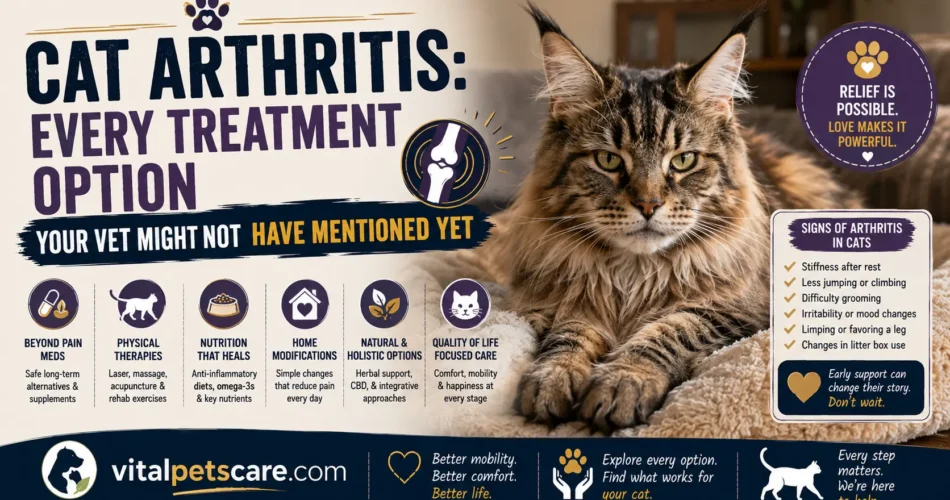
Cat arthritis is one of the most underdiagnosed conditions in feline medicine. Studies suggest up to 90% of cats over 12 have some degree of osteoarthritis — yet most owners never know until it’s advanced.
The challenge is cats hide joint pain exceptionally well. By the time the signs are obvious, the condition has usually been building for years.
This guide covers every treatment option worth knowing — from simple home changes to a brand-new injection most owners haven’t heard of yet. You’ll leave with more options than you walked in with.
Senior Cat Arthritis Signs — Spotting It Before It Gets Obvious
Unlike dogs, cats rarely limp from arthritis. The signs are subtler, which is exactly why senior cat arthritis signs go unnoticed for so long.
The key is watching for behavioral changes, not physical ones. What your cat stops doing tells you more than how they move.
Cat with Arthritis Walking — What the Gait Change Looks Like
A cat with osteoarthritis doesn’t always limp visibly. Instead, their stride shortens — steps become smaller, more deliberate, and slightly stiff.
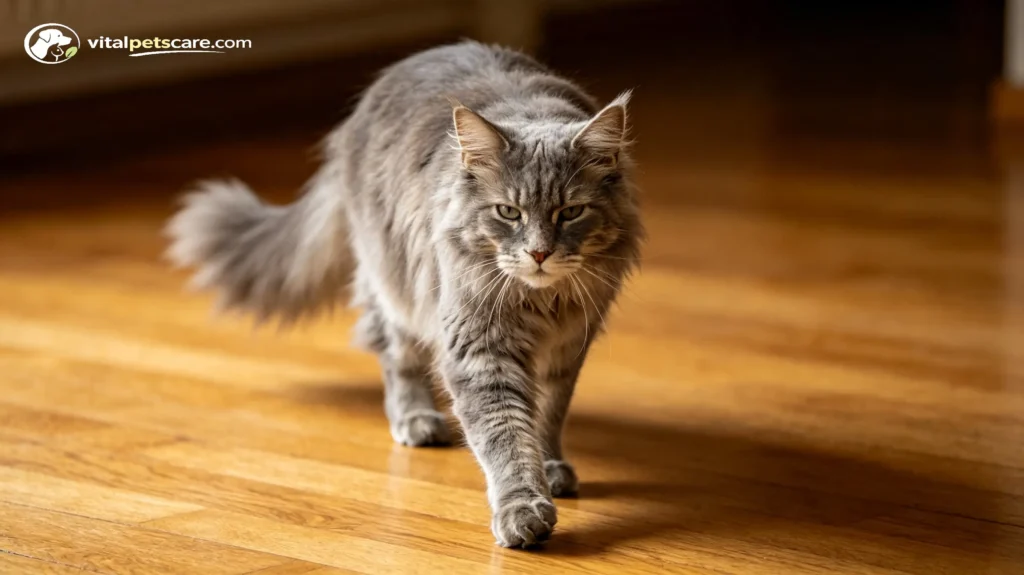
You might notice your cat moving more carefully around furniture, or choosing longer routes that avoid jumping. This cautious navigation is one of the earliest visible signs.
Senior Cat Stiff Jumping Down Causes
Jumping down is harder on arthritic joints than jumping up. The impact of landing puts significant pressure on already inflamed synovial fluid and cartilage.
A senior cat stiff jumping down often hesitates at the edge, looks down for longer than usual, or chooses not to jump at all. This hesitation is worth paying close attention to — it’s one of the clearest early signals.
Personality and Grooming Changes as Hidden Signs
Irritability, reduced social interaction, and avoiding being touched are all pain responses. A cat that used to love being petted but now flinches or walks away may be experiencing joint discomfort.
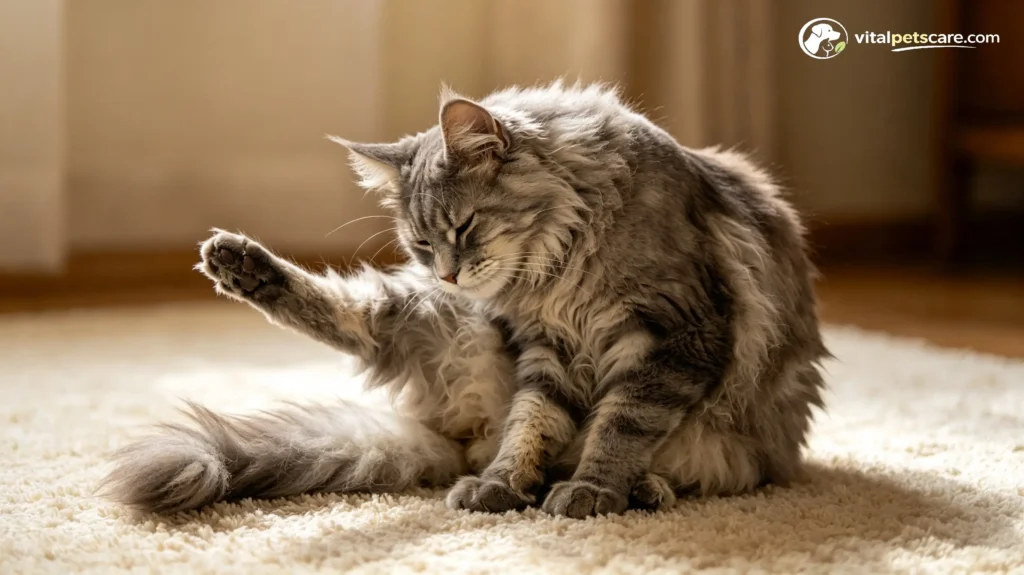
Grooming changes come next — a cat in pain starts skipping areas that require twisting or reaching. This connects directly to the next section.
The Arthritis Chain Reaction — Joint Pain to Muscle Loss to Grooming Failure
This is the part most articles miss. Cat arthritis doesn’t just cause stiffness — it sets off a progressive chain that affects the whole body.
Joint pain reduces movement. Reduced movement leads to muscle loss. Muscle loss makes movement harder, which reduces it further. And throughout all of this, grooming suffers.
Senior Cat Losing Muscle in Back Legs
When hip and knee joints hurt, cats instinctively use their back legs less. Less use leads to sarcopenia — age-related muscle wasting — which accelerates in the areas being protected.
Senior cat losing muscle in back legs is often visible as a narrowing of the hindquarters. The back legs look thinner and feel less firm when touched.
This muscle loss then makes arthritis worse, since muscles support and stabilize joints. It becomes a cycle that’s difficult to reverse without intervention.
Senior Cat Difficulty Grooming Back
The back, base of tail, and hindquarters require significant spinal flexibility to reach. For a cat with joint pain, this twisting movement becomes uncomfortable — then painful — then impossible.
Senior cat difficulty grooming back shows up as matted fur, dandruff, or an unkempt coat specifically in these hard-to-reach areas. The rest of the coat may look fine, which is why this sign is easy to miss.
For a deeper look at the grooming side of this chain, our Senior Cat Not Grooming & Matted Fur article covers the full picture once published.
Cat Arthritis Home Remedies That Actually Make a Difference
1. Warm Supportive Sleeping Spots
Heat eases joint stiffness by improving circulation around inflamed tissue. A self-heating cat bed or a warm blanket in a low, easy-to-access spot makes a noticeable difference.
Avoid raised beds that require jumping — the goal is comfort without effort. Floor-level sleeping spots reduce the joint strain of getting in and out.
2. Raised Food and Water Bowls
Bending down to floor-level bowls puts pressure on the neck, shoulders, and front joints. Raising bowls to a comfortable height reduces this strain significantly.
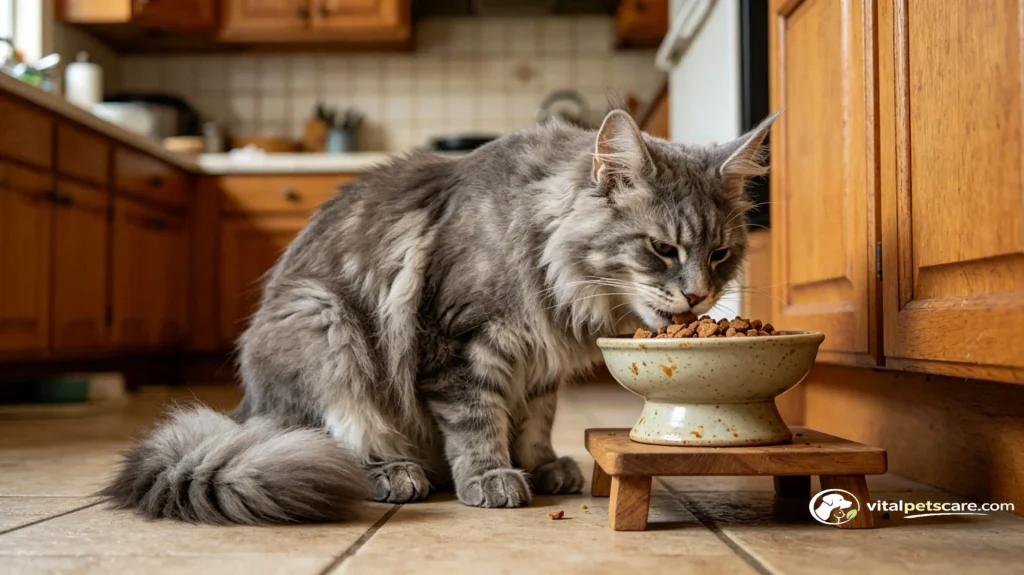
This is one of the simplest feline arthritis home remedies to implement immediately. Even a small platform or book under the bowl makes a real difference.
3. Weight Management
Every extra pound adds measurable pressure to already inflamed joints. Managing body weight is one of the most effective long-term interventions for cat arthritis pain relief.
Even a modest weight reduction in an overweight cat can produce noticeable improvement in mobility. Your vet can help identify a realistic target weight and feeding plan.
4. Gentle Movement and Play
Complete rest isn’t the answer — synovial fluid needs movement to lubricate joints effectively. Short, gentle play sessions with low-effort toys keep joints moving without overloading them.
Keep sessions brief and stop if your cat seems uncomfortable. Consistency matters more than duration here.
Cat Arthritis Pain Relief — Medical Treatment Options
Arthritis Shots for Cats (Solensia)
This is the treatment most owners haven’t heard about yet. Solensia is the first FDA-approved monthly injection specifically developed for feline arthritis pain relief.
It works as a monoclonal antibody — targeting and neutralizing a specific pain signal called nerve growth factor (NGF) that drives arthritis pain. Unlike traditional pain medications, it doesn’t affect the kidneys or liver, making it particularly suitable for senior cats with existing organ concerns.
Many owners report visible improvement in mobility and comfort within the first month. Ask your vet specifically about Solensia if arthritis has been confirmed — it’s not always offered unless requested.
Vet-Prescribed Anti-Inflammatory Options
Traditional NSAIDs (non-steroidal anti-inflammatory drugs) are sometimes used for short-term arthritis flare-ups in cats. However, cats metabolize these differently from dogs and humans — long-term use requires careful monitoring of kidney function.
Never give human NSAIDs like ibuprofen or aspirin to cats. These are toxic and can be fatal even in small amounts.
Acupuncture and Physiotherapy
Veterinary acupuncture has growing evidence behind it for feline pain management. It works by stimulating specific points that trigger natural pain-relief responses in the nervous system.
Physiotherapy focuses on gentle, guided movement to rebuild muscle and maintain joint range of motion. Both are increasingly available through specialist vet clinics and can work well alongside medical treatment.
Best Supplements for Senior Cat Joints
Supplements work best as part of a broader management plan, not as a standalone fix. The evidence behind joint supplements in cats is growing, though results vary between individuals.
Always introduce supplements gradually and check with your vet first, especially if your cat is on other medications or managing a concurrent condition like kidney disease.
Glucosamine and Chondroitin
These two work together to support cartilage health and reduce the breakdown of joint tissue. Glucosamine provides the building blocks for cartilage repair, while chondroitin helps retain water in the cartilage for cushioning.
Results are gradual — most owners notice improvement over 6-8 weeks of consistent use rather than days. Look for cat-specific formulations rather than repurposing dog or human products.
Omega-3 Fatty Acids
Omega-3s, particularly EPA and DHA from fish oil, have genuine anti-inflammatory properties that reduce joint inflammation directly. Unlike glucosamine, the anti-inflammatory effect tends to be more noticeable and faster-acting.
Fish oil is one of the most widely recommended supplements for cat arthritis pain relief. A vet can advise on the right dose based on your cat’s weight and overall health.
Green Lipped Mussel Extract
Green lipped mussel (GLM) contains a unique combination of omega-3 fatty acids, glucosamine, and chondroitin in one natural source. It’s increasingly recognized as one of the more comprehensive joint supplements available.
Some studies suggest GLM may reduce joint inflammation more effectively than standard fish oil alone. It’s available in powder form that mixes easily into wet food — practical for cats who resist tablets or capsules.
Senior Cat Mobility Ramp Ideas
Ramps and steps remove the need for jumping entirely — which is the single most joint-stressful movement for an arthritic cat. A few well-placed options can transform how your cat navigates their environment.
Sofa and bed ramps are the most commonly needed. Look for options with a gentle incline (no steeper than 20-25 degrees) and a non-slip surface. Carpet-covered ramps provide grip and feel more natural underfoot than plastic.
Window perch steps give cats access to their favorite spots without the jump. Multi-step options with wide, flat platforms are better than steep single steps for arthritic cats.
Litter box ramps matter too. A litter box with a high entrance can be painful to climb into for a cat with hip or knee arthritis. Switching to a low-entry litter box or adding a small ramp outside the entrance solves this immediately.
DIY options work well too — a stack of firm cushions or a non-slip step stool can serve as a functional ramp without any cost. The priority is reducing jump height, not the specific product used.
When to See a Vet
If your cat has stopped jumping, avoids their favorite spots, or seems reluctant to move around normally, it’s time for a proper arthritis assessment. These behavioral shifts are too meaningful to attribute to “just getting older.”
Watch closely if mobility changes come with weight loss, muscle wasting, or grooming failure. This combination suggests the arthritis chain reaction is already progressing — and earlier intervention slows it down significantly.
Ask your vet specifically about Solensia if arthritis is confirmed. It’s not always offered proactively, but it represents a genuine step forward in treating arthritis in cats compared to older options.
Twice-yearly checkups make a real difference for arthritic cats. Regular joint assessments and weight monitoring help your vet adjust the treatment plan before things deteriorate.
Frequently Asked Questions
What are the signs of arthritis in senior cats?
Key signs include hesitating before jumping, shorter strides, avoiding high spots, grooming failure, and personality changes. Cats rarely limp visibly from arthritis — behavioral shifts are the clearest signal.
What home remedies help cat arthritis?
Warm sleeping spots, raised food bowls, weight management, and gentle play are the most effective home remedies. These work best alongside proper veterinary care, not as a replacement.
What is Solensia for cats?
Solensia is the first FDA-approved monthly injection for feline arthritis pain. It targets nerve growth factor (NGF) using a monoclonal antibody approach, with minimal impact on kidney or liver function.
Are arthritis shots safe for senior cats?
Yes, Solensia is specifically designed with senior cats in mind. Its mechanism avoids the kidney and liver concerns associated with traditional NSAIDs, making it a strong option for older cats.
What supplements help cat arthritis?
Glucosamine, chondroitin, omega-3 fatty acids, and green lipped mussel extract are the most widely recommended. Results are gradual — consistent use over 6-8 weeks gives the clearest picture.
Why does my senior cat struggle to jump down?
Landing puts significant pressure on inflamed synovial fluid and cartilage. Senior cat stiff jumping down is one of the earliest and most reliable signs of arthritis.
Can arthritis cause muscle loss in cats?
Yes, joint pain reduces movement, and reduced movement leads to sarcopenia — muscle wasting. Senior cat losing muscle in back legs is a direct downstream effect of untreated arthritis.
Why has my senior cat stopped grooming their back?
Reaching the back and hindquarters requires spinal flexibility that arthritis makes painful. Senior cat difficulty grooming back is a classic sign of hip or spinal joint involvement.
Are mobility ramps helpful for arthritic cats?
Yes, ramps eliminate the most joint-stressful movement — jumping. A gentle-incline, non-slip ramp to favorite spots significantly reduces daily joint strain.
Can I give my cat human pain medication for arthritis?
Never. Human NSAIDs like ibuprofen and aspirin are toxic to cats and can be fatal even in small amounts. Always use vet-prescribed options only.
How is cat arthritis diagnosed?
Vets typically combine a physical joint examination, X-rays, and behavioral history to diagnose arthritis. There’s no single definitive test — the full picture matters.
How often should an arthritic cat see the vet?
Twice-yearly checkups are recommended as a minimum. More frequent visits may be needed when adjusting treatment plans or managing concurrent conditions like kidney disease.

