
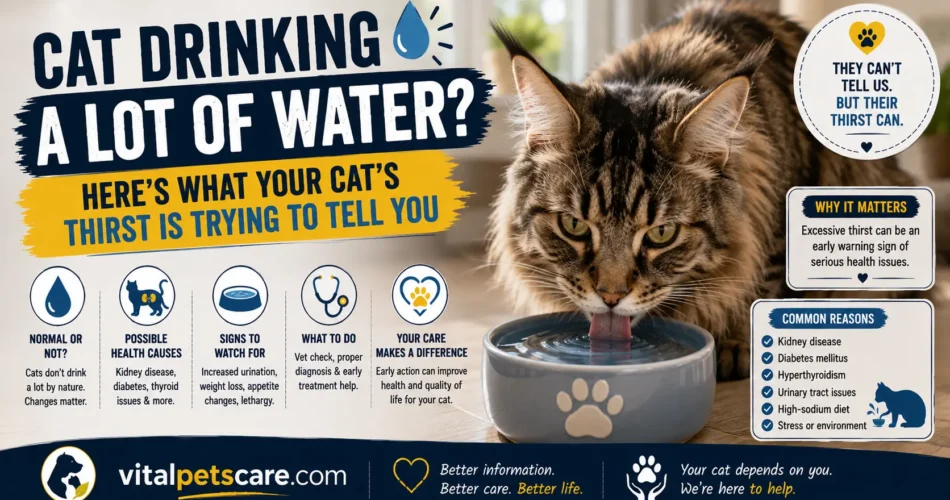
Cats are not big drinkers by nature. So when your cat starts drinking a lot of water, it’s your first clue that something has shifted inside their body.
Think of thirst as a messenger. It’s rarely random — it’s almost always a response to something happening internally.
This guide decodes that message clearly. You’ll learn the most common causes, what specific patterns mean, and exactly when it’s time to make that vet call.
Why Is My Cat Drinking So Much Water?
Kidney Disease (CKD)
The kidneys normally concentrate urine to conserve water. When they start to fail, they lose this ability — forcing the body to drink more to compensate.
Chronic kidney disease (CKD) is the single most common reason behind increased thirst in cats, especially those over 10. It develops slowly, which is why increased drinking is often the first visible sign.
Hyperthyroidism
An overactive thyroid speeds up nearly every body process, including how fast the kidneys filter blood. This creates a thirst response that mimics kidney disease closely.
If your senior cat is drinking lots of water alongside weight loss and a ragged coat, hyperthyroidism is worth ruling out first. Our Senior Cat Losing Weight article covers the thyroid connection in detail.
Diabetes Mellitus
When blood sugar rises beyond what the kidneys can manage, excess glucose spills into the urine — pulling water with it. The result is frequent urination, which triggers increased drinking to replace lost fluids.
Diabetes mellitus is less common than kidney disease or hyperthyroidism but follows the same pattern of thirst and frequent urination.
Urinary Tract Infection
A UTI creates urgency and discomfort that can sometimes look like excessive drinking. Cats with UTIs often visit the water bowl more frequently alongside straining or crying in the litter box.
Diet-Related Thirst
Dry food contains very little moisture compared to wet food. A cat switched to a dry-only diet may drink noticeably more — which is normal, not concerning, as long as no other symptoms appear.
What Is the Polydipsia-Polyuria Connection?
This is the mechanism vets look for first. Polydipsia means excessive drinking — polyuria means excessive urination. They almost always happen together, which is why vets refer to the pair as PD/PU.
Here’s how the cycle works: a failing organ or hormonal imbalance forces the kidneys to produce more urine. More urine means more fluid loss. More fluid loss triggers thirst. More drinking produces more urine — and the cycle continues.
Understanding this cycle helps explain why treating the underlying cause is the only real solution. Limiting water access doesn’t fix the problem — it just removes the body’s only way of compensating.
Cat Drinking a Lot of Water and Peeing a Lot
This combination is the clearest signal that something medical is happening. A cat peeing a lot alongside heavy drinking is the classic PD/PU pattern that points directly to kidney disease, hyperthyroidism, or diabetes.
Normal cats urinate around 2-4 times per day. If your cat visits the litter box significantly more than this, that’s a meaningful change worth tracking.
Watch for larger clumps in a clumping litter box — this is one of the easiest ways to spot increased urine output before other symptoms become obvious. A sudden need to clean the litter box more frequently is often the first clue owners notice.
If your cat is urinating a lot and the urine seems very pale or watery, this points specifically to the kidneys losing their ability to concentrate urine. This is one of the earliest and most reliable signs of chronic kidney disease.
Cat Drinking a Lot of Water But Acting Normal
This is the pattern that lulls most owners into waiting. A cat drinking a lot of water but acting normal feels less urgent — if they’re eating, playing, and behaving as usual, how serious can it be?
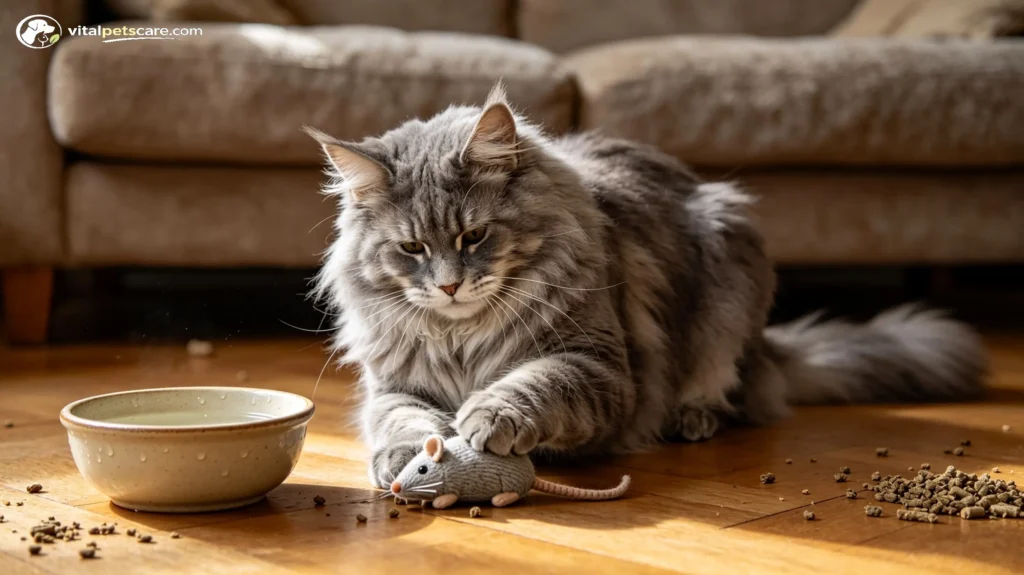
The honest answer: more serious than it looks. Cats are remarkably good at masking early illness, and many conditions cause increased thirst long before behavioral changes appear.
Kidney disease and hyperthyroidism both commonly present this way in early stages. The cat seems fine — but internally, organ function is already declining.
Acting normal buys you time but doesn’t change the underlying cause. A blood and urine panel at this stage, before other symptoms appear, often catches things early enough to make a real difference in long-term outcomes.
Cat Drinking a Lot of Water and Meowing
This combination adds an emotional layer to the physical symptom. A cat drinking a lot of water and meowing excessively is often communicating discomfort or confusion alongside the thirst.
In senior cats, this pairing frequently points to hyperthyroidism. The hormonal imbalance creates restlessness and anxiety alongside increased thirst, which often shows up as unusual vocalization.
Cognitive decline can also cause this combination. A confused senior cat may vocalize more at night while also drinking more frequently. If this sounds familiar, our Senior Cat Dementia & Nighttime Behavior article covers this overlap in detail.
Pain from a urinary tract infection is another possibility. Cats in discomfort often vocalize near the water bowl or litter box as a way of expressing that something doesn’t feel right.
Why Is My Male Cat Drinking So Much Water?
Male cats share all the same causes of increased thirst as female cats. But there’s one additional concern worth knowing about specifically.
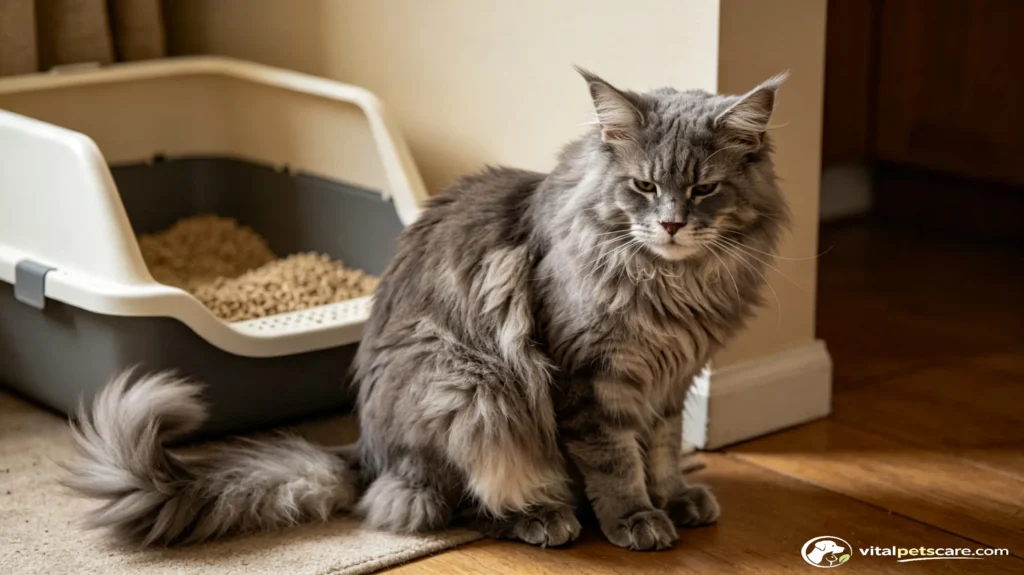
Male cats have a significantly narrower urethra than females, making them far more prone to urinary blockages. A male cat drinking excessively and straining in the litter box without producing urine is a genuine emergency.
This combination — excessive drinking plus straining without urination — needs same-day veterinary attention. A blocked urethra can become life-threatening within hours if left untreated.
For male cats showing increased thirst without straining, the same causes apply — kidney disease, hyperthyroidism, diabetes, and UTIs. But the blockage risk means any litter box changes alongside thirst deserve faster attention in male cats than in females.
Senior Cat Kidney Disease Diet
Diet is one of the most powerful tools for managing kidney disease in cats. The right food can meaningfully slow progression and improve quality of life once a diagnosis is confirmed.
The three most important things to look for in a senior cat kidney disease diet are:
Low phosphorus — damaged kidneys struggle to filter phosphorus properly. Reducing it in the diet directly reduces the workload on failing kidney tissue.
Controlled protein — this is nuanced. Too much protein creates more waste for the kidneys to filter, but too little accelerates muscle loss. A moderate, high-quality protein from named animal sources is generally the target.
High moisture content — wet food is strongly preferred over dry for cats with kidney disease. Cats with CKD are already losing more fluid through urine, so every bit of dietary moisture helps.
Prescription kidney diets like Hill’s k/d or Royal Canin Renal Support are the most commonly recommended options. These are formulated specifically around the low-phosphorus, controlled-protein requirements of cats with chronic kidney disease.
Always transition to a new diet gradually. A sudden switch can cause digestive upset that reduces food intake — the last thing a cat already losing weight needs.
How Much Water Should a Cat Drink Per Day?
A useful baseline: cats typically drink around 60ml per kilogram of body weight per day. For an average 4kg cat, that’s roughly 240ml — about one cup.
Cats eating wet food get a significant portion of their daily water through food itself. A wet-food-fed cat may drink very little from a bowl, which is completely normal.
Normal urination is around 2-4 times per day for most cats. Beyond this, especially with larger-than-normal litter clumps, suggests urination has increased beyond typical.
Tracking your cat’s drinking and litter box patterns for a few days before a vet visit gives your vet genuinely useful data. Vets often ask owners to estimate intake — having real observations rather than guesses helps narrow down the cause faster.
When to See a Vet
If increased drinking has been going on for more than a few days, don’t keep waiting for it to resolve. Polydipsia rarely fixes itself — it almost always points to something that needs identifying.
Book within the week if thirst is paired with weight loss, appetite changes, or more frequent urination. These combinations point to kidney disease, hyperthyroidism, or diabetes — all of which respond far better to early treatment than late.
A male cat straining in the litter box alongside heavy drinking needs same-day attention. This combination can indicate a urinary blockage, which is a medical emergency.
Don’t wait for your cat to seem obviously unwell. With conditions like CKD, cats can appear relatively normal until function has declined significantly. A simple blood and urine panel catches these conditions early — and early is always better.
Frequently Asked Questions
Why is my cat drinking so much water?
The most common causes are kidney disease, hyperthyroidism, and diabetes mellitus. A vet visit with a blood and urine panel is the most reliable way to find out which one applies.
Is it normal for senior cats to drink more water?
Not exactly. While older cats are more prone to conditions that cause thirst, increased drinking is not a normal part of aging itself — it almost always signals an underlying cause worth investigating.
What is polydipsia in cats?
Polydipsia is the medical term for excessive thirst. It almost always comes alongside polyuria (excessive urination), and the pair together — PD/PU — is what vets look for when diagnosing the cause.
How much water should a cat drink per day?
Around 60ml per kilogram of body weight is a useful baseline. A 4kg cat typically drinks around 240ml daily, though wet-food-fed cats drink significantly less from the bowl.
Why is my cat drinking a lot but acting normal?
Cats mask illness well. A cat drinking a lot of water but acting normal is often in the early stages of kidney disease or hyperthyroidism — before behavioral changes appear. Early blood work often catches these conditions at their most treatable stage.
What does it mean when a cat drinks a lot and pees a lot?
This is the classic PD/PU pattern. It points to an underlying condition forcing the kidneys to produce more urine, which triggers increased thirst to compensate. Kidney disease, hyperthyroidism, and diabetes are the most common causes.
Why is my male cat drinking so much water?
Male cats share the same causes as females, but they carry an additional risk — a narrow urethra makes them far more prone to urinary blockages. A male cat straining in the litter box alongside heavy drinking needs same-day veterinary attention.
What is the best diet for a cat with kidney disease?
Look for low phosphorus, moderate high-quality protein, and high moisture content. Prescription kidney diets like Hill’s k/d or Royal Canin Renal Support are the most commonly recommended options.
Can dry food cause a cat to drink more water?
Yes, switching to a dry-only diet can cause noticeable increases in drinking since dry food contains very little moisture. If no other symptoms are present, this is usually not a concern.
How often should a cat urinate?
Normal urination is around 2-4 times per day. Significantly more than this, especially with larger litter clumps, suggests polyuria worth mentioning to your vet.
Can a UTI cause a cat to drink more water?
Yes, urinary tract infections can cause increased water bowl visits alongside discomfort, straining, and sometimes crying near the litter box.
When should I take my cat to the vet for drinking too much?
If increased drinking lasts more than a few days, or comes with weight loss, frequent urination, or litter box changes, book within the week. A male cat straining alongside heavy drinking needs same-day care.

