
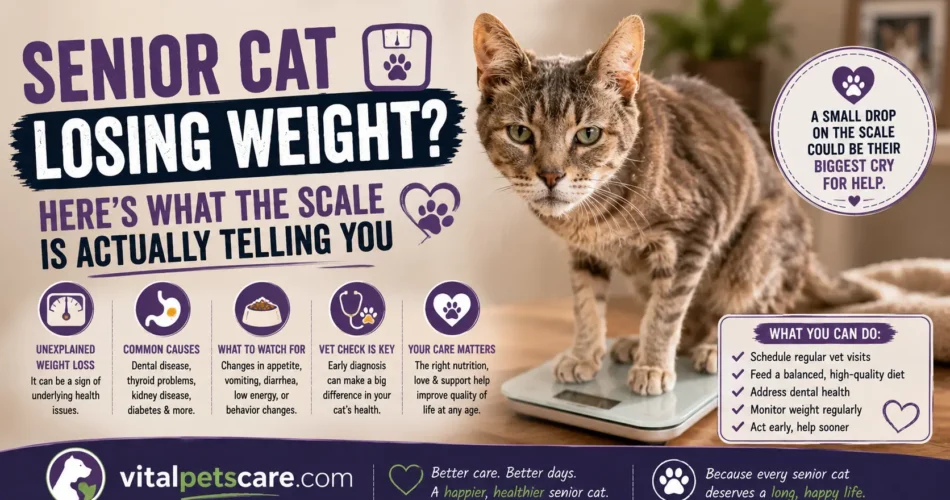
Noticing your senior cat losing weight is one of those changes that’s easy to dismiss at first. A little thinner, a little bonier — it feels like aging.
But the scale is usually telling you something specific. And the sooner you understand what, the better the outcome for your cat.
This guide covers the real causes, what specific patterns mean, and what to do next. By the end, you’ll know exactly what to watch for and when to act.
Is It Normal for Older Cats to Lose Weight?
A small, gradual weight change over years can be part of normal aging. But senior cat losing weight that’s noticeable over weeks or months usually points to something specific.
The short answer is — some weight fluctuation is normal, but consistent or sudden loss is not. Cats don’t simply “thin out” with age the way some owners assume.
If your cat has lost more than 10% of their body weight, that’s a meaningful change regardless of how gradual it felt. This threshold is worth keeping in mind as a practical benchmark.
Why Is My Senior Cat Losing Weight?
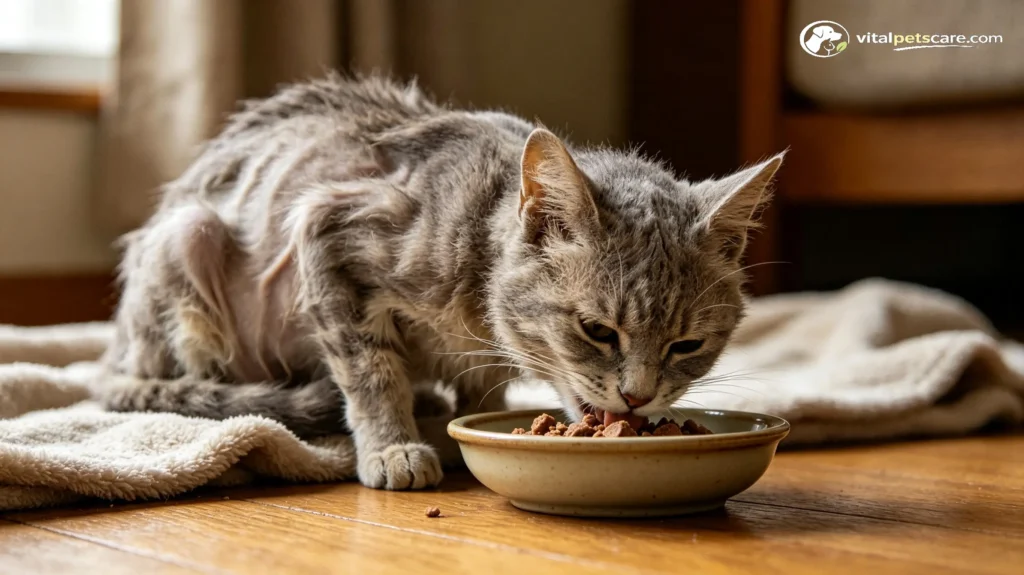
Hyperthyroidism — the Most Common Culprit
This is the most frequent cause of weight loss in cats over 10. Hyperthyroidism causes the thyroid gland to overproduce thyroxine, which dramatically speeds up metabolism.
The result is a cat that eats well — sometimes ravenously — but still loses weight. If this sounds familiar, the hyperthyroidism section below covers it in full detail.
Kidney Disease
Chronic kidney disease (CKD) is another leading cause of weight loss in senior cats. It affects nutrient absorption and appetite, often causing gradual but steady weight loss over time.
Increased thirst is usually the first sign alongside weight loss. For more detail on this condition, our Senior Cat Kidney Disease article covers it fully once published.
Diabetes
Diabetes mellitus in cats causes weight loss despite normal or increased appetite — similar to hyperthyroidism. It’s less common than thyroid disease but worth ruling out early.
Dental Pain Affecting Eating
Sore teeth or gum disease make eating painful. A cat with dental disease may appear to want food but walk away after a few bites, leading to gradual caloric deficit and weight loss.
Cancer or Organ Disease
Cachexia — muscle and weight loss driven by underlying disease — is associated with cancer and advanced organ conditions. This type of weight loss often comes with lethargy and significant appetite changes.
Poor Nutrient Absorption
Some senior cats develop digestive conditions like inflammatory bowel disease (IBD) that reduce nutrient absorption even when eating normally. The food goes in, but the body can’t use it efficiently.
Old Cat Eating But Losing Weight — What This Pattern Means
This is the pattern that confuses owners most. A good appetite feels reassuring — but an old cat eating but losing weight is actually one of the more important warning signs in senior feline health.
When a cat eats normally but still loses weight, the body is either burning through calories too fast or failing to absorb nutrients properly. Both require investigation, not a wait-and-see approach.
Senior Cat Appetite Increase But Losing Weight
A cat eating more than usual but still losing weight is a near-classic sign of hyperthyroidism. The overactive thyroid drives metabolism so fast that even increased food intake can’t keep up.
This specific pattern — ravenous appetite plus weight loss — is worth mentioning to your vet right away. A simple thyroid blood panel can usually confirm or rule it out quickly.
Cat Losing Weight But Acting Normal
This pattern is particularly tricky. A cat losing weight but acting normal may still be in the early stages of an underlying condition, before other symptoms become obvious.
Cats are skilled at masking illness. Acting normal doesn’t mean everything is fine — it means the condition hasn’t yet reached the point where it affects visible behavior. Early blood work often catches things that behavior alone misses.
Senior Cat Hyperthyroidism Early Signs
Hyperthyroidism is the most common hormonal condition in older cats, and it’s very manageable once diagnosed. Knowing the early signs helps you catch it before weight loss becomes severe.
Senior Cat Thyroid Symptoms to Watch For
Early senior cat thyroid symptoms include:
- Increased appetite, sometimes dramatically so
- Weight loss despite eating well
- Increased thirst and urination
- Hyperactivity or restlessness, especially at night
- A rougher, less well-kept coat
- Occasional vomiting or diarrhea
These signs often develop gradually, which is why they’re easy to attribute to “just aging.”
How Hyperthyroidism Causes Weight Loss Despite Eating
The thyroid gland produces thyroxine, a hormone that regulates metabolism. When the gland becomes overactive, thyroxine floods the body and pushes metabolism into overdrive.
This forces the body to burn through both fat and muscle mass far faster than food intake can replace. The result is visible weight loss, muscle wasting, and the bony feel many owners notice when petting an affected cat.
How to Tell If Your Cat Is Underweight
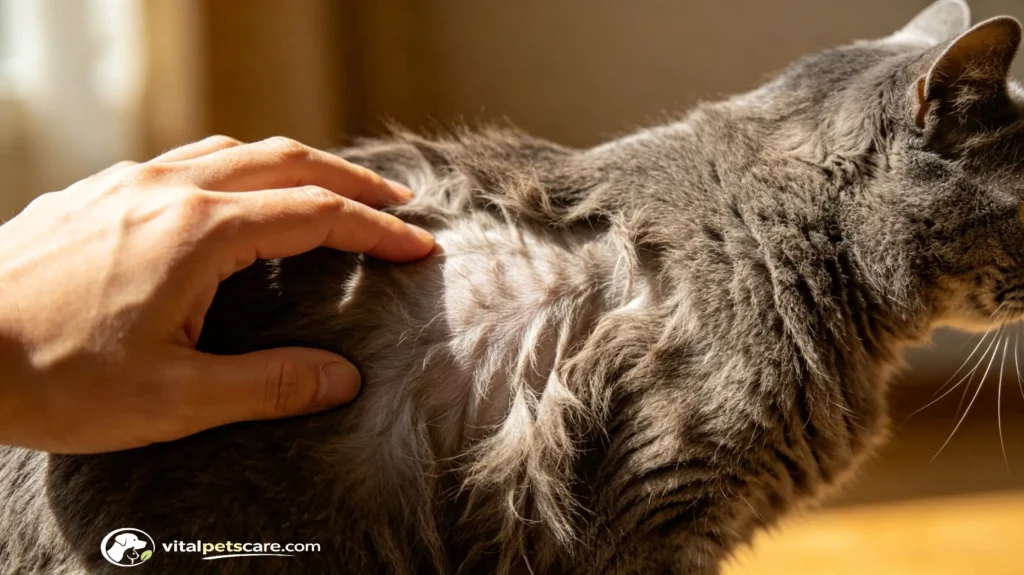
The most reliable way is a body condition score (BCS) check — a hands-on assessment that tells you more than weight alone. Here’s how to do a simple version at home.
Run your hands along your cat’s ribcage. You should be able to feel the ribs easily but not see them prominently. If the ribs feel sharp and visible, your cat is likely underweight.
Next, look at your cat from above. A healthy cat has a slight waist visible behind the ribcage. A severely underweight cat looks narrow all the way through with no curves.
Finally, feel along the spine and hip bones. In an underweight cat, these feel sharp and prominent rather than cushioned. This is what owners often describe as their older cat getting skinny or their elderly cat feeling bony.
A vet can assign a formal BCS score on a 1-9 scale. Scores of 3 or below typically indicate underweight status that needs addressing.
Cat Food for Older Cat Losing Weight
Nutrition plays a direct role in managing weight loss, especially once a cause has been identified. Here’s what to look for when choosing cat food for an older cat losing weight.

High protein content is the most important factor. Senior cats need adequate protein to maintain muscle mass, and many standard senior formulas actually reduce protein unnecessarily.
Look for food where a named protein source (like chicken, salmon, or turkey) appears as the first ingredient. Avoid formulas where plant-based fillers dominate the ingredient list.
Caloric density matters too. A cat that’s underweight benefits from food that delivers more calories per serving without requiring a larger volume of food.
If hyperthyroidism or kidney disease is confirmed, your vet may recommend a prescription diet tailored to that specific condition. In these cases, standard senior food isn’t enough on its own.
When to See a Vet
If your senior cat is losing weight and you haven’t changed anything about their diet or routine, book a vet visit within the week. Weight loss without an obvious cause is rarely something to wait out.
Watch closely if weight loss comes with increased thirst, vomiting, lethargy, or changes in appetite. These combinations point to conditions like hyperthyroidism, kidney disease, or diabetes that need blood work to confirm.
A cat that has lost more than 10% of their body weight deserves a full panel — thyroid levels, kidney function, blood glucose, and a full blood count. This gives your vet the clearest picture of what’s driving the loss.
Age alone doesn’t explain consistent weight loss. A 14-year-old cat losing weight and a 17-year-old cat losing weight both deserve the same prompt investigation, regardless of how old they are.
Frequently Asked Questions
Why is my senior cat losing weight?
The most common causes are hyperthyroidism, kidney disease, diabetes, and dental pain. A vet visit with blood work is the most reliable way to find out which one applies.
Is it normal for older cats to lose weight?
Small, gradual changes can happen with age. But consistent or noticeable weight loss is not normal and usually points to a specific, often treatable cause.
What does it mean when an old cat eats but still loses weight?
This pattern often points to hyperthyroidism or poor nutrient absorption. The body is either burning calories too fast or failing to use what’s coming in.
What are the early signs of hyperthyroidism in senior cats?
Early signs include increased appetite, weight loss, restlessness, increased thirst, and a rougher coat. These often develop gradually and are easy to miss.
Can a 14 or 17-year-old cat lose weight and still be okay?
Age alone doesn’t cause significant weight loss. Both a 14-year-old and a 17-year-old cat losing weight deserve prompt investigation regardless of age.
How can I tell if my cat is underweight?
Feel along the ribcage, spine, and hip bones. If these feel sharp and prominent with little cushioning, your cat is likely underweight. A vet can confirm with a formal body condition score.
What is cachexia in cats?
Cachexia is weight and muscle loss driven by an underlying disease like cancer or advanced organ failure. It’s different from simple weight loss and often comes with significant lethargy.
Can dental disease cause weight loss in senior cats?
Yes, dental pain makes eating uncomfortable, leading to reduced food intake over time. Treating dental disease often leads to noticeable improvement in both appetite and weight.
What food should I give my older cat that’s losing weight?
Look for high-protein, calorie-dense options with a named protein as the first ingredient. If a condition like kidney disease or hyperthyroidism is confirmed, a prescription diet may be needed.
Can a cat lose weight but act completely normal?
Yes, especially in early-stage conditions. Cats mask illness well, so acting normal doesn’t mean everything is fine. Early blood work often catches issues before behavior changes appear.
What is a body condition score for cats?
It’s a 1-9 scale used by vets to assess weight and muscle condition hands-on. Scores of 3 or below typically indicate underweight status that needs addressing.
When should I take my senior cat to the vet for weight loss?
If weight loss is noticeable, unexplained, or paired with other symptoms, book within the week. A full blood panel is usually the first and most useful step.

