
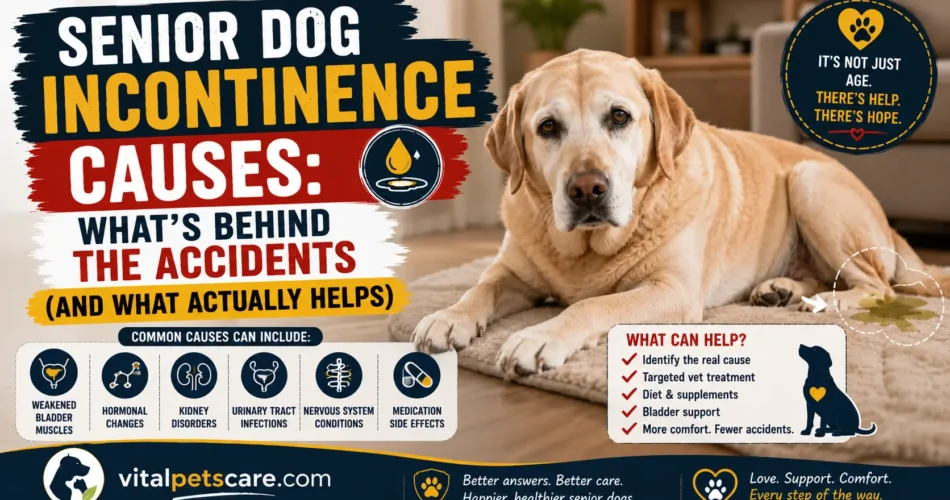
Finding an accident from your senior dog can feel confusing, even upsetting. Understanding senior dog incontinence causes helps take the guesswork out of what’s really going on.
This isn’t about bad behavior. In most cases, it’s a physical issue your dog has no control over.
This guide walks through the real causes, how to tell incontinence apart from other accidents, and what genuinely helps. By the end, you’ll have a clear plan going forward.
What Is Senior Dog Incontinence?
Senior dog incontinence refers to the involuntary loss of bladder or bowel control. It’s different from a training accident, since your dog isn’t choosing to go — their body simply isn’t holding it anymore.
This distinction matters, since it changes how you should respond. Incontinence usually happens without any warning signs, often while a dog is sleeping or resting calmly.
Understanding this difference is the first step toward finding the right cause and the right kind of help.
Urinary Incontinence in Senior Dogs — The Main Causes
Weakened Bladder Sphincter Muscles
The bladder sphincter is the muscle that holds urine in until your dog chooses to release it. With age, this muscle can weaken, leading to occasional or frequent leaking.
This is one of the most common causes behind urinary incontinence in senior dogs, especially in dogs over 10 years old.
The Spay-Hormone Link (USMI)
This cause is less commonly explained, but it’s worth understanding. Urethral Sphincter Mechanism Incompetence (USMI) happens when reduced estrogen levels, often following spaying, weaken the muscles that control the bladder.
This is a hormone-responsive condition, meaning it often improves with proper veterinary treatment. It’s one of the most treatable causes of incontinence, so it’s worth mentioning to your vet directly.
Underlying Illness
Conditions like urinary tract infections, kidney disease, and diabetes can all cause increased urination or reduced bladder control. These causes often come with other symptoms, like increased thirst or changes in urine odor.
Ruling out illness is an important step before assuming it’s simply age-related muscle weakness.
Bowel Incontinence in Elderly Dogs — A Different Type
Bowel incontinence works differently from urinary incontinence, though it’s sometimes confused with it. Bowel incontinence in elderly dogs usually involves weakened rectal muscles or nerve signals that no longer communicate properly with the brain.
This can also be linked to cognitive decline. If you’ve read our guide on senior dog cognitive decline signs, forgetting normal bathroom routines is sometimes part of the same underlying process.
Digestive issues, like chronic diarrhea, can also make bowel control harder to manage. Identifying whether the cause is muscular, neurological, or digestive helps guide the right treatment approach.
Senior Dog Leaking Urine While Sleeping — Why This Happens
This is one of the most common ways incontinence shows up. A senior dog leaking urine while sleeping happens because the bladder sphincter relaxes fully during rest, more than it does while your dog is awake and moving.
This is different from a dog who simply needs more frequent bathroom breaks. Sleeping incontinence specifically points to a physical, not behavioral, cause.
Waking up in a wet spot without any signs of distress is a strong clue this is involuntary. This pattern is one of the clearest signals to bring up with your vet.
Incontinence vs. Marking — How to Tell the Difference
These two can look similar, but they come from very different places. Incontinence is involuntary, while marking is a deliberate behavior, often tied to territory or anxiety.
A few clues help tell them apart. Incontinence usually happens while lying down or sleeping, while marking typically happens on vertical surfaces or in small, deliberate amounts.
If your dog seems unaware the accident even happened, that points strongly toward incontinence. Marking, on the other hand, is usually intentional and often linked to a specific trigger, like a new pet or visitor.
What Helps Dog Incontinence
1. Vet-Guided Treatment Options
Many cases of incontinence, especially USMI, respond well to proper veterinary treatment. Your vet can recommend the right approach based on the specific cause identified.
2. Doggy Diapers or Belly Bands
These provide a practical way to manage accidents while addressing the root cause. They’re especially useful during the diagnosis and treatment process.
3. More Frequent Bathroom Breaks
Extra trips outside, especially before bed and first thing in the morning, can reduce accidents. This works best alongside proper veterinary care, not as a replacement for it.
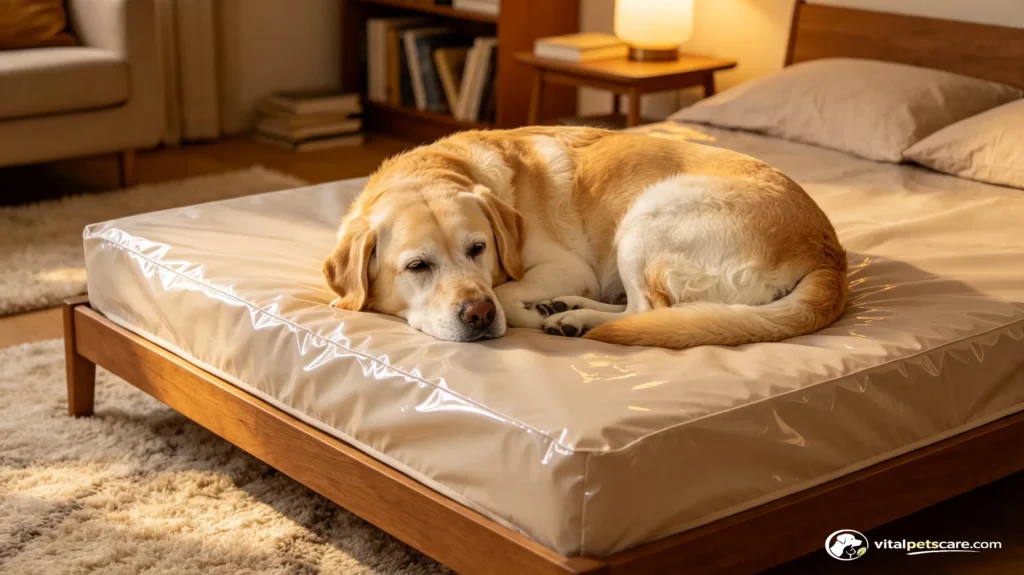
4. Washable, Absorbent Bedding
Waterproof or absorbent bed covers make cleanup easier and protect your dog’s regular bedding. This small change reduces stress for both of you.
5. Track Patterns to Share with Your Vet
Noting when accidents happen, how often, and whether your dog seems aware of them helps your vet diagnose faster. This is one of the most useful things you can do before your appointment.
When to See a Vet
Any new incontinence in a senior dog deserves a vet visit, even if it seems mild. This helps rule out infections or illness before assuming it’s simply age-related.
Watch closely if incontinence comes with increased thirst, changes in urine color, or signs of discomfort while urinating. These combinations point to something beyond normal muscle weakening.
Bowel incontinence paired with confusion or disorientation is worth mentioning too, since it may connect to cognitive changes. A full picture helps your vet find the right cause faster.
Most causes of incontinence are very manageable once properly diagnosed. Getting an early answer usually means a simpler, more effective treatment plan.
Frequently Asked Questions
What are the most common senior dog incontinence causes?
Weakened bladder muscles, hormone-related changes after spaying, and underlying illness are the most common causes. A vet visit helps identify which one applies.
Is urinary incontinence in senior dogs treatable?
Yes, many cases respond well to veterinary treatment, especially hormone-related incontinence. Early diagnosis usually leads to better results.
What is USMI in dogs?
USMI stands for Urethral Sphincter Mechanism Incompetence, a condition linked to reduced estrogen after spaying. It’s one of the more treatable causes of incontinence.
Why does my senior dog leak urine only while sleeping?
The bladder sphincter relaxes more fully during rest than while awake. This makes sleeping one of the most common times for involuntary leaking.
How can I tell if my dog is incontinent or just marking?
Incontinence usually happens involuntarily while resting, while marking is deliberate and often tied to a trigger. Dogs with incontinence often seem unaware it happened.
What is bowel incontinence in elderly dogs caused by?
It’s often linked to weakened rectal muscles, nerve issues, or cognitive decline. Digestive problems can also make bowel control more difficult.
Can cognitive decline cause incontinence in senior dogs?
Yes, some dogs forget normal bathroom routines as cognitive decline progresses. This is different from purely physical, muscle-related incontinence.
Are doggy diapers a good solution for incontinence?
Yes, they help manage accidents while the underlying cause is diagnosed and treated. They’re a practical tool, not a substitute for veterinary care.
Does spaying cause incontinence in all dogs?
No, only some spayed dogs develop this hormone-related condition. It’s a known but not universal risk associated with spaying.
Can a UTI cause incontinence in senior dogs?
Yes, urinary tract infections are a common and treatable cause of sudden incontinence. A simple urine test can usually confirm this.
How often should I take my senior dog outside if they’re incontinent?
More frequent breaks, especially before bed and after waking, can help reduce accidents. This works best alongside proper veterinary treatment.
Is incontinence a normal part of aging in dogs?
Not exactly — while it becomes more common with age, it usually points to a specific, often treatable cause. It shouldn’t be dismissed as simply “old age.”

