
Noticing senior dog cloudy eyes can be worrying. It’s natural to assume the worst — like cataracts — but the truth is more nuanced.
Cloudiness in a senior dog’s eyes can mean several different things. Some are normal aging, while others need veterinary attention.
This guide walks through the real causes, how to tell them apart, and when to be concerned. By the end, you’ll know exactly what you’re looking at.
What Causes Senior Dog Cloudy Eyes?
There are a few common reasons why a senior dog cloudy eyes appear. The most frequent are nuclear sclerosis (a normal aging change), cataracts (a lens opacity condition), and dry eye syndrome.
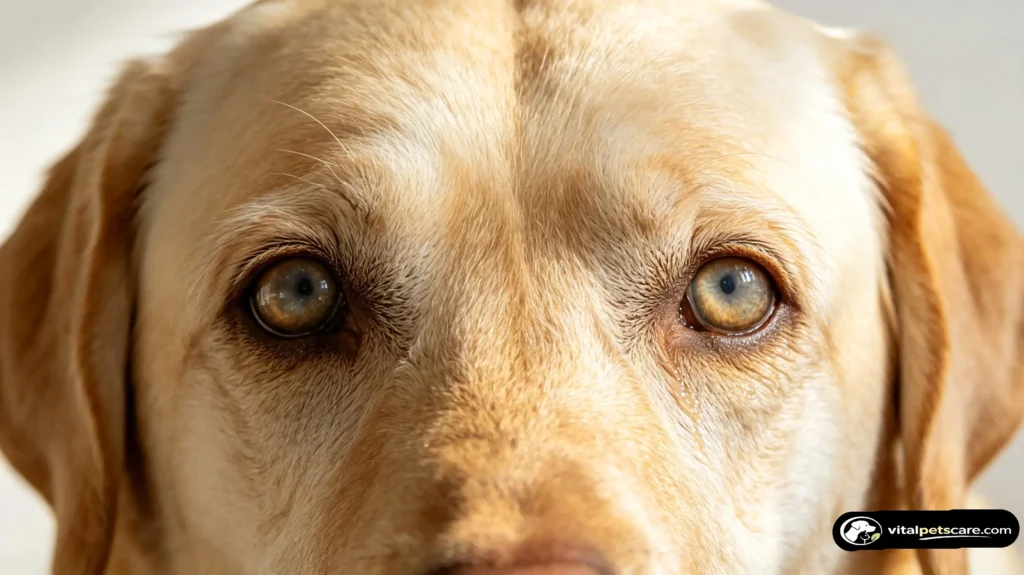
Each cause looks slightly different when you look closely, and each one is handled differently. Understanding which one you’re dealing with matters for your next steps.
The good news is that cloudiness alone doesn’t automatically mean your dog’s vision is failing. Sometimes it’s just how the lens changes with age.
Nuclear Sclerosis vs. Cataracts — What’s the Real Difference?
These two conditions are constantly confused, even by some dog owners. But they’re actually quite different, and knowing the difference helps you respond correctly.
Nuclear sclerosis is a normal, age-related hardening of the lens center. It looks like a bluish-gray haze and happens to most senior dogs eventually. Vision loss is usually minimal, and it doesn’t require treatment.
Cataracts are cloudiness caused by changes in lens proteins that block light. They can develop quickly and often lead to more noticeable vision loss. Cataracts are more likely to need veterinary attention or even surgery.
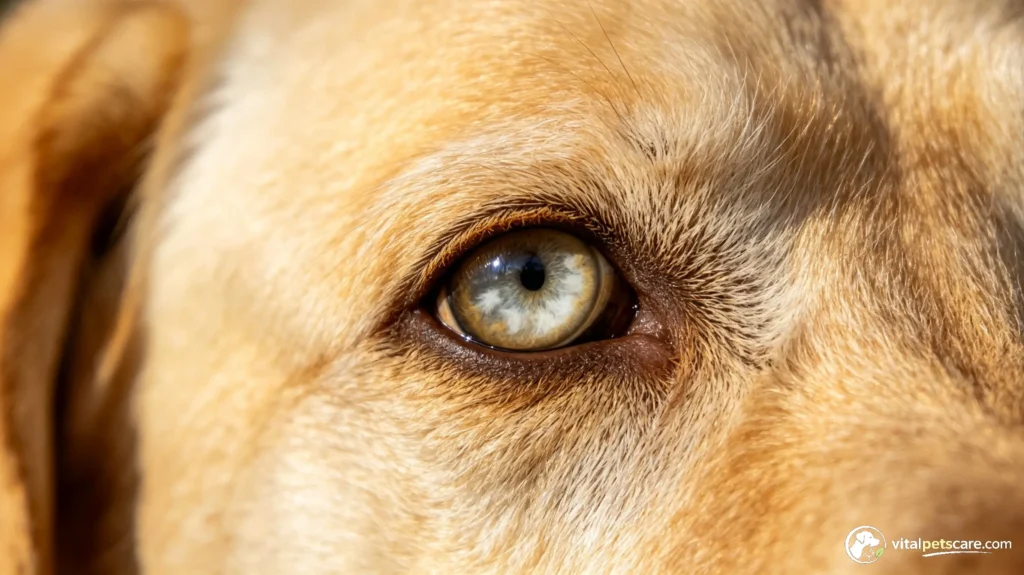
A vet can tell them apart easily during an eye exam. The key difference: nuclear sclerosis is normal aging, while cataracts are a medical condition worth monitoring closely.
Is My Senior Dog’s Vision Getting Worse? Signs to Watch For
Cloudiness alone doesn’t always mean failing vision. But there are specific signs that point to senior dog vision getting worse beyond just a cosmetic change.
Watch for hesitation in dim lighting, bumping into furniture, reluctance to climb stairs, or moving more cautiously around the house. These are clearer signs that sight is actually declining, not just appearing different.
If cloudiness is paired with discharge, redness, or visible swelling around the eye, that’s worth a quicker vet visit. These combinations suggest something beyond normal aging like nuclear sclerosis.
Your dog’s behavior tells you more than appearance alone. If they’re navigating normally and acting confident, the cloudiness might just be cosmetic.
Common Eye Problems in Senior Dogs Beyond Cloudiness
Cloudy eyes are just one of several ocular issues senior dogs face. Dry eye syndrome is another common problem, causing discharge, redness, and discomfort around the eye area.
Glaucoma is less common but more serious — it’s increased eye pressure that can damage the optic nerve. Early signs include redness, cloudiness, and sometimes visible squinting or pain.
If you’ve read our guide on senior dog pain signs, eye discharge and sensitivity to touch around the eyes were mentioned as possible pain indicators. These eye problems can definitely be part of that picture.
Understanding these different conditions helps you describe symptoms clearly to your vet, which leads to faster diagnosis and better care.
How to Support a Senior Dog with Vision Loss
1. Keep Home Layout Consistent
Dogs with vision loss rely heavily on memory and scent. Moving furniture or changing your home layout confuses them more than it does sighted dogs.
2. Use Night-Lights in Dark Areas
Low-level lighting helps a dog with declining ocular function navigate better, especially at night. This is especially helpful for dogs also showing senior dog cloudy eyes.
3. Add Protective Barriers
Baby gates or barriers around stairs and drop-offs prevent accidents. This gives a vision-impaired dog confidence to move around safely.
4. Stick to Consistent Routines
Predictable schedules and paths help your dog stay oriented. This reduces stress and helps them adapt to vision changes gradually.
5. Keep Communication Consistent
Use the same voice cues and touches. Your dog will rely more on hearing and feeling as vision declines, so consistency becomes even more important.
When to See a Vet
If cloudiness appears suddenly over just a few days, it’s worth a vet check. Rapid changes are more likely to signal cataracts or another condition needing attention.
Watch closely if vision loss comes with eye redness, discharge, or visible pain. These combinations suggest something beyond normal nuclear sclerosis and shouldn’t wait.
Any change in behavior paired with eye cloudiness is worth mentioning. Your vet can examine the lens, check eye pressure, and rule out conditions that do need treatment.
Early diagnosis often means more treatment options. Don’t assume cloudiness is just cosmetic without at least one professional eye exam.
Frequently Asked Questions
What causes cloudy eyes in senior dogs?
The most common causes are nuclear sclerosis (normal aging), cataracts (lens opacity), and dry eye syndrome. A vet exam can identify which one applies.
Are cloudy eyes in senior dogs normal?
Cloudiness can be normal if it’s nuclear sclerosis. But any sudden cloudiness should be checked by a vet to rule out cataracts or other conditions.
What’s the difference between nuclear sclerosis and cataracts?
Nuclear sclerosis is a normal hardening of the lens with minimal vision loss. Cataracts involve lens protein changes that block light and often cause more noticeable vision loss.
Is my senior dog’s vision getting worse if their eyes are cloudy?
Not necessarily — cloudiness alone doesn’t always mean declining vision. Behavior changes like bumping into things are clearer signs of actual vision loss.
Can cataracts in senior dogs be treated?
Yes, veterinary treatment options exist, including eye drops and potentially surgery in some cases. Early diagnosis helps determine the best approach.
What are the signs of vision loss in senior dogs?
Hesitation in dim light, bumping into furniture, reluctance to climb stairs, and moving more cautiously are clear signs of declining ocular function.
Is dry eye syndrome common in senior dogs?
Yes, it’s one of the more common eye problems in older dogs. It causes discharge, redness, and discomfort around the eye area.
What is glaucoma in senior dogs?
It’s increased eye pressure that can damage the optic nerve. Signs include redness, cloudiness, and sometimes visible pain or squinting.
Should I worry if my senior dog has cloudy eyes but seems fine?
If your dog’s behavior and navigation haven’t changed, cloudiness might just be cosmetic. But one vet exam is still worth it to confirm what you’re seeing.
How can I help a senior dog with vision loss?
Keep your home layout consistent, add night-lights, use protective barriers, maintain routines, and rely more on voice cues and touch for communication.
Do all senior dogs develop cloudy eyes?
Nuclear sclerosis is very common in older dogs, but not all develop it to the same degree. Individual variation is normal.
When should I take my senior dog to the vet for cloudy eyes?
If cloudiness appears suddenly, comes with redness or discharge, or is paired with behavior changes, a vet visit shouldn’t wait. Otherwise, a routine eye exam is still recommended.

