

Dogs are good at hiding pain. It’s an old instinct from the wild, where looking weak was risky.
That’s why it’s easy to miss when your dog is hurting. This guide will help you know if your senior dog is in pain, even when the signs are small.
We’ll walk through the most common signs, one by one. By the end, you’ll feel more confident about what’s normal aging — and what’s not.
Why Senior Dogs Hide Pain
In the wild, a weak animal was an easy target. So dogs learned to hide pain, even from people who love them.
This instinct doesn’t go away with age. Your dog may still act “normal” even when something hurts.
That’s why you need to know how to tell if a senior dog is in pain by watching small changes, not waiting for obvious signs. The next section covers exactly what to look for.
10 Signs Your Senior Dog May Be in Pain
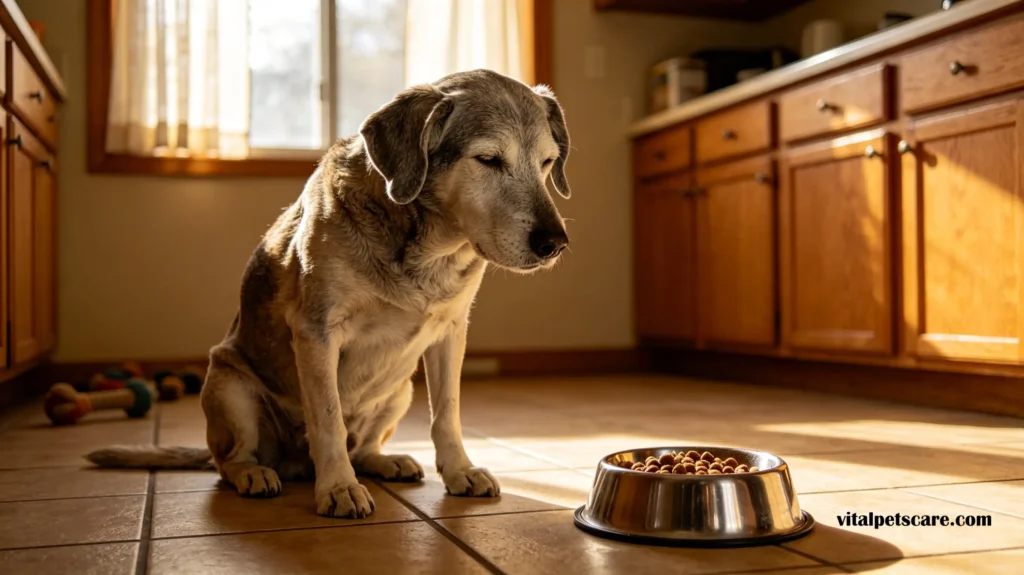
1. Reluctance to Jump, Climb Stairs, or Move Normally
If your dog hesitates before jumping on the couch, that’s often the first sign. This is one of the clearest signs your senior dog is in pain.
Stiff joints or sore muscles make movement harder. Watch for slow starts or avoiding stairs altogether.
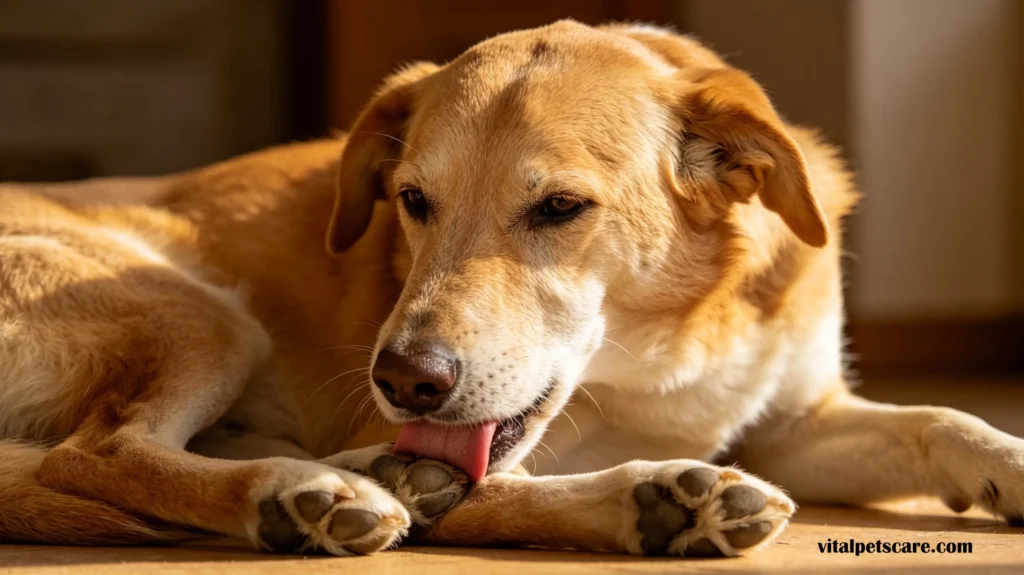
2. Excessive Licking or Chewing at One Area
Dogs often lick or chew a spot that hurts. It’s their way of trying to soothe the pain.
If you notice constant licking on one paw or joint, don’t ignore it. This is a sign your senior dog is in pain, not just a habit.
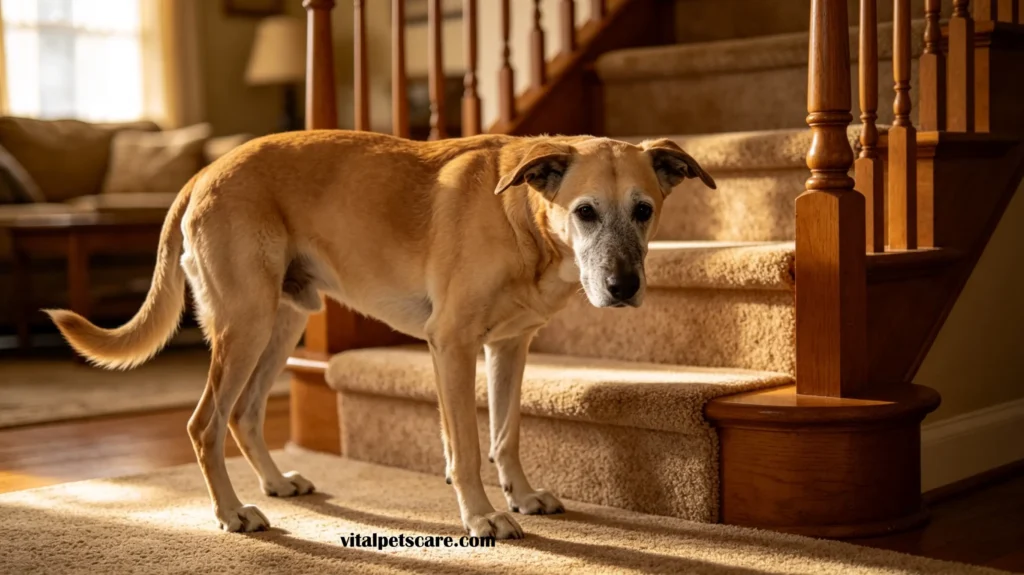
3. Changes in Posture or a Hunched Back
A healthy dog stands tall and relaxed. A hunched back or lowered head can mean discomfort.
This is easy to miss at first. Compare photos from a few months ago if you’re unsure.
4. Increased Irritability or Sensitivity to Touch
A normally gentle dog may snap or growl when touched. This isn’t bad behavior — it’s often pain.
Pay attention to where they react. That spot is usually the problem area.
5. Panting or Restlessness Without Exertion
Heavy panting after a walk is normal. Panting while resting is not.
This is a common way to tell if your senior dog is in pain, especially if paired with pacing or trouble settling down.
6. Loss of Appetite or Sudden Weight Loss
Pain can make eating harder, especially if it’s dental pain. A dog in pain may eat less or skip meals.
Sudden weight loss is always worth watching closely. It rarely happens without a reason.
7. Withdrawal from Family Interaction or Hiding
A senior dog that suddenly avoids people may be in pain. Hiding is a natural response to feeling unwell.
This is especially true if your dog was social before. Trust the change in behavior.
8. Vocalizing — Whining, Groaning, or Yelping Unexpectedly
Sounds are one of the more obvious signs a senior dog is in pain. A yelp when standing up is a clear signal.
Even soft groaning during rest can mean something. Dogs don’t cry out without reason.
9. Changes in Sleep Patterns
Pain can disrupt normal sleep. Your dog may sleep more, or struggle to get comfortable at night.
Restlessness, shifting positions often, or waking up whining are all worth noting.
10. Excessive Gas, Bloating, or Digestive Changes
Digestive issues can sometimes point to pain, not just diet. Bad gas paired with other signs is worth watching.
We’ll cover this exact situation in detail next.
Senior Dog Skinny with Bad Gas — Is He in Pain?
If your dog is losing weight and has bad gas, pain could be part of the picture. This combination often points to a digestive problem.
Dental pain can make chewing harder, leading to weight loss. Poor chewing also affects digestion, which can cause gas.
Other causes include pancreatitis or trouble absorbing nutrients. Both become more common in senior dogs.
This combination shouldn’t be ignored or assumed as “just aging.” A vet visit can rule out pain and find the real cause.
How to Confirm It’s Pain (Not Just Aging)
Aging and pain can look similar, which makes this tricky. The best way to tell the difference is by tracking patterns.
Keep a simple log for a few days. Note when your dog seems slow, avoids movement, or acts differently than usual.
Filming your dog walking can also help. A vet can spot subtle limping that’s easy to miss in person.
If symptoms are constant, not occasional, that’s a stronger sign of pain. Aging alone tends to be more gradual and steady.
When to See a Vet
Some signs mean you should call the vet right away. Don’t wait if your dog suddenly can’t stand or walk.
Other red flags include sudden crying out, refusing food for more than a day, or heavy panting at rest. These are not “wait and see” situations.
If you’ve noticed 2 or more signs from the list above, book a visit soon. Early treatment often works best.
When in doubt, trust your gut. You know your dog better than anyone.
While you wait for a vet visit, small changes can bring comfort. A soft, supportive bed helps ease pressure on sore joints.
Ramps or steps can help your dog avoid jumping. This reduces strain on painful areas.
Vet-approved joint supplements may also help, especially for arthritis-related pain. Ask your vet before starting anything new.
For more mobility tips, check our full guide on senior dog joint health and mobility. (Link this to the Mobility & Joint Health section of your pillar page.)
Frequently Asked Questions
How can I tell if my senior dog is in pain?
Watch for stiffness, less movement, changes in appetite, or new irritability. These are common signs your senior dog is in pain.
What does silent suffering look like in dogs?
It often looks like small changes — quiet withdrawal, less enthusiasm, or subtle limping. Dogs rarely show pain in obvious ways.
Can a senior dog be in pain without limping?
Yes. Pain can show up as appetite loss, irritability, or restlessness, with no limping at all.
What are the first signs of pain in an aging dog?
Early signs are often small — slower movement, hesitating before stairs, or mild stiffness after resting. These are easy to miss at first.
Do senior dogs whine when in pain?
Some do. Whining, groaning, or yelping when moving are all possible signs. But many dogs stay quiet even when hurting.
How long can a dog hide pain?
Dogs can hide pain for weeks or even months. This is why small behavior changes matter more than waiting for obvious symptoms.
What household changes help a dog in pain?
Soft bedding, ramps for furniture, and non-slip floors all help. These small changes reduce strain on sore joints.
Is heavy breathing a sign of pain in dogs?
Yes, especially if it happens while resting. Panting without exercise can point to discomfort or stress.
Should I give my senior dog pain medication without a vet visit?
No. Many human pain medications are unsafe for dogs. Always get a vet’s guidance before giving anything for pain.
Can arthritis in senior dogs be reversed?
No, but it can be managed well. Supplements, weight control, and gentle exercise can slow progress and ease discomfort.

