
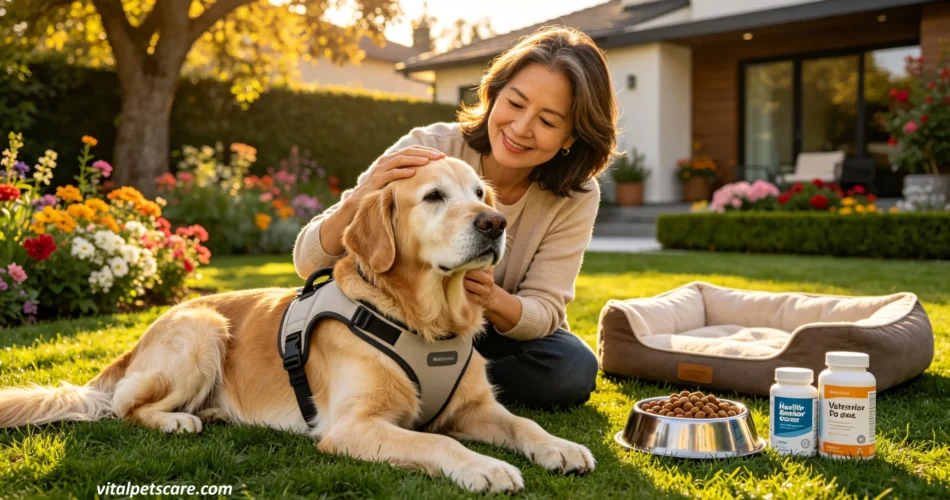
Watching a dog move from their energetic middle years into their senior stage brings a mix of emotions — pride in the years you’ve shared, and a quiet worry about what’s ahead. The good news: most of the changes that come with aging are manageable, and many are even preventable with the right care.
Most dogs are considered “senior” starting around 7 years old, though this varies significantly by size — large and giant breeds (like Great Danes or Mastiffs) often enter their senior years by 5-6, while small breeds (like Chihuahuas or Toy Poodles) may not show signs of aging until 10-12.
This guide walks through everything you need to know about caring for an aging dog — from recognizing early signs of pain or cognitive decline, to adjusting nutrition, supporting mobility, and understanding when it’s time to make harder decisions. Whether your dog just crossed into their senior years or has been there for a while, you’ll find practical, vet-informed guidance for every stage.
Signs Your Senior Dog May Be Aging or in Pain
Dogs are experts at masking discomfort — it’s an instinct left over from their wild ancestors, where showing weakness could mean danger. That’s why it’s so important to know the subtle signs of aging or pain, since your dog won’t always show you the obvious ones.
Signs a Senior Dog Is in Pain
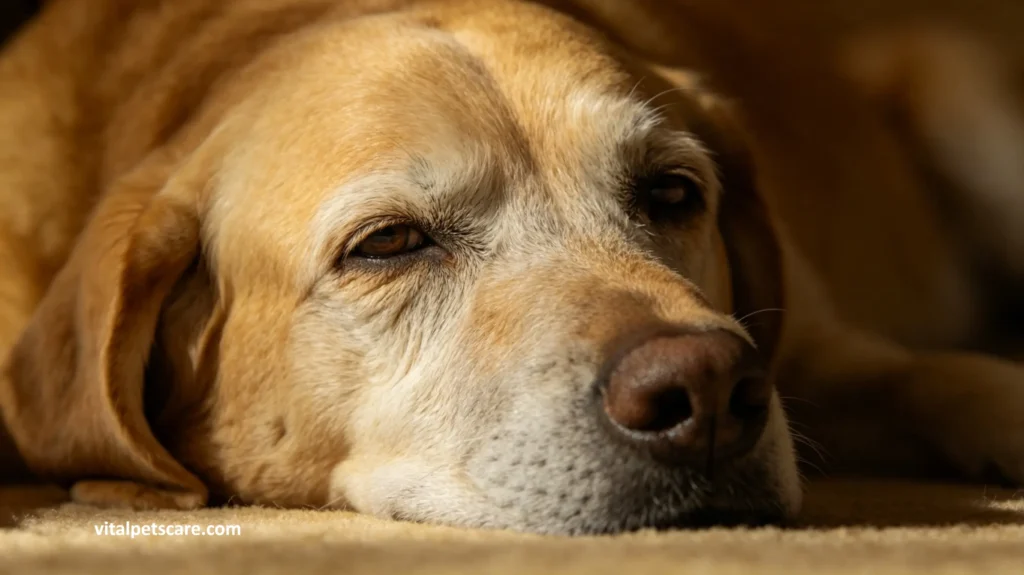
Pain in older dogs rarely looks dramatic. Instead, watch for:
- Reluctance to jump on furniture or climb stairs they used to manage easily
- Excessive licking of a specific joint or area
- Changes in posture — a hunched back or lowered head while walking
- Increased irritability when touched in certain spots
- Panting or restlessness without physical exertion
If you notice two or more of these together, it’s worth a vet visit — pain is very treatable, but only once identified.
Senior Dog Sudden Confusion — Causes
Sudden disorientation — like staring blankly at walls, getting “stuck” in corners, or seeming lost in a familiar room — can be an early sign of Canine Cognitive Dysfunction (CCD), often compared to dementia in humans. It can also occasionally signal a UTI, vision loss, or a neurological issue, so sudden confusion always deserves a vet check rather than a wait-and-see approach.
Senior Dog Stiff in the Morning — What It Means
Morning stiffness that eases as your dog moves around is one of the most common early signs of arthritis. It’s especially common in larger breeds and dogs who were very active earlier in life. A soft, supportive bed and a short indoor warm-up walk before heading outside can make a noticeable difference.
Senior Dog Cognitive Decline Signs
Beyond confusion, cognitive decline can show up as:
- Forgetting previously known commands
- Disrupted sleep-wake cycles (awake at night, sleeping through the day)
- Reduced interest in play or family interaction
- House-training accidents despite no medical cause
Early diagnosis matters — several dietary and supplement interventions can slow progression when started early.
Senior Dog Losing Hearing or Vision — What to Watch For
Gradual hearing loss often shows up first as your dog failing to respond to their name from another room, while vision loss may appear as bumping into furniture in low light or hesitating on stairs. Both are common and manageable — dogs adapt remarkably well once you adjust cues (hand signals for hearing loss, keeping furniture layout consistent for vision loss).
Mobility & Joint Health in Aging Dogs
Mobility issues are one of the most common — and most manageable — challenges of aging in dogs. With the right combination of support, supplementation, and small home adjustments, most senior dogs can stay comfortable and active well into their later years.
Senior Dog Back Legs Giving Out — Causes and Solutions
Weakness or buckling in the back legs is often linked to arthritis, degenerative myelopathy, or general muscle loss (sarcopenia) that comes with age. A vet visit is important to rule out neurological causes, but in many cases, supportive solutions like orthopedic harnesses, non-slip flooring, and controlled exercise can significantly improve stability.
Senior Dog Arthritis Home Remedies
While veterinary treatment (like anti-inflammatory medication) is often necessary for moderate-to-severe arthritis, several home strategies can ease day-to-day discomfort:
- Warm compresses on stiff joints
- Orthopedic dog beds that reduce pressure points
- Gentle, consistent low-impact movement rather than long rest periods
- Weight management, since extra pounds put direct strain on joints
Best Joint Supplements for Senior Dogs
The most commonly recommended joint-support ingredients include:
- Glucosamine and chondroitin — supports cartilage health
- Omega-3 fatty acids (fish oil) — reduces joint inflammation
- Green-lipped mussel extract — a natural anti-inflammatory
- MSM (methylsulfonylmethane) — supports joint flexibility
Always introduce supplements gradually and check with your vet, especially if your dog is on other medications.
Senior Dog Struggling to Get Up — How to Help
If your dog hesitates or needs multiple attempts to stand, small environmental changes help immediately: raised food bowls (less strain on the neck and joints while eating), rugs or yoga mats over slippery floors, and a supportive sling or harness for dogs who need help on stairs or getting into the car.
Low-Impact Exercise Routines for Senior Dogs
Exercise shouldn’t stop as your dog ages — it should adapt. Good low-impact options include:
- Short, frequent walks instead of one long walk
- Swimming (excellent for joint-friendly muscle maintenance)
- Gentle indoor play sessions with soft toys
- Sniffing walks — mentally stimulating with minimal physical strain
Senior Dog Stairs Difficulty — Practical Solutions
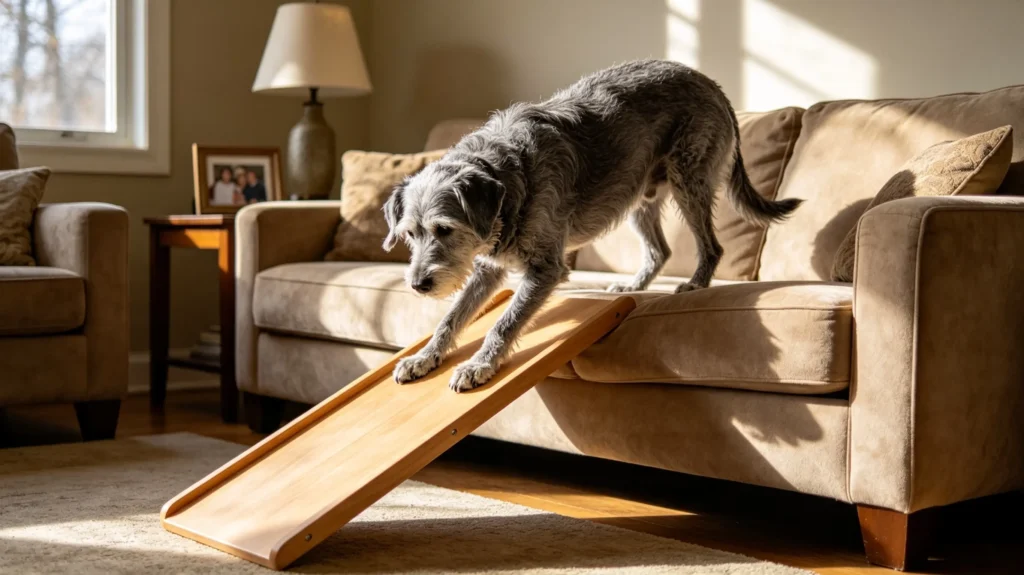
If stairs have become a struggle, consider a pet ramp for high-traffic areas (like getting into the car or onto a bed), non-slip stair treads, or simply blocking off staircases and keeping your dog on one level of the home when unsupervised.
Nutrition & Feeding for Senior Dogs
As metabolism slows and organ function shifts with age, nutrition becomes one of the most powerful tools for keeping a senior dog comfortable and healthy. What worked in their adult years often needs adjusting now.
Best Food for Senior Dogs with Kidney Issues
Dogs with declining kidney function typically benefit from moderately reduced, high-quality protein (not eliminated — just easier on the kidneys to process), lower phosphorus levels, and added omega-3s to support kidney health. Prescription renal diets are often recommended once kidney disease is diagnosed — always confirm with a vet before switching.
Senior Dog Low-Protein Diet — Myth or Fact?
This is one of the most misunderstood areas of senior nutrition. Healthy senior dogs generally do not need less protein — in fact, adequate protein helps prevent age-related muscle loss. Reduced protein is only necessary for dogs with diagnosed kidney disease, not as a default “senior” precaution.
Senior Dog Weight Management Diet
Slower metabolism combined with reduced activity makes weight gain common in senior dogs — and extra weight directly worsens joint pain. Look for senior-specific formulas with fewer calories per cup but similar protein levels, and consider measuring meals precisely rather than free-feeding.
Senior Dog Probiotic Supplement Benefits
Digestive efficiency can decline with age, and probiotics help support gut bacteria balance, nutrient absorption, and stool consistency. They’re particularly useful for senior dogs experiencing occasional soft stool or sensitivity to diet changes.
Senior Dog Feeding Schedule Changes as Dogs Age
Many owners find that splitting meals into two or three smaller portions (rather than one large meal) is easier on an aging digestive system and helps maintain steady energy levels throughout the day.
Common Health Changes & When to See a Vet
Some health shifts are a normal part of aging — others are early warning signs that deserve prompt attention. Knowing the difference helps you act quickly when it matters.
Senior Dog Weight Loss — Causes
Unexplained weight loss can stem from dental pain (making eating uncomfortable), organ issues like kidney or liver disease, or reduced nutrient absorption. Any noticeable weight drop over a few weeks warrants a vet visit, even if your dog seems otherwise fine.
Senior Dog Panting Heavily at Rest
Occasional panting is normal, but frequent heavy panting while resting can indicate pain, heart or respiratory issues, or Cushing’s disease. It’s worth tracking when it happens — after activity, only at night, etc. — to help your vet narrow down the cause.
Senior Dog Incontinence — Causes and Management
Leaking urine, especially during sleep, is often linked to weakened bladder muscles or hormonal changes rather than a training issue. Management options range from more frequent bathroom breaks to vet-prescribed medications that improve bladder control.
Senior Dog Dental Problems — Signs to Watch
Bad breath, difficulty chewing, pawing at the mouth, or visible tartar buildup all point to dental disease — extremely common in senior dogs and often underdiagnosed since dogs rarely show obvious pain.
Senior Dog Vet Checkup Frequency (Recommended Schedule)
Most vets recommend senior dogs (7+ years, or 5+ for large breeds) move from annual to twice-yearly checkups, allowing earlier detection of issues like kidney decline, arthritis, or dental disease before they become serious.
Behavior & Emotional Changes in Older Dogs
Aging affects more than the body — many senior dogs experience real shifts in mood, anxiety levels, and sleep patterns that are just as important to address as physical symptoms.
Senior Dog Anxiety at Night — Causes
Nighttime anxiety often ties back to cognitive decline, vision or hearing loss (making the dark more disorienting), or discomfort that becomes more noticeable when it’s quiet. A consistent bedtime routine and a comfortable, familiar sleeping space can help ease this.
Senior Dog Dementia Symptoms
Beyond confusion, watch for pacing, staring at walls, disrupted sleep cycles, and reduced recognition of family members. Canine Cognitive Dysfunction is progressive but manageable, especially with early dietary and environmental support.
Senior Dog Nighttime Restlessness — Causes
Restlessness at night can stem from joint discomfort that worsens after a day of activity, needing more frequent bathroom trips, or the same cognitive shifts mentioned above. Ruling out pain is always the first step.
Senior Dog Sleeping More Than Usual — Is It Normal?
Yes, to a point — senior dogs naturally sleep more as energy needs decrease. However, if increased sleep comes with reduced appetite, difficulty waking, or disinterest in normal activities, it’s worth mentioning to your vet.
Quality of Life & End-of-Life Care
This is often the hardest part of caring for a senior dog — but having clear information makes these decisions more manageable, and helps ensure your dog’s final years, months, or days are as comfortable as possible.
Senior Dog Quality of Life Checklist
A good quality of life is generally measured across a few key areas: pain levels, appetite, mobility, hygiene, happiness, and more good days than bad.
Senior Dog Hospice Care at Home
Hospice care focuses on comfort rather than cure — pain management, a peaceful environment, and maintaining normal routines as much as possible. Many vets now offer in-home palliative care consultations to support this stage.
Senior Dog Pain Management Options
Options range from vet-prescribed anti-inflammatories and pain medications to complementary approaches like acupuncture, hydrotherapy, and joint supplements — often used in combination for the best comfort outcomes.
Recognizing When It’s Time
This is deeply personal, but most vets suggest tracking your dog’s “good days vs. bad days” over time. When bad days consistently outnumber good ones despite pain management, it’s usually a sign to have an honest conversation with your veterinarian about next steps.
Frequently Asked Questions
What age is considered a senior dog?
Generally 7+ years, though large and giant breeds may be considered senior as early as 5-6, while small breeds often aren’t seniors until 10-12.
How often should a senior dog see the vet?
Twice a year is generally recommended, versus once a year for younger adult dogs.
What are the first signs of aging in dogs?
Common early signs include slower movement, more sleep, mild stiffness after rest, and graying around the muzzle.
Can senior dogs still exercise?
Yes — regular, low-impact exercise (short walks, swimming, gentle play) is important for maintaining muscle mass and joint mobility, just adjusted for their energy and comfort level.
