

A dog limping on and off is one of the more confusing symptoms to deal with. It comes and goes, which makes it easy to dismiss — until it happens again.
The truth is the pattern of limping tells you more than the limp itself. Morning limping means something different from limping after a walk, or limping that appears randomly.
This guide breaks down each pattern clearly, what it likely means, and when it’s time to take action. You’ll know exactly what to watch for going forward.
Why Does My Dog Limp On and Off?
Intermittent limping is different from a constant limp. A dog limping on and off usually means the underlying cause is triggered by specific conditions — movement, rest, temperature, or activity level.
This is actually useful information. A limp that comes and goes often points to joint inflammation, soft tissue injury, or early arthritis rather than a fracture or severe injury.
Understanding what triggers the limp helps narrow down the cause faster. The next section breaks down the most common patterns and what each one typically means.
Dog Limping On and Off — What the Pattern Tells You

Limping Worse in the Morning (Arthritis Pattern)
Morning limping that eases with movement is one of the clearest arthritis signals. Joints stiffen overnight without movement, making the first steps of the day the hardest.
If your dog walks it off within 20-30 minutes, this pattern almost always points to joint inflammation or early arthritis. For more on this pattern, our guide on senior dog stiff in the morning remedies covers it in detail.
Limping Worse After Exercise or Walking
A limp that appears or worsens after activity points to a different cause. This pattern often signals a soft tissue injury, ligament strain, or a condition like panosteitis in younger dogs.
The key sign here is that rest brings relief. If your dog seems fine before a walk but limps afterward, activity level is directly triggering the issue.
Random Limping That Comes and Goes
This is the hardest pattern to pin down. Random, unpredictable limping can point to early joint disease, a partially healed injury, or even cartilage changes that are sensitive to pressure changes.
Tracking when it happens — time of day, after which activities, weather conditions — helps your vet identify the cause much faster.
Dog Limping Back Leg On and Off
Back leg limping that comes and goes most commonly points to hip or knee joint issues. Dog limping back leg on and off is often linked to hip dysplasia, arthritis in the knee, or a partial cruciate ligament tear.
A partial cruciate tear is worth knowing about specifically. Unlike a full tear, which causes constant severe lameness, a partial tear can cause intermittent limping that seems to improve with rest but returns with activity.
If the back leg limping is paired with muscle loss or weakness, our guide on senior dog back legs giving out covers that overlap in more detail. Both conditions often develop alongside each other in senior dogs.
Dog Limping Off and On Front Leg
Front leg limping on and off points to a slightly different set of causes. Dog limping off and on front leg is often linked to shoulder or elbow joint issues, soft tissue injuries, or a condition called osteochondrosis in younger dogs.
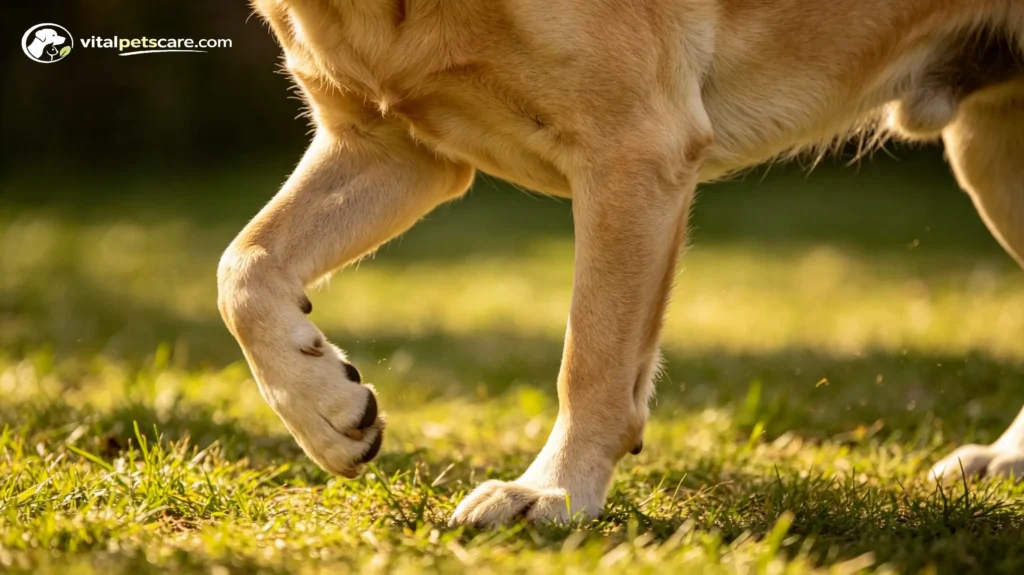
In senior dogs specifically, front leg limping often comes from compensating for back leg pain. When the hind end hurts, dogs shift weight forward, putting extra strain on the front legs over time.
This compensation pattern is easy to miss. If your dog has existing back leg issues, front leg limping may be a secondary symptom rather than a separate cause.
Dog Limping On and Off After Walking — What It Means
This is one of the most commonly searched patterns, and it has a fairly consistent explanation. Dog limping on and off after walking usually means the joint or soft tissue is fine at rest, but struggles under sustained weight-bearing activity.
This is different from a limp that appears before any activity. Post-walk limping specifically points to exercise-triggered joint inflammation or a soft tissue injury that flares under pressure.
Shortening walk length and monitoring whether limping reduces is a useful first step. If limping after walks becomes more frequent or takes longer to resolve, it’s worth a vet visit to check for underlying joint disease.
Is Intermittent Limping Serious?
Not always, but it depends on the pattern and how long it’s been happening. A dog limping on and off for just a day or two after unusual activity is often minor and resolves on its own.
Limping that keeps returning over several weeks is a different story. This usually means something is consistently aggravating a joint, ligament, or soft tissue — and rest alone won’t fix it.
The seriousness also depends on what comes with it. Limping paired with swelling, heat in the joint, or sudden weight-bearing failure is more urgent than limping alone.
According to the American Veterinary Medical Association, any lameness lasting more than 24 hours or recurring regularly should be evaluated by a veterinarian. This is a useful benchmark for deciding when to act.
How to Help a Dog That Limps On and Off
1. Reduce Activity Temporarily
Rest is the first step for most intermittent limping cases. Short, controlled walks replace longer or more intense activity until the pattern is better understood.
2. Monitor and Track the Pattern
Note when limping happens, how long it lasts, and what triggered it. This information is genuinely useful — it helps your vet diagnose faster than a description alone.
3. Check Weight and Body Condition
Extra weight adds direct pressure to already sensitive joints. Managing body weight is one of the most effective ways to reduce the frequency of dog limping on and off.
4. Support Joint Health Early
Joint supplements containing glucosamine, chondroitin, and omega-3 fatty acids may help support cartilage health over time. Always check with your vet before starting anything new.
5. Avoid Hard Surfaces During Recovery
Hard floors and concrete put more impact on sore joints than grass or soft ground. Switching walk surfaces temporarily can reduce post-activity limping noticeably.
6. Use Anti-Inflammatory Support if Vet-Approved
Your vet may recommend short-term anti-inflammatory support depending on the cause. Never use human pain medication — many are toxic to dogs and can cause serious harm.
When to See a Vet
If limping has been coming and going for more than two weeks, it’s time for a proper evaluation. Recurring patterns rarely resolve without identifying and addressing the root cause.
Watch closely if limping suddenly becomes constant or your dog refuses to put weight on the leg at all. This shift from intermittent to persistent is a clear escalation signal.
Swelling, heat, or visible deformity around a joint means don’t wait. These signs point to something more acute that needs same-day attention.
Any dog limping on and off that’s getting more frequent over time rather than less deserves a vet visit. Catching joint disease or ligament issues early leads to better long-term outcomes.
Frequently Asked Questions
Why does my dog limp on and off?
Intermittent limping is usually triggered by specific conditions like activity, rest, or temperature. It often points to joint inflammation, soft tissue injury, or early arthritis.
Is it normal for a dog to limp on and off?
Occasional limping after unusual activity can be normal. But recurring or worsening intermittent limping usually points to an underlying cause worth investigating.
What does it mean when a dog limps on and off on their back leg?
This pattern often points to hip dysplasia, knee joint issues, or a partial cruciate ligament tear. A vet exam can confirm which one applies.
Why does my dog limp on and off on their front leg?
Front leg intermittent limping often links to shoulder or elbow joint issues. In senior dogs, it can also result from compensating for back leg pain.
Why does my dog limp after walking but seem fine before?
This post-walk pattern usually means the joint or soft tissue struggles under sustained activity. It’s different from limping that appears before any movement.
Is morning limping different from limping after exercise?
Yes, these patterns point to different causes. Morning limping that eases with movement usually signals arthritis, while post-exercise limping suggests soft tissue or joint stress.
How long should I wait before seeing a vet about intermittent limping?
If limping recurs for more than two weeks or becomes more frequent, a vet visit is recommended. The AVMA suggests any lameness lasting more than 24 hours should be evaluated.
Can weather affect a dog’s limping?
Yes, barometric pressure changes are believed to affect joint fluid and inflammation. Some dogs limp more on cold or rainy days, which often points to arthritis.
Can weight cause a dog to limp on and off?
Yes, extra weight adds direct pressure to joints and soft tissue. Managing body weight often reduces the frequency of intermittent limping noticeably.
Should I give my dog pain medication for intermittent limping?
Never use human pain medication for dogs — many are toxic. Always consult your vet before giving any pain relief, even short-term.
Can joint supplements help a dog that limps on and off?
Yes, supplements containing glucosamine, chondroitin, and omega-3s may help support joint health over time. They work best alongside proper veterinary guidance.
When does intermittent limping become an emergency?
If limping suddenly becomes constant, your dog refuses to bear weight, or you notice swelling and heat around a joint, treat it as urgent. These signs need same-day veterinary attention.

