

Senior dog anxiety at night is one of the most exhausting things to deal with as an owner. You’re both losing sleep, and it’s hard to know where to start.
The good news is there’s almost always a specific reason behind it. Understanding the cause is the first step toward actually fixing it.
This guide walks through why it happens, what the symptoms mean, and what genuinely helps — from simple home changes to vet-guided options. By the end, you’ll have a clear plan to try.
What Causes Senior Dog Anxiety at Night?
Cognitive Decline and Nighttime Disorientation
This is one of the most common causes in older dogs. As cognitive dysfunction progresses, dogs can become confused and disoriented — and darkness makes this significantly worse.
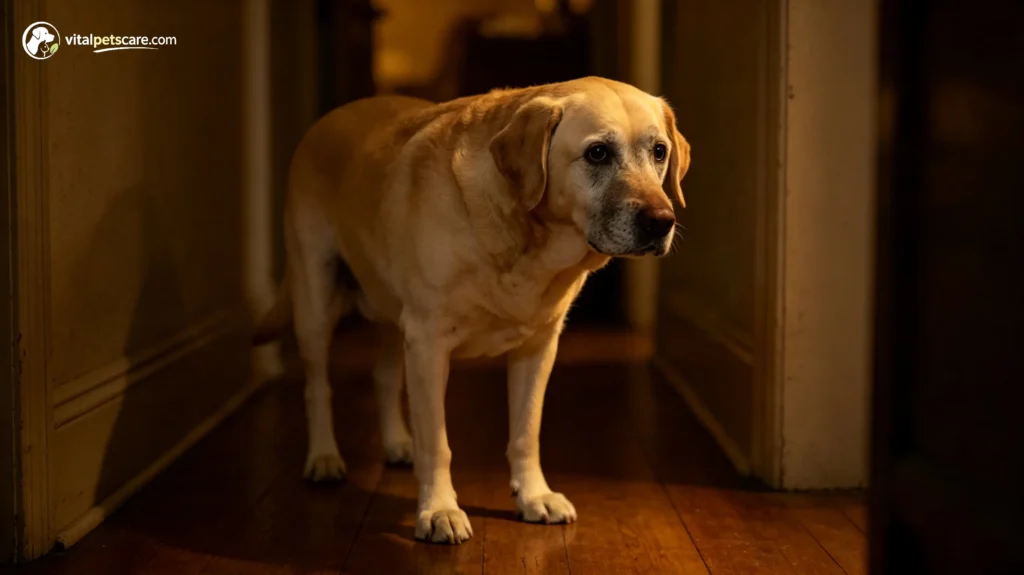
This is closely linked to sundowning, where symptoms intensify in the evening and at night. If you’ve read our guide on senior dog cognitive decline signs, this nighttime pattern is one of the earliest signs covered there.
Pain or Physical Discomfort
Pain tends to feel more noticeable at night, when there are fewer distractions. A dog dealing with arthritis or joint discomfort may become restless and anxious as the night goes on.
If nighttime anxiety is paired with panting or pacing, our article on senior dog panting at night covers this exact overlap in detail.
Vision or Hearing Loss Making Darkness Scarier
Dogs with declining vision or hearing find darkness more disorienting than younger dogs. What used to feel like a safe, familiar space can suddenly feel uncertain and stressful.
This cause is often overlooked, but it’s worth considering alongside cognitive decline.
Disrupted Sleep Cycles
Senior dogs often experience natural shifts in their circadian rhythm. This can lead to increased cortisol levels at night, making it harder to settle — even without any obvious trigger.
Senior Dog Anxiety at Night Symptoms
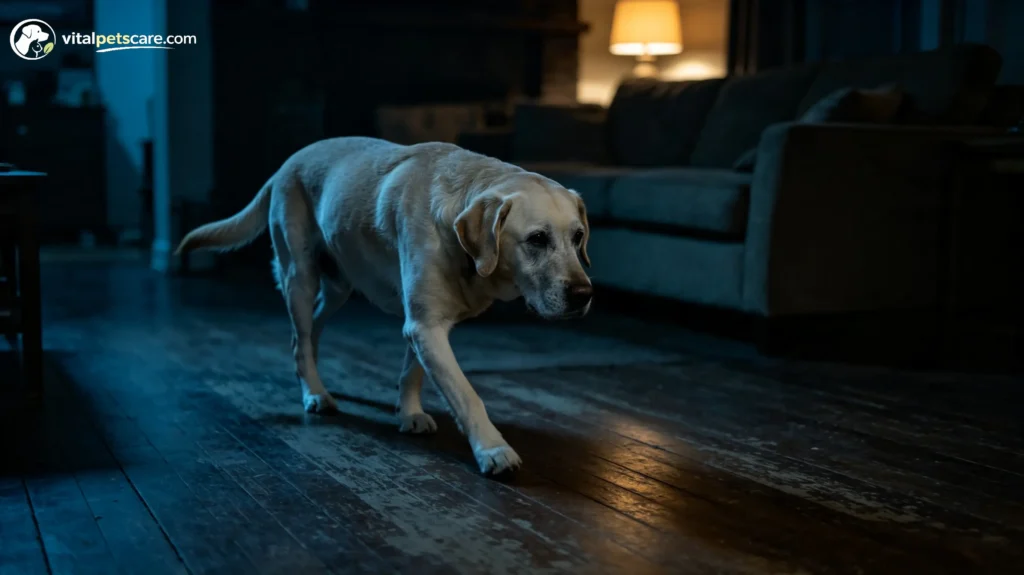
Pacing and Panting
These are the most recognizable senior dog anxiety at night symptoms. Pacing without settling and panting without physical exertion both signal the nervous system is activated.
Senior Dog Nose Dripping Anxiety
A runny or dripping nose can be a physical stress response. Senior dog nose dripping anxiety happens when the body releases stress hormones that affect mucus production.
This is less commonly discussed but genuinely reported by many owners. It’s a subtle sign that anxiety is real, not just behavioral restlessness.
Whining, Howling, or Vocalizing
Sudden vocalizing at night, especially in a dog that wasn’t previously vocal, is a strong anxiety signal. This is also one of the more common signs of cognitive dysfunction in older dogs.
Restlessness and Inability to Settle
Constant position changes, circling, or getting up repeatedly are all signs of nighttime anxiety. This pattern is exhausting and usually gets worse without intervention.
Senior Dog Separation Anxiety — Is It Different?
Yes, separation anxiety is a distinct type worth understanding separately. Senior dog separation anxiety specifically triggers when your dog is left alone, rather than happening generally at night regardless of your presence.
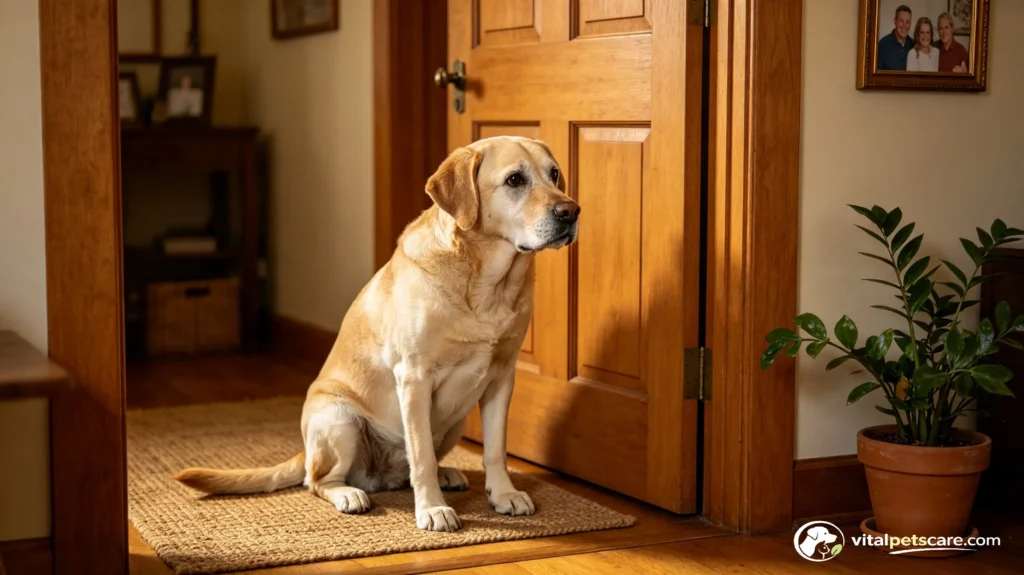
Signs include destructive behavior, excessive barking, or toileting accidents that only happen when you leave. This is different from nighttime anxiety, which can occur even when you’re home and nearby.
That said, the two can overlap. A dog with cognitive decline may feel separation distress more intensely at night, since darkness already feels more disorienting without familiar cues nearby.
How to Calm Senior Dog Anxiety at Night
1. Consistent Bedtime Routine
Predictability reduces anxiety more than almost anything else. A consistent routine — same feeding time, same walk, same bedtime — signals safety to a confused or anxious dog.
2. Night-Lights and Safe Sleeping Space
Low-level lighting helps dogs with vision loss or cognitive decline feel less disoriented. Placing a night-light near your dog’s sleeping area is one of the simplest and most effective changes you can make.
3. Calming Music or White Noise
Soft background sounds can ease nighttime anxiety, especially in dogs with hearing changes. Several studies suggest classical music or white noise reduces stress behaviors in dogs significantly.
4. Gentle Exercise Before Bedtime
A short, calm walk before bed helps burn off restless energy. Avoid intense exercise close to bedtime, since this can actually increase alertness rather than calm it.
What Can I Give My Senior Dog for Anxiety?
Best CBD for Senior Dogs with Anxiety
Some owners find CBD may help support a calmer state in anxious senior dogs. Honest Paws offers a CBD oil formulated specifically for dog calming support, using broad-spectrum hemp extract.
CBD is not FDA-evaluated for treating anxiety in pets. Always consult your vet before starting, especially if your dog is already on other medications.
Best Remedy for Separation Anxiety in Senior Dogs
Beyond CBD, several non-pharmaceutical options may help support calm. Pheromone diffusers (like Adaptil) release calming signals that mimic natural dog pheromones and are widely used for separation-related anxiety.
Calming chews containing ingredients like L-theanine, melatonin, or chamomile are another option many owners try first. These are generally considered safe but should still be vet-approved before use.
Senior Dog Anxiety at Night Medication Options
For more severe cases, vets may recommend prescription options. These are typically short-term solutions used alongside behavioral changes, not as a standalone fix.
Never give human anxiety or sleep medications to your dog. Many are toxic to dogs and can cause serious harm even in small amounts. Always follow your vet’s guidance on any senior dog anxiety at night medication.
When to See a Vet
If nighttime anxiety happens every night and home changes haven’t helped, it’s time for a vet evaluation. Persistent anxiety often points to an underlying medical cause that needs proper diagnosis.
Watch closely if anxiety comes with other new symptoms — confusion, appetite changes, or physical symptoms like nose dripping. These combinations suggest something beyond simple behavioral anxiety.
A vet can assess for cognitive dysfunction, pain, hormonal changes, or other medical causes. Early diagnosis often opens the door to more effective, targeted treatment options.
Frequently Asked Questions
What causes senior dog anxiety at night?
The most common causes include cognitive decline, pain or discomfort, vision or hearing loss, and disrupted sleep cycles. A vet visit helps identify which one applies to your dog.
What are the symptoms of senior dog anxiety at night?
Common symptoms include pacing, panting, whining, nose dripping, and inability to settle. These signs are usually worse at night than during the day.
Is senior dog anxiety at night the same as separation anxiety?
No, they’re different. Nighttime anxiety can happen even when you’re home, while separation anxiety is specifically triggered by being left alone.
Why does my senior dog get anxious only at night?
Darkness makes disorientation and cognitive confusion worse. Dogs with early cognitive dysfunction often show symptoms mainly at night, when familiar visual cues disappear.
What can I give my senior dog for anxiety at night?
Options include pheromone diffusers, calming chews containing L-theanine or melatonin, and CBD oil that may help support calm. Always consult your vet before starting anything new.
Is CBD safe for senior dogs with anxiety?
CBD is not FDA-evaluated for treating anxiety in pets. Some owners report it may help support a calmer state, but vet guidance is essential before use, especially alongside other medications.
Can cognitive decline cause nighttime anxiety in dogs?
Yes, cognitive dysfunction is one of the most common underlying causes. Sundowning — where symptoms worsen in the evening — is a direct result of this condition.
What is the best remedy for separation anxiety in senior dogs?
Pheromone diffusers and calming chews are often the first options tried. More severe cases may need vet-prescribed medication alongside behavioral support.
Why does my senior dog’s nose drip when anxious?
Stress hormones released during anxiety can affect mucus production. Senior dog nose dripping anxiety is a genuine physical stress response, not just a coincidence.
How can I calm my senior dog’s anxiety at night naturally?
Consistent bedtime routines, night-lights, white noise or calming music, and gentle pre-bedtime walks all help. These work best when combined rather than used alone.
Can pain cause nighttime anxiety in senior dogs?
Yes, pain tends to feel more noticeable at night when distractions are gone. Dogs with arthritis or joint discomfort often become restless and anxious as the night goes on.
When should I see a vet about my senior dog’s nighttime anxiety?
If anxiety happens every night, worsens over time, or comes with other new symptoms, a vet visit is the right next step. Early diagnosis leads to better, more targeted treatment options.

