

Noticing your senior dog losing hearing or eyesight can feel heartbreaking. These changes happen gradually, which makes them easy to miss until they’re more obvious.
The good news is dogs adapt remarkably well to sensory loss — especially with the right support. Small changes at home can make a significant difference in how safe and confident your dog feels.
This guide walks through the signs of both hearing and vision loss, what to watch for when both happen together, and how to genuinely help. By the end, you’ll have a clear, practical plan.
Signs Your Senior Dog Is Losing Hearing
Not Responding to Their Name or Commands
This is usually the first sign owners notice. A senior dog losing hearing may stop responding to their name, even from a short distance.
This is easy to confuse with stubbornness or aging. The key difference is that a deaf dog won’t respond even when you’re directly in front of them and they’re looking at you.
Sleeping Through Loud Noises
A dog that previously startled at the doorbell or thunder but now sleeps through both is showing a clear sign of auditory decline. This change often happens so gradually that owners don’t notice until the hearing loss is already significant.
Startling Easily When Touched Unexpectedly
This is one of the more counterintuitive signs. A dog losing hearing relies more heavily on touch and vibration for awareness, so being touched unexpectedly can cause a strong startle response.
This isn’t aggression — it’s a natural reaction to losing one of their primary senses.
Increased Vocalization for No Clear Reason
Some dogs bark or whine more as hearing declines. Without the ability to monitor their environment through sound, they may vocalize more to compensate — especially at night.
How to Tell If Your Dog Is Losing Hearing
A simple home test can give you a useful first clue. Stand behind your dog while they’re resting and make a sudden sharp noise — like clapping or jingling keys — outside their line of vision.
A dog with normal hearing will react immediately. A senior dog losing hearing may show little to no response, or react only to the vibration of the sound rather than the sound itself.
This isn’t a replacement for a vet exam, but it’s a practical first step. Vets can confirm hearing loss through a test called a BAER test (Brainstem Auditory Evoked Response), which measures how the brain responds to sound.
Signs Your Senior Dog Is Losing Eyesight
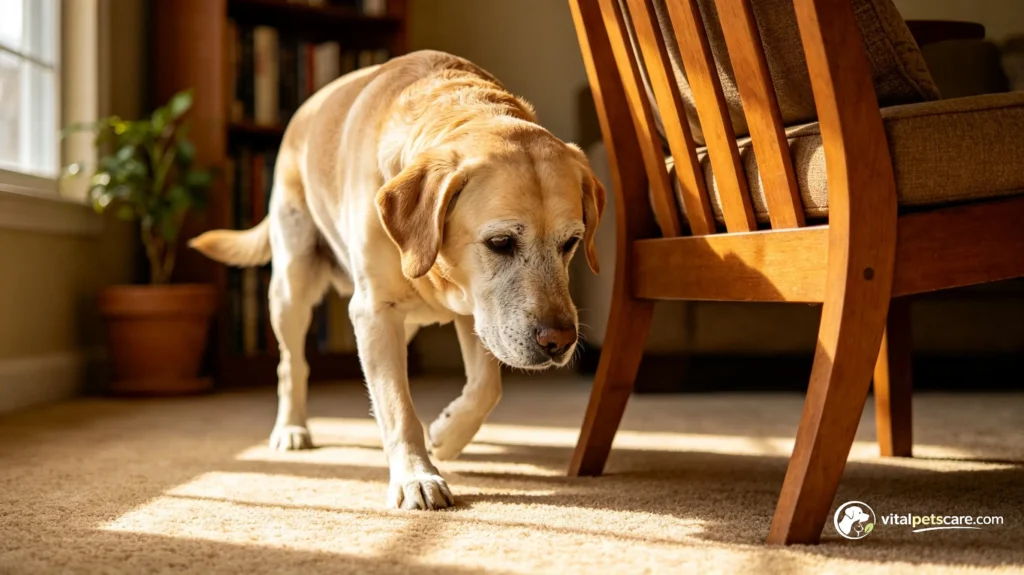
Bumping Into Furniture or Walls
This is one of the clearest signs of declining vision. A dog that suddenly bumps into furniture they’ve navigated around for years is likely experiencing real vision loss, not just clumsiness.
This is especially noticeable in unfamiliar environments or after furniture has been moved.
Hesitating in Low Light or at Night
Dogs with early vision loss often struggle most in dim lighting. Retinal degeneration affects low-light vision first in many cases, which is why hesitation at night is often the earliest sign.
If you’ve read our guide on senior dog cloudy eyes, this nighttime hesitation connects directly to some of the same conditions covered there.
Startle Response and Behavioral Changes
A dog losing eyesight may become more cautious, clingy, or anxious in familiar spaces. They may also startle more easily at movement they didn’t see coming.
This behavioral shift is worth watching closely. It can also overlap with anxiety and cognitive changes — our guide on senior dog anxiety at night covers this overlap in more detail.
Old Dog Losing Eyesight and Hearing Together
This combination creates a compounding effect that goes beyond simply losing two senses. An old dog losing eyesight and hearing together loses their two primary ways of making sense of the world simultaneously.
This can lead to significantly increased anxiety, confusion, and clinginess. Dogs in this situation rely almost entirely on scent, touch, and routine to feel safe and oriented.
The behavioral impact is often more dramatic than either loss alone. Owners sometimes mistake the resulting confusion for cognitive decline, when it’s actually a sensory issue that responds well to environmental adjustments.
Keeping routines absolutely consistent, using scent markers, and maintaining physical contact become especially important for dogs experiencing dual sense loss. This is one situation where environmental support genuinely changes quality of life.
How Hearing and Vision Loss Affect Senior Dog Behavior
Sensory loss changes more than just how a dog perceives the world. It directly affects how confident, calm, and connected they feel day to day.
Many dogs become more clingy as hearing or vision declines. This is a natural response — they seek physical reassurance when their primary senses can no longer do that job.
Anxiety is another common behavioral shift. If you’ve read our guide on senior dog anxiety at night, sensory loss is one of the underlying causes covered there — darkness removes the limited visual cues a dog with partial vision still relies on.
Some dogs also become more irritable or reactive. Being startled repeatedly by things they can’t hear or see creates a low-level stress response that builds over time.
Understanding these behavioral changes as sensory-driven, not personality-driven, helps you respond with patience rather than frustration.
How to Help a Senior Dog Losing Hearing or Eyesight
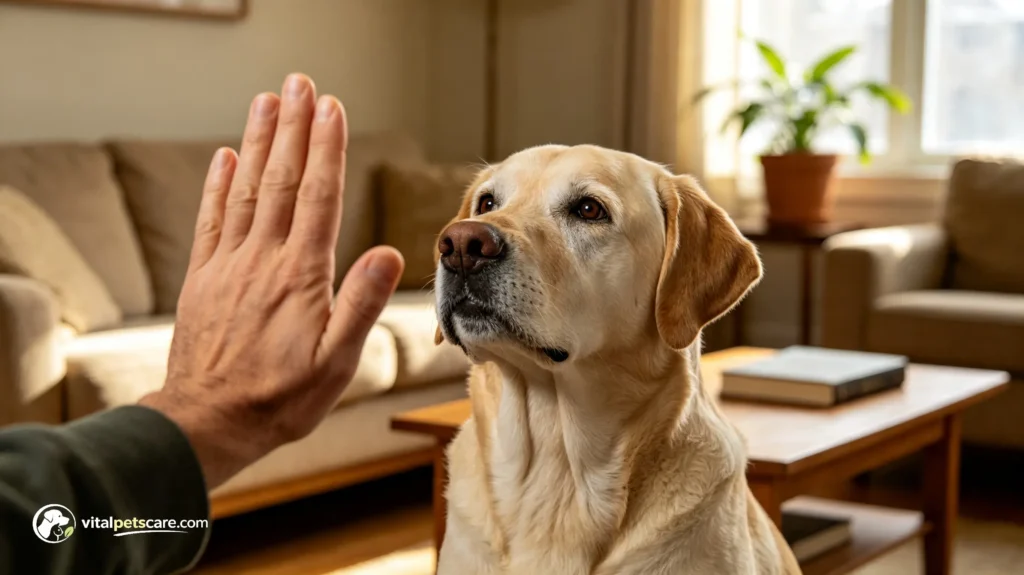
1. Switch to Hand Signals for Deaf Dogs
Hand signals replace verbal commands for dogs with auditory decline. Most dogs learn them quickly, since they’re already watching their owner’s body language closely.
Start with simple signals for sit, stay, and come. Consistent hand signals give a deaf dog a reliable communication system that reduces frustration on both sides.
2. Keep Home Layout Consistent for Vision Loss
Dogs with declining vision rely heavily on memory and scent to navigate. Moving furniture, even slightly, can disorient a dog who has mapped their home through remembered paths.
3. Use Scent Markers as Navigation Guides
A small amount of a distinct scent (like lavender near the water bowl or vanilla near the bed) helps vision-impaired dogs navigate by smell. This is one of the most practical and underused tools for supporting senior dog vision and hearing loss.
4. Add Night-Lights and Tactile Cues
Low-level lighting helps dogs with partial vision navigate at night. Tactile cues — like a different texture of mat near stairs or doorways — also help dogs with combined sensory loss map their environment through feel.
When to See a Vet
If hearing or vision loss appears suddenly rather than gradually, it needs prompt attention. Sudden sensory loss can point to vestibular disease, SARDS (Sudden Acquired Retinal Degeneration Syndrome), or another condition requiring immediate diagnosis.
Watch closely if sensory loss comes with other new symptoms — confusion, loss of balance, or head tilting. These combinations suggest something beyond normal age-related decline.
A vet can confirm hearing loss through a BAER test and assess vision through a full ophthalmic exam. According to Animal Eye Guys, early diagnosis of conditions like progressive retinal atrophy significantly improves the management options available.
When in doubt, an early vet visit brings clarity. It also rules out treatable causes before assuming it’s simply aging.
Frequently Asked Questions
What are the signs of a senior dog losing hearing?
Common signs include not responding to their name, sleeping through loud noises, startling when touched, and increased vocalization. These often develop gradually over time.
How can I tell if my dog is losing hearing at home?
Stand behind your dog and make a sharp noise outside their line of vision. A senior dog losing hearing will show little to no response, or react only to vibration rather than sound.
What causes hearing loss in senior dogs?
The most common cause is cochlear degeneration — a natural breakdown of the inner ear structures with age. This type of hearing loss is gradual and irreversible.
Can a dog go completely deaf with age?
Yes, some dogs develop complete auditory decline over time. Most adapt remarkably well, especially with consistent hand signals and routine support.
What are the early signs of vision loss in senior dogs?
Early signs include hesitating in low light, bumping into furniture, and increased startle responses. Night vision is often affected first due to early retinal degeneration.
What is SARDS in dogs?
SARDS (Sudden Acquired Retinal Degeneration Syndrome) causes rapid, irreversible vision loss in dogs. It’s one of the reasons sudden vision loss should always be checked by a vet promptly.
What happens when a dog loses both hearing and eyesight?
Dual sense loss creates a compounding effect — dogs rely almost entirely on scent, touch, and routine. Anxiety and confusion often increase significantly in this situation.
How do I communicate with a deaf dog?
Hand signals are the most effective replacement for verbal commands. Most dogs learn them quickly and respond well to consistent visual cues.
Can scent markers really help a vision-impaired dog?
Yes, distinct scents near key locations (water bowl, bed, stairs) give vision-impaired dogs a reliable navigation system. This is one of the most practical and underused support strategies.
Does hearing or vision loss cause anxiety in senior dogs?
Yes, both can increase anxiety and clinginess. Sensory loss removes the primary ways dogs monitor their environment, which creates ongoing low-level stress.
Is there treatment for age-related hearing loss in dogs?
There’s no cure for age-related cochlear degeneration, but management through hand signals, routine, and environmental adjustments significantly improves quality of life.
When should I take my senior dog to the vet for sensory loss?
Any sudden hearing or vision loss needs same-week veterinary attention. Gradual loss is less urgent but still worth a check-up to confirm the cause and rule out treatable conditions.

