
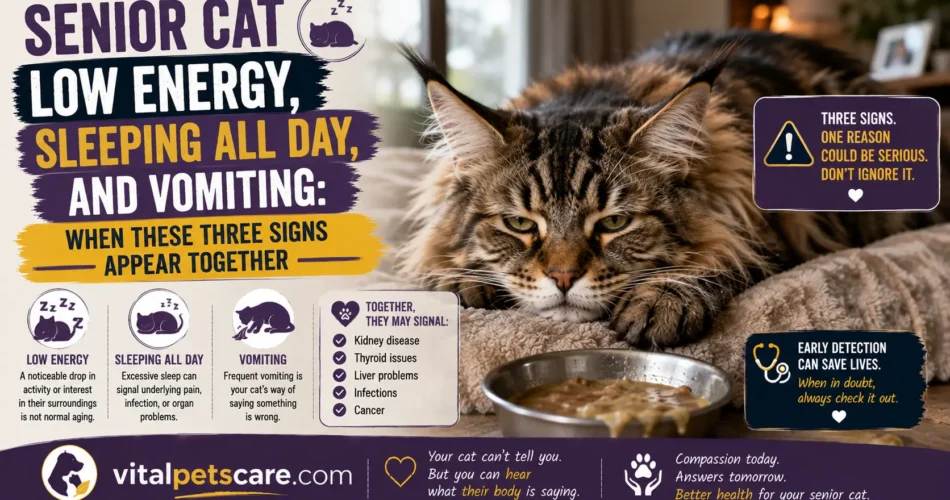
A senior cat low on energy is easy to dismiss as normal aging. However, when sleeping all day and vomiting appear alongside it, the picture changes.
These three signs often share the same root cause. In fact, they’re frequently the body’s way of signaling that something internal needs attention.
This guide connects the dots clearly. As a result, you’ll know what’s likely going on — and what to do next.
Why Is My Senior Cat Low on Energy?
There are several reasons behind senior cat low energy. However, the most important thing to understand is that lethargy is a symptom — not a diagnosis on its own.
Pain or Physical Discomfort
Pain is exhausting, even when it’s mild. As a result, a cat dealing with arthritis or internal discomfort often conserves energy by sleeping more and moving less.
In addition, pain reduces motivation to eat, play, or interact. However, because cats hide pain so well, this cause is frequently missed until it’s more advanced.
Kidney Disease or Organ Decline
Chronic kidney disease (CKD) causes toxins to build up in the bloodstream. As a result, affected cats feel genuinely unwell — tired, nauseous, and reluctant to move.
In addition, this explains why low energy and vomiting often appear together. Meanwhile, our cat drinking a lot of water article covers the kidney disease connection in more detail.
Hyperthyroidism — The Paradox
This one surprises many owners. However, while hyperthyroidism causes restlessness in some cats, it causes exhaustion in others — particularly in later stages.
As a result, a cat with an overactive thyroid may swing between hyperactivity and complete fatigue. In addition, the body simply can’t sustain the pace that an overactive thyroid demands long-term.
Anemia
Anemia — a low red blood cell count — reduces the amount of oxygen reaching the body’s tissues. As a result, even simple activities feel exhausting for an affected cat.
In addition, anemic cats often look pale around the gums. However, this sign is subtle and easy to miss without specifically checking for it.
Depression or Cognitive Decline
Mental health affects energy levels too. For example, a cat experiencing cognitive decline or environmental stress may become withdrawn and lethargic.
As a result, this cause is worth considering alongside physical ones — especially in cats also showing signs of nighttime confusion. Our senior cat crying at night article covers the cognitive connection in more detail.
Senior Cat Sleeping All Day — Normal or Not?
Cats are naturally long sleepers. However, there’s a meaningful difference between healthy rest and sleep driven by illness or exhaustion.
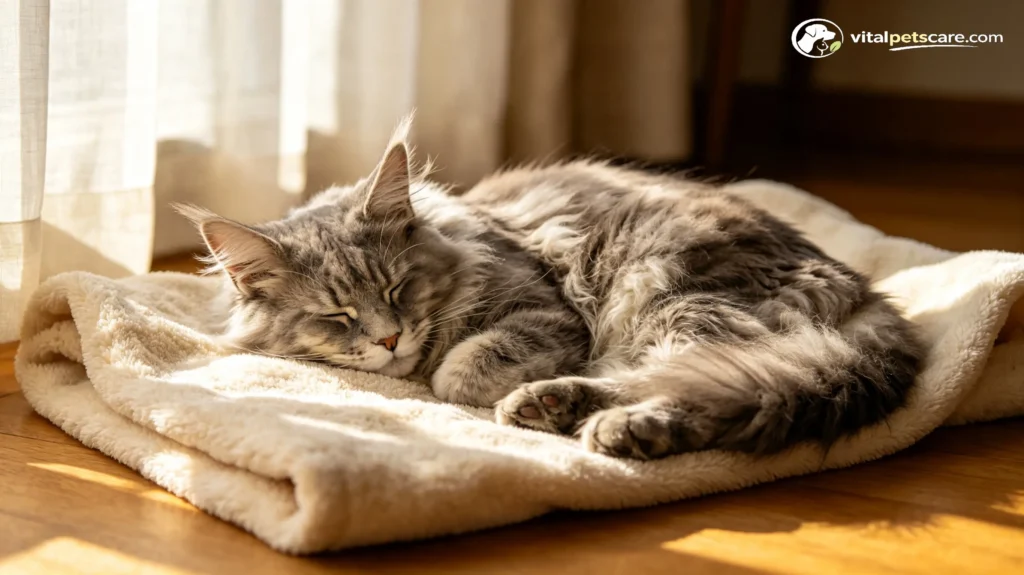
How Much Sleep Is Normal for a Senior Cat?
Most adult cats sleep between 12-16 hours per day. However, senior cats often sleep 16-20 hours — which is generally normal as energy needs decrease with age.
In addition, the quality of sleep matters as much as the quantity. For example, a cat who sleeps all day but seems alert and engaged when awake is usually fine.
When Sleeping All Day Becomes a Warning Sign
Sleep becomes a concern when other signs appear alongside it. For example, sleeping all day combined with reduced appetite, vomiting, or weight loss points to something beyond normal rest.
In addition, a sudden increase in sleep — rather than a gradual one — is more likely to signal illness. As a result, tracking when the change started helps your vet significantly.
Cat Sleep Changes That Signal Illness
Not all changes in sleep patterns mean the same thing. However, certain shifts are more likely to signal an underlying illness than others.
Watch for sleep that comes with a change in quality, not just quantity. For example, a cat that sleeps more but wakes up alert and engaged is different from one that seems drowsy and unresponsive even when awake.
In addition, location changes matter. A cat that suddenly sleeps in unusual spots — like behind the toilet or inside a cupboard — is often seeking isolation. As a result, this behavior frequently signals pain or illness rather than simple preference.
Meanwhile, a cat that sleeps deeply through sounds or activity they previously reacted to may be experiencing sensory decline or genuine exhaustion from an underlying condition. However, it’s worth ruling out hearing loss first before assuming illness is the cause.
Senior Cat Vomiting More Often — The Main Causes
Occasional vomiting is common in cats. However, senior cat vomiting more often — particularly if it’s increasing in frequency — almost always has a specific cause worth identifying.
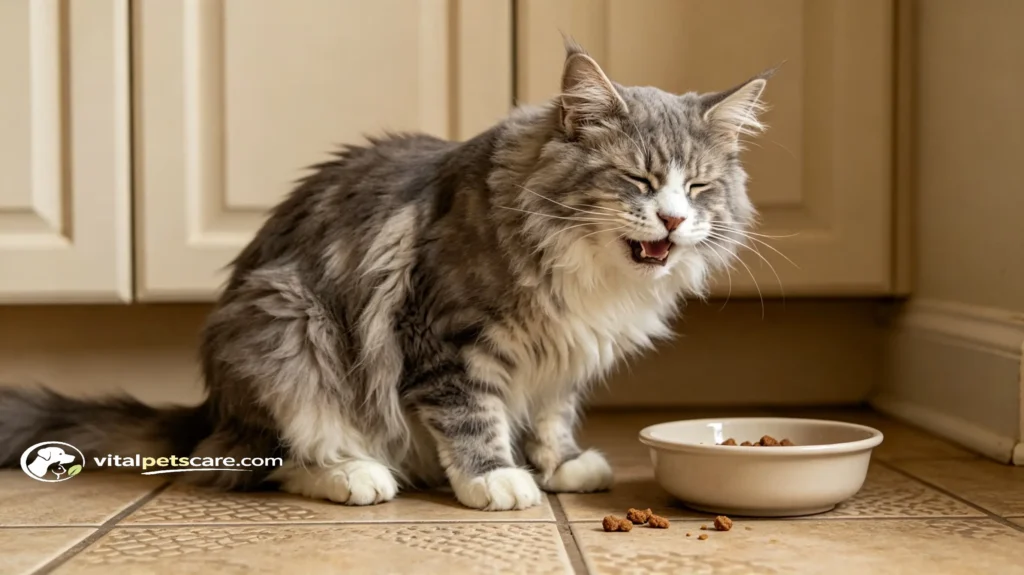
Kidney Disease and Toxin Buildup
When kidneys struggle to filter waste, toxins accumulate in the bloodstream. As a result, nausea and vomiting are among the most common early signs of chronic kidney disease in cats.
In addition, this explains why vomiting and low energy often appear together. Meanwhile, increased thirst usually accompanies both — connecting directly to our cat drinking a lot of water article.
Cat Sleep Changes That Signal Illness
Not all changes in sleep patterns mean the same thing. However, certain shifts are more likely to signal an underlying illness than others.
Watch for sleep that comes with a change in quality, not just quantity. For example, a cat that sleeps more but wakes up alert and engaged is different from one that seems drowsy and unresponsive even when awake.
In addition, location changes matter. A cat that suddenly sleeps in unusual spots — like behind the toilet or inside a cupboard — is often seeking isolation. As a result, this behavior frequently signals pain or illness rather than simple preference.
Meanwhile, a cat that sleeps deeply through sounds or activity they previously reacted to may be experiencing sensory decline or genuine exhaustion from an underlying condition. However, it’s worth ruling out hearing loss first before assuming illness is the cause.
Senior Cat Vomiting More Often — The Main Causes
Occasional vomiting is common in cats. However, senior cat vomiting more often — particularly if it’s increasing in frequency — almost always has a specific cause worth identifying.
Kidney Disease and Toxin Buildup
When kidneys struggle to filter waste, toxins accumulate in the bloodstream. As a result, nausea and vomiting are among the most common early signs of chronic kidney disease in cats.
In addition, this explains why vomiting and low energy often appear together. Meanwhile, increased thirst usually accompanies both — connecting directly to our cat drinking a lot of water article.
Hyperthyroidism
An overactive thyroid speeds up digestion significantly. As a result, food moves through the digestive system faster than normal — sometimes causing vomiting shortly after eating.
In addition, hyperthyroidism-related vomiting often comes alongside weight loss despite a good appetite. However, many owners mistake this for a sensitive stomach rather than a hormonal issue.
Inflammatory Bowel Disease
Inflammatory bowel disease (IBD) causes chronic inflammation of the digestive tract. As a result, affected cats vomit regularly — often after meals — and gradually lose weight over time.
In addition, IBD frequently causes changes in stool consistency. However, vomiting is usually the more noticeable symptom in senior cats.
Hairballs vs. True Vomiting
These two look similar but are actually quite different. For example, hairball vomiting produces a tubular clump of fur and is usually an isolated event.
True vomiting, on the other hand, involves stomach contents and often comes with retching or distress beforehand. As a result, frequency is the key distinction — occasional hairballs are normal, but regular true vomiting is not.
Why Low Energy, Sleeping, and Vomiting Often Appear Together
This combination isn’t a coincidence. In fact, these three signs frequently share the same underlying root cause.
Here’s why. When an organ like the kidney or thyroid isn’t functioning properly, the whole body feels the impact. As a result, energy drops, sleep increases, and the digestive system reacts with nausea and vomiting — all at the same time.
Think of it this way. The body is running on less than it needs. As a result, it conserves energy by sleeping more, while simultaneously struggling to process food normally.
In addition, pain creates a similar pattern. For example, a cat with unmanaged arthritis often sleeps more to escape discomfort — and the stress of chronic pain can upset digestion too.
Meanwhile, cognitive decline adds another layer. Confused, disoriented cats often stop eating and drinking normally. As a result, their digestive system becomes more sensitive — leading to vomiting alongside fatigue and withdrawal.
Understanding this connection matters. However, it also means treating just one symptom rarely resolves the others. As a result, identifying the shared root cause is the most effective approach — which is exactly what a full blood panel helps achieve.
How to Help a Senior Cat with Low Energy and Vomiting
1. Track the Pattern Before Your Vet Visit
Note when vomiting happens, how often, and what comes up. In addition, track sleep changes and appetite shifts over the same period.
As a result, your vet gets real observations rather than guesses. However simple this sounds, it genuinely speeds up diagnosis.
2. Adjust Feeding to Reduce Vomiting
Smaller, more frequent meals put less strain on the digestive system. As a result, vomiting after meals often reduces noticeably with this simple change.
In addition, switching to wet food improves hydration and is generally easier to digest than dry food. However, always transition gradually to avoid further digestive upset.
3. Encourage Gentle Movement
Complete rest isn’t always helpful. For example, short gentle play sessions keep the body moving without draining what little energy a tired cat has.
In addition, movement supports digestion and helps maintain muscle. Meanwhile, keep sessions brief — even five minutes of gentle activity helps.
4. Keep the Environment Calm and Consistent
Stress worsens both lethargy and vomiting. As a result, a quiet, predictable home environment makes a meaningful difference for a cat already feeling unwell.
In addition, avoid introducing new pets, people, or furniture changes during this time. However minor these changes seem, they add to the burden of an already struggling system.
When to See a Vet
If low energy and vomiting have both been present for more than a few days, book a vet visit soon. In fact, this combination rarely resolves without identifying and treating the underlying cause.
Watch closely if vomiting happens more than twice a week. As a result of frequent vomiting, cats can become dehydrated quickly — especially senior cats already managing other conditions.
In addition, blood in the vomit, black or tarry stools, or complete appetite loss alongside lethargy need same-day attention. However uncomfortable these signs are to notice, acting fast leads to significantly better outcomes.
Meanwhile, a cat that seems genuinely exhausted — not just sleepy — deserves prompt evaluation. As a result of conditions like anemia or kidney disease being caught early, treatment options are broader and more effective.
When in doubt, a full blood panel is usually the most useful first step. However routine it seems, it often reveals the cause of all three symptoms at once.
Frequently Asked Questions
Why is my senior cat so low on energy?
The most common causes are pain, kidney disease, hyperthyroidism, and anemia. However, cognitive decline can also cause lethargy in older cats.
Is it normal for senior cats to sleep all day?
Some extra sleep is normal with age. However, sleeping all day combined with vomiting or appetite loss usually points to an underlying cause worth investigating.
How much sleep is normal for a senior cat?
Most senior cats sleep between 16-20 hours per day. As a result, extra sleep alone isn’t always a concern — it’s what comes alongside it that matters.
Why is my senior cat vomiting more often?
The most common causes include kidney disease, hyperthyroidism, inflammatory bowel disease, and hairballs. However, frequency is the key — occasional vomiting is normal, but regular vomiting is not.
What is the difference between hairballs and true vomiting?
Hairballs produce a tubular clump of fur and are usually isolated events. True vomiting, on the other hand, involves stomach contents and often comes with retching or distress beforehand.
Why do low energy, sleeping, and vomiting appear together?
These three signs often share the same root cause — usually organ decline, pain, or hormonal imbalance. As a result, treating the underlying cause usually improves all three symptoms at once.
Can kidney disease cause vomiting in senior cats?
Yes, chronic kidney disease causes toxins to build up in the bloodstream. As a result, nausea and vomiting are among the earliest and most common signs.
Can cognitive decline cause low energy in cats?
Yes, cognitive dysfunction causes withdrawal and reduced activity. In addition, confused cats often stop eating and drinking normally — which further reduces energy levels.
What should I feed a senior cat that keeps vomiting?
Smaller, more frequent meals of easily digestible wet food often help. However, always check with your vet first if vomiting is frequent or worsening.
How can I tell if my cat is truly lethargic or just tired?
A tired cat wakes up alert and engaged. However, a lethargic cat seems unresponsive or drowsy even when awake — and often shows little interest in food, play, or interaction.
Can anemia cause lethargy in senior cats?
Yes, anemia reduces the oxygen reaching body tissues. As a result, even simple activities feel exhausting — and pale gums are often a subtle visible sign.
When should I take my senior cat to the vet for low energy and vomiting?
If both symptoms have lasted more than a few days, book within the week. In addition, vomiting more than twice a week, blood in vomit, or complete appetite loss need same-day attention.

