
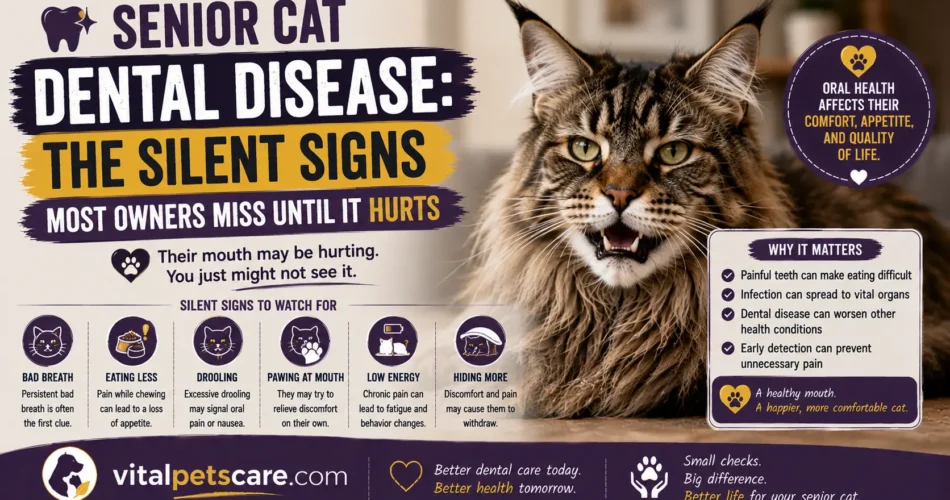
Most owners don’t notice senior cat dental disease until it’s already advanced. In fact, cats hide mouth pain so well that the signs can go undetected for months.
However, dental disease is extremely common in older cats. As a result, knowing what to look for makes a real difference.
This guide covers the silent signs, the causes, and why breathing changes can sometimes be connected. By the end, you’ll know exactly what to watch for.
Why Senior Cats Hide Dental Pain
Cats are natural pain hiders. In fact, this instinct goes back thousands of years.
In the wild, showing weakness meant danger. As a result, cats learned to mask discomfort — even severe pain.
This makes senior cat dental disease particularly hard to spot. However, the signs are there if you know what to look for.
In addition, dental pain builds gradually. As a result, cats adapt slowly — making it even harder to notice the change.
Senior Cat Dental Disease Signs — What to Actually Look For
Bad Breath That’s Worse Than Usual
Cat breath isn’t pleasant at the best of times. However, dental disease creates a distinctly sharper, more foul smell.
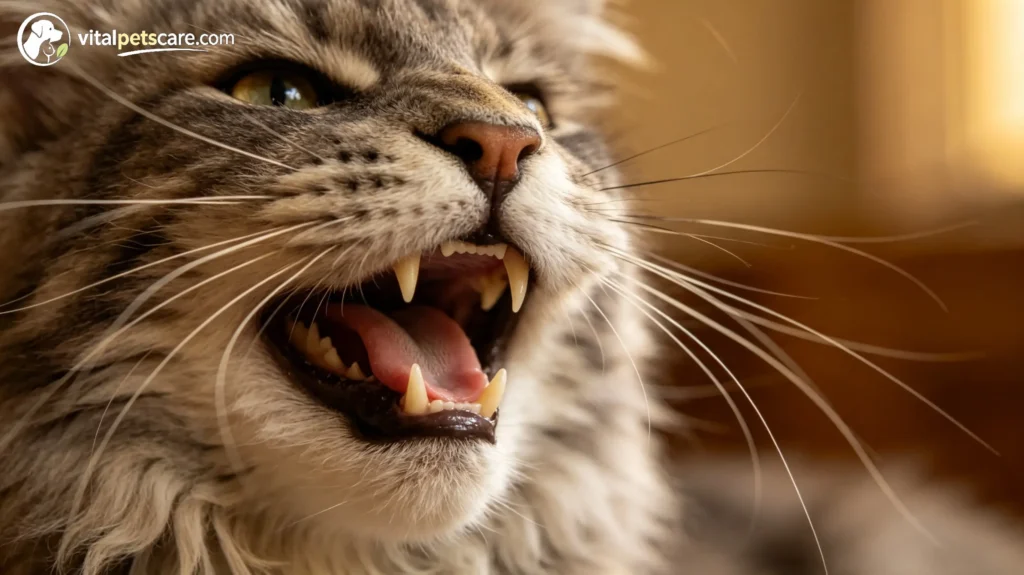
This happens because bacteria builds up around infected teeth and gums. As a result, the smell becomes noticeably different from normal cat breath.
Drooling or Dropping Food
Occasional drooling is normal. However, excessive drooling — especially around mealtimes — often points to mouth pain.
In addition, dropping food mid-chew is a clear signal. As a result, cats with dental pain often chew only on one side of the mouth.
Pawing at the Mouth or Face
This is one of the more obvious signs. However, many owners mistake it for grooming rather than discomfort.
Watch for repeated pawing at the same spot. In addition, rubbing the face against furniture or carpet can signal mouth pain too.
Eating Less or Avoiding Hard Food
A cat that suddenly avoids dry food may be doing so for a reason. In fact, hard food puts direct pressure on painful teeth.
As a result, senior cat dental disease often shows up first as reduced appetite. Meanwhile, this connects to our senior cat low energy article, where appetite loss is covered as part of the same symptom pattern.
Yellow or Brown Buildup on Teeth
Plaque builds up on teeth over time. However, when it hardens, it becomes tartar — a yellow or brown crust along the gum line.
In addition, tartar pushes bacteria deeper into the gum. As a result, this leads to infection and the early stages of periodontal disease.
Red or Swollen Gums
Healthy gums are pale pink and firm. However, red, swollen, or bleeding gums signal gingivitis — the earliest stage of dental disease.
As a result, checking your cat’s gums regularly is one of the simplest ways to catch problems early. In addition, gums that bleed when touched need prompt veterinary attention.
Behavioral Changes — Withdrawal and Irritability
Dental pain affects mood. In fact, cats in ongoing discomfort often become less social and more irritable.
As a result, a previously affectionate cat may suddenly avoid being touched around the head or face. However, many owners attribute this to aging rather than pain.
Silent Signs of Cat Dental Disease Most Owners Miss
Some signs are easy to spot. However, others are so subtle that most owners never connect them to dental disease at all.
Slower eating is one example. In fact, a cat that takes longer to finish meals may simply be chewing more carefully to avoid pain.
In addition, weight loss can be a silent dental sign. As a result of eating less due to mouth pain, cats gradually lose weight — which owners often attribute to aging instead. Meanwhile, our senior cat losing weight article covers this connection in more detail.
Yawning less is another overlooked clue. However, cats with mouth pain often reduce wide mouth movements to avoid discomfort. As a result, you may notice fewer visible yawns over time.
In addition, grooming changes can signal dental pain. For example, a cat that stops grooming their face or head area may be avoiding the movement due to jaw or tooth discomfort.
Finally, sleeping more than usual can be a silent sign. In fact, chronic pain is exhausting — even when it’s not obvious. As a result, increased sleep alongside any of the other signs above strengthens the case for a dental check.
Senior Cat Breathing Changes — The Dental Connection
This connection surprises most owners. However, senior cat breathing changes can sometimes be directly linked to dental disease.
Here’s why. The roots of the upper teeth sit very close to the nasal cavity in cats. As a result, a severe tooth root infection can spread upward — causing nasal discharge, sneezing, or labored breathing.
In addition, stomatitis — severe oral inflammation — can make breathing uncomfortable when the mouth is involved. However, this is more common in advanced, untreated cases.
Meanwhile, not all breathing changes are dental-related. For example, heart disease, asthma, or fluid around the lungs can also cause breathing changes in senior cats.
As a result, breathing changes should always be evaluated by a vet. In addition, mentioning any recent dental symptoms helps your vet make the connection faster.
Common Types of Dental Disease in Senior Cats
Not all dental disease is the same. In fact, senior cats can develop several distinct conditions — each with different signs and treatment needs.
Periodontal Disease
This is the most common type. In fact, studies suggest over 70% of cats over 3 already have some degree of periodontal disease.
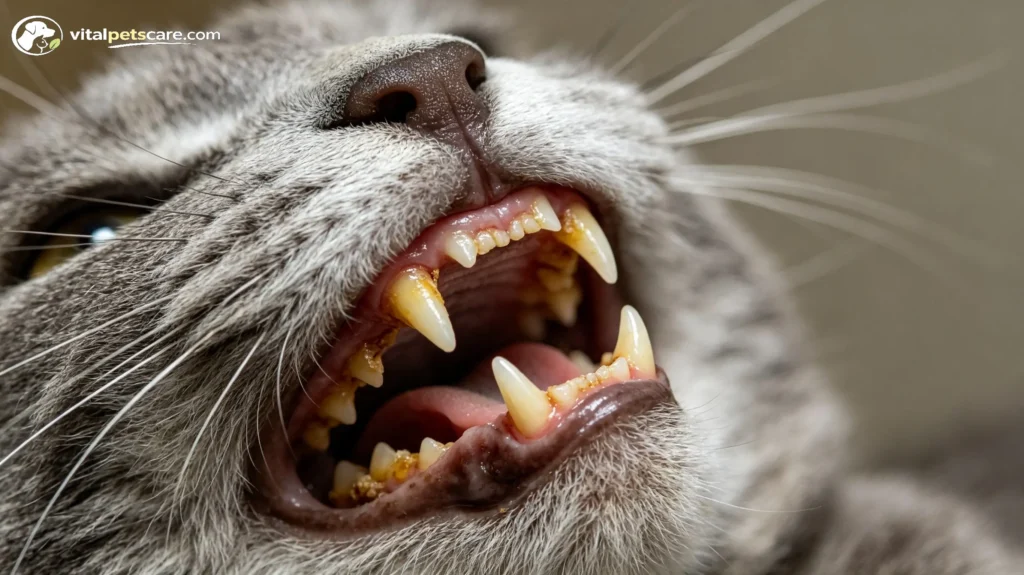
It starts with plaque building up along the gum line. As a result, bacteria causes inflammation — first as gingivitis, then progressing deeper into the tooth socket.
In addition, advanced periodontal disease causes bone loss around the tooth. However, it’s very manageable when caught early.
Tooth Resorption
This condition is unique to cats. In fact, it’s one of the most painful dental conditions a cat can experience.
Tooth resorption happens when the tooth structure breaks down from the inside. As a result, the tooth becomes fragile and extremely sensitive — often causing significant pain before any visible sign appears.
In addition, it affects around 30-40% of adult cats. However, senior cats are significantly more prone to it than younger ones.
Stomatitis
Stomatitis is severe inflammation of the entire mouth lining. As a result, it causes intense pain that makes eating, grooming, and even opening the mouth difficult.
This condition is less common than periodontal disease. However, it’s one of the most painful and hardest to manage. In addition, treatment often requires veterinary dental intervention rather than home management alone.
How to Prevent Dental Disease in Aging Cats
Prevention is far easier than treatment. In fact, small daily habits make a significant difference in long-term dental health.
1. Brush Your Cat’s Teeth Regularly
Daily brushing is the gold standard. However, even two or three times a week makes a real difference.
Use a cat-specific toothbrush and toothpaste only. In addition, never use human toothpaste — it contains ingredients that are toxic to cats.
2. Use Dental Treats or Water Additives
Dental chews help reduce plaque through chewing action. As a result, they’re a practical option for cats that resist brushing.
In addition, water additives designed for cats can help reduce bacterial buildup. However, always choose products approved by the Veterinary Oral Health Council (VOHC) for best results.
3. Schedule Regular Dental Checkups
A professional dental cleaning under anesthesia removes tartar that brushing can’t reach. As a result, most vets recommend annual or biannual dental checks for senior cats.
In addition, early professional cleaning prevents the progression to periodontal disease or tooth resorption. However, many owners delay this due to anesthesia concerns — which your vet can address directly.
4. Feed a Dental-Supportive Diet
Some senior cat foods are formulated to reduce plaque through texture and ingredients. As a result, switching to a dental-supportive formula adds another layer of prevention.
In addition, wet food alone doesn’t clean teeth — contrary to a common belief. However, it also doesn’t cause more plaque than dry food when fed alongside other preventive measures.
When to See a Vet
If your cat shows any of the signs covered in this guide, book a dental check soon. In fact, dental disease rarely improves without professional treatment.
Watch closely if eating has changed alongside any mouth-related signs. As a result of pain reducing food intake, weight loss can follow quickly — especially in already thin senior cats.
In addition, any breathing changes alongside dental symptoms need prompt attention. However minor the breathing change seems, the oral-respiratory connection in cats makes this combination worth investigating quickly.
Meanwhile, bad breath that develops suddenly and smells unusually sharp is worth a same-week visit. As a result of catching tooth resorption or stomatitis early, treatment is simpler and less invasive.
When in doubt, a basic oral exam at your next vet visit costs nothing extra. In addition, asking your vet to check the teeth specifically — rather than waiting for them to mention it — ensures it doesn’t get overlooked.
Frequently Asked Questions
What are the signs of dental disease in senior cats?
Key signs include bad breath, drooling, dropping food, pawing at the mouth, red gums, and eating less. However, some signs are much more subtle — like slower eating or weight loss.
Do cats hide dental pain?
Yes, cats are natural pain hiders. In fact, dental pain can go unnoticed for months because cats adapt so well to chronic discomfort.
What is tooth resorption in cats?
Tooth resorption is when the tooth structure breaks down from the inside. As a result, it causes significant pain — often before any visible sign appears. In addition, it affects around 30-40% of adult cats.
What is stomatitis in cats?
Stomatitis is severe inflammation of the entire mouth lining. As a result, it causes intense pain that makes eating and grooming very difficult. However, it’s less common than periodontal disease.
Can dental disease cause breathing changes in cats?
Yes, in some cases. In fact, the roots of the upper teeth sit very close to the nasal cavity. As a result, a severe tooth root infection can spread upward — causing nasal discharge or labored breathing.
How common is dental disease in senior cats?
Very common. In fact, studies suggest over 70% of cats over 3 already have some degree of periodontal disease. As a result, senior cats are at even higher risk.
Is bad breath always a sign of dental disease in cats?
Not always — but it’s one of the most common signs. However, unusually sharp or foul breath that develops suddenly is a stronger indicator than mild general odor.
Can I brush my senior cat’s teeth at home?
Yes, and it’s one of the most effective prevention tools. In addition, use only cat-specific toothpaste — never human toothpaste, as it contains ingredients toxic to cats.
What is the VOHC and why does it matter?
The Veterinary Oral Health Council (VOHC) approves dental products proven to reduce plaque and tartar in pets. As a result, choosing VOHC-approved products gives you confidence they actually work.
Does wet food cause more dental disease than dry food?
No — this is a common myth. In fact, wet food doesn’t cause more plaque than dry food. However, it also doesn’t clean teeth on its own — so other prevention measures are still needed.
How often should a senior cat have a dental cleaning?
Most vets recommend annual or biannual professional cleanings for senior cats. As a result of regular cleaning, tartar buildup and early periodontal disease are kept under control.
When should I take my senior cat to the vet for dental concerns?
If eating has changed, bad breath has worsened, or any breathing changes have appeared alongside dental signs, book within the week. In addition, any pawing at the mouth or visible gum redness deserves prompt attention.

