
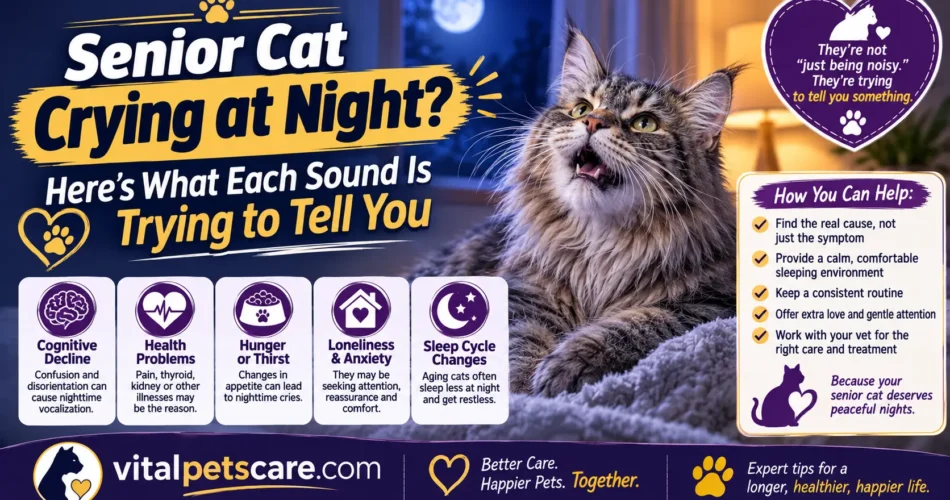
A senior cat crying at night is one of the most exhausting things to deal with as an owner. However, it’s also one of the clearest signals that something has changed.
The sound your cat makes actually matters. In fact, yowling, crying, and loud meowing each point to slightly different causes.
This guide breaks each one down clearly. As a result, you’ll know exactly what’s going on — and what to try first.
Why Is My Senior Cat Crying at Night?
There are several reasons behind senior cat crying at night. However, the most important thing to know is that it’s rarely just attention-seeking behavior.
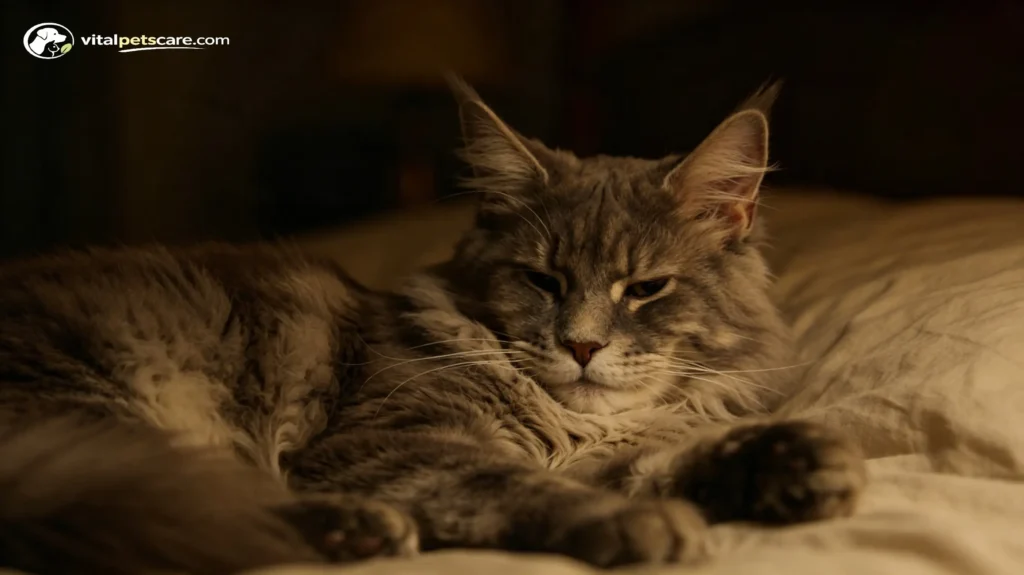
Feline Cognitive Dysfunction
This is the most common cause in cats over 10. Feline cognitive dysfunction (FCD) causes confusion and disorientation — and darkness makes both significantly worse.
As a result, cats often vocalize at night when they feel lost or unsure of their surroundings. In addition, this condition tends to worsen gradually over time.
Pain or Physical Discomfort
Pain is another frequent trigger. For example, arthritis pain often feels more noticeable at night when there are fewer distractions.
As a result, a cat that manages discomfort quietly during the day may vocalize more once the house goes quiet. However, this cause is easy to miss since cats rarely show obvious pain signs.
Hunger or Thirst at Night
Some senior cats wake hungry or thirsty during the night. In addition, conditions like hyperthyroidism can increase appetite dramatically — making nighttime hunger more common than owners expect.
A small meal before bed sometimes helps. However, if hunger seems excessive, it’s worth checking for underlying causes.
Sensory Loss Making Darkness Scary
Cats with declining vision or hearing find darkness more disorienting. As a result, the familiar home environment suddenly feels uncertain and unsafe at night.
If you’ve read our guide on senior cat vision and hearing loss, this nighttime pattern is one of the key behavioral changes covered there.
Hyperthyroidism-Related Restlessness
An overactive thyroid creates restlessness and anxiety that often peaks at night. In addition, hyperthyroidism causes increased thirst — which connects directly to our cat drinking a lot of water article.
As a result, cats with undiagnosed thyroid issues often pace, vocalize, and seem unsettled after dark.
Yowling vs. Crying vs. Loud Meowing — What Each Sound Means
Not all nighttime sounds mean the same thing. In fact, the type of sound your cat makes is one of the most useful diagnostic clues available.
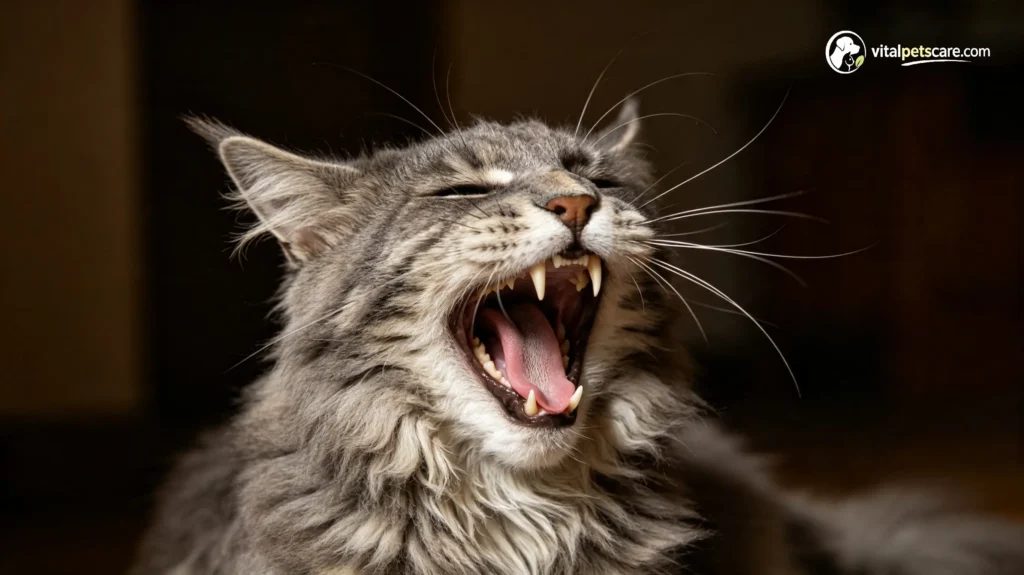
Senior Cat Nighttime Yowling Causes
Yowling is long, drawn-out, and often sounds almost mournful. This type of vocalization is most strongly associated with feline cognitive dysfunction.
As a result, it tends to happen repeatedly through the night rather than just once or twice. In addition, it often starts suddenly in cats who were previously quiet at night.
Senior Cat Crying at Night Causes
Crying is shorter and more distressed-sounding than yowling. However, it’s often louder and more urgent in tone.
This pattern more commonly points to pain or physical discomfort. For example, a cat with arthritis may cry out when shifting positions during the night.
Senior Cat Loud Meowing at Night
Loud, repetitive meowing is different again. In addition to cognitive causes, this pattern often signals hunger, thirst, or sensory disorientation.
Meanwhile, cats with hyperthyroidism tend toward this type of vocalization — persistent, attention-seeking, and often paired with restless pacing.
Senior Cat Dementia Symptoms — The Nighttime Connection
Feline cognitive dysfunction is often called cat dementia, and for good reason. However, unlike human dementia, it’s still widely underdiagnosed in cats.
In fact, studies suggest up to 50% of cats over 15 show signs of cognitive decline. As a result, nighttime symptoms are often the first clue owners notice — long before daytime signs become obvious.
Confusion and Disorientation After Dark
Darkness removes the visual cues cats rely on to feel oriented. As a result, a cat with early cognitive dysfunction may suddenly seem lost in a home they’ve lived in for years.
This confusion often triggers vocalization. In addition, affected cats may pace, stare blankly at walls, or get stuck in corners — behaviors that feel alarming but are actually common with this condition.
Senior Cat Confusion at Night Causes
Several things make nighttime confusion worse. For example, reduced lighting, disrupted sleep cycles, and lowered melatonin production all contribute to nighttime disorientation in senior cats.
Meanwhile, changes in the home — new furniture, a different routine, or even a new pet — can significantly worsen confusion. As a result, consistency becomes one of the most powerful tools for managing this condition.
How Sundowning Affects Cats
Sundowning is a term borrowed from human dementia care. However, it applies equally well to cats — describing symptoms that worsen specifically in the late afternoon and evening.
As a result of sundowning, a cat that seems relatively calm during the day may become noticeably more confused and vocal once daylight fades. In addition, this pattern often intensifies in winter when evenings arrive earlier.
Senior Cat Behavior Changes That Signal Something Is Wrong
Nighttime crying is rarely an isolated symptom. In fact, it usually comes alongside other behavioral shifts that are easy to overlook during the day.
Watch for increased clinginess or, on the other hand, unusual withdrawal. Both can signal discomfort or cognitive changes in senior cats.
Meanwhile, changes in litter box use are another important signal. As a result of confusion or pain, cats may start missing the box or going less frequently than usual.
In addition, watch for reduced interest in food during the day alongside nighttime hunger. This pattern can point to hyperthyroidism or cognitive dysfunction affecting normal hunger cycles.
Changes in grooming habits are also worth noting. For example, a cat that suddenly stops grooming or, conversely, over-grooms obsessively may be responding to stress or pain. Our senior cat losing hair article covers this overlap in more detail.
How to Help a Senior Cat Crying at Night
1. Create a Consistent Evening Routine
Predictability is one of the most powerful tools for a confused senior cat. As a result, keeping feeding, playtime, and bedtime at the same time each day reduces nighttime disorientation significantly.
In addition, avoid rearranging furniture or making sudden changes to the home environment. However small these changes seem, they can trigger increased confusion after dark.
2. Add Night-Lights and a Safe Sleeping Space
Low-level lighting helps cats with vision loss or cognitive dysfunction navigate at night. As a result, placing a small night-light near your cat’s sleeping area is one of the simplest and most effective changes you can make.
In addition, a warm, comfortable sleeping spot at floor level removes the need for jumping. Meanwhile, keeping the sleeping area in a familiar, quiet part of the home helps reduce anxiety.
3. Address Pain or Hunger Triggers
If pain is the cause, treating it directly often reduces nighttime vocalization significantly. For example, vet-approved arthritis management through our cat arthritis guide covers the most effective options currently available.
In addition, a small, high-protein meal before bed can ease nighttime hunger. However, always check with your vet first if your cat has an underlying condition like kidney disease.
4. Vet-Guided Options for Cognitive Decline
For cats with confirmed feline cognitive dysfunction, vets may recommend specific dietary support or supplements that promote brain health. In addition, pheromone diffusers like Feliway can help reduce anxiety-driven vocalization.
Meanwhile, some cats benefit from melatonin supplementation to support healthier sleep cycles. However, this should always be vet-guided rather than self-administered.
When to See a Vet
If nighttime crying happens every night, it’s time for a proper evaluation. In fact, persistent nightly vocalization almost always has a treatable underlying cause.
Watch closely if crying comes with other new symptoms. For example, weight loss, increased thirst, or changes in litter box use alongside nighttime crying point to conditions needing blood work to confirm.
In addition, sudden onset of nighttime yowling in a previously quiet cat deserves prompt attention. As a result of catching feline cognitive dysfunction or hyperthyroidism early, treatment options are broader and more effective.
Meanwhile, don’t assume nighttime crying is simply “old age.” However common it is in senior cats, it’s rarely untreatable — and most causes improve significantly with the right intervention.
Frequently Asked Questions
Why is my senior cat crying at night?
The most common causes are feline cognitive dysfunction, pain, hunger, and sensory loss. However, the type of sound your cat makes — yowling, crying, or meowing — helps narrow down which one applies.
What causes senior cat nighttime yowling?
Yowling is most strongly linked to feline cognitive dysfunction. As a result, it tends to happen repeatedly through the night rather than just once or twice.
Is nighttime crying normal in older cats?
It’s common, but it’s not normal. In fact, persistent nighttime vocalization almost always points to a specific, often treatable cause rather than simple aging.
What is feline cognitive dysfunction?
Feline cognitive dysfunction (FCD) is a progressive brain condition similar to dementia in humans. As a result, it causes confusion, disorientation, and disrupted sleep cycles — often showing up first as nighttime crying.
What is sundowning in cats?
Sundowning describes symptoms that worsen specifically in the late afternoon and evening. In addition, it’s closely linked to cognitive dysfunction and often intensifies in winter when evenings arrive earlier.
Can pain cause a senior cat to cry at night?
Yes, pain tends to feel more noticeable at night when there are fewer distractions. For example, arthritis pain often causes cats to cry out when shifting positions during the night.
Why does my senior cat yowl but seem fine during the day?
This is a classic sundowning pattern. As a result of reduced lighting and disrupted melatonin production, symptoms worsen after dark even when the cat seems relatively calm during the day.
Can hyperthyroidism cause nighttime crying in cats?
Yes, hyperthyroidism creates restlessness and anxiety that often peaks at night. In addition, increased hunger from an overactive thyroid can trigger loud meowing after dark.
How can I help my senior cat stop crying at night?
Consistent evening routines, night-lights, addressing pain or hunger, and vet-guided cognitive support all help. However, identifying the specific cause first makes each solution significantly more effective.
Should I ignore my senior cat crying at night?
No — ignoring it doesn’t address the underlying cause. In fact, persistent nighttime crying that goes unaddressed usually worsens over time rather than resolving on its own.
Can pheromone diffusers help a cat crying at night?
Yes, pheromone diffusers like Feliway can reduce anxiety-driven vocalization. However, they work best alongside other interventions rather than as a standalone solution.
When should I take my senior cat to the vet for nighttime crying?
If crying happens every night, comes with weight loss, increased thirst, or litter box changes, book within the week. In addition, sudden onset yowling in a previously quiet cat deserves prompt attention.

