

Finding accidents around the house is frustrating. However, senior cat litter box problems are almost never about bad behavior.
In fact, most older cats miss the box because something physical or medical is making it harder to use. As a result, punishing or scolding rarely helps — and often makes things worse.
This guide explains the real causes clearly. In addition, it covers why hiding and litter box changes often appear together — and what actually helps both.
Senior Cat Litter Box Problems — Medical First, Behavioral Second
The most important thing to understand is this. Senior cat litter box problems are almost always medical or physical — not behavioral.
In fact, a cat that previously used the box perfectly doesn’t suddenly forget out of spite. As a result, the first question should always be — what has changed physically that makes the box harder to use?
Arthritis Making It Painful to Climb In
A standard litter box requires stepping over a high edge. However, for a cat with arthritis, this simple movement can be genuinely painful.
As a result, the cat may avoid the box entirely — or not make it in time. In addition, squatting inside the box can be uncomfortable for cats with hip or knee joint issues.
Urinary Tract Infection or Kidney Disease
A urinary tract infection (UTI) creates sudden urgency. As a result, a cat may not reach the box in time — which looks like a behavioral accident but isn’t.
In addition, kidney disease increases urination frequency significantly. However, owners often blame the cat rather than recognizing the medical cause behind it.
Cognitive Decline Causing Confusion About Location
A cat with cognitive dysfunction may simply forget where the litter box is. As a result, they may eliminate in the nearest available spot — which is confusing and distressing for both cat and owner.
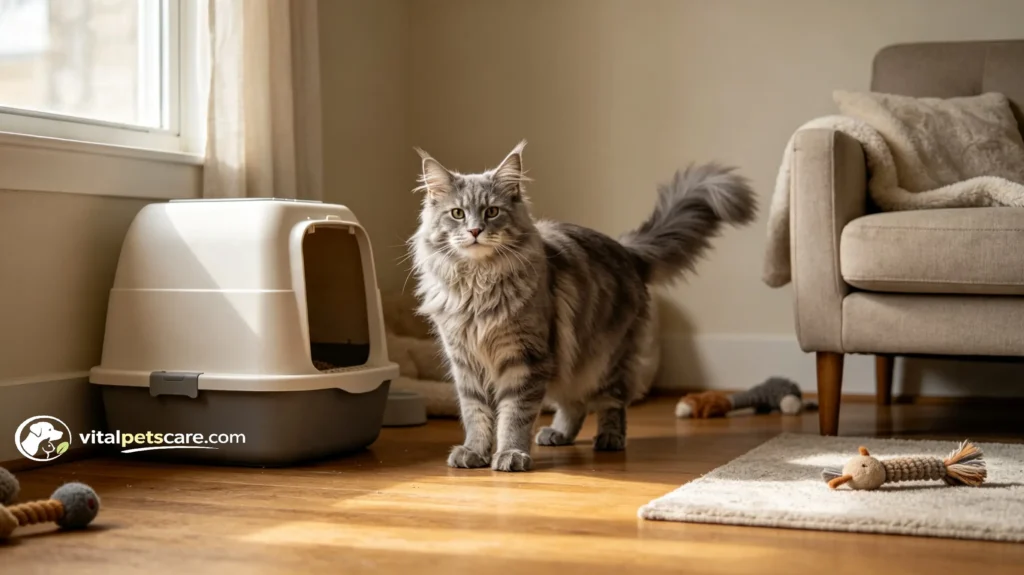
In addition, this cause often worsens at night. Meanwhile, our senior cat crying at night article covers the cognitive connection in more detail.
Litter Box Design Problems
Sometimes the box itself is the problem. For example, a box that’s too small, too high-sided, or filled with uncomfortable litter can deter a senior cat from using it.
As a result, something as simple as switching to a low-entry litter box can resolve the problem quickly. In addition, unscented litter is generally better tolerated by sensitive older cats.
Senior Cat Peeing Outside the Litter Box
This is one of the most commonly searched senior cat concerns. However, it almost always has a clear medical explanation rather than a behavioral one.
Urinary Urgency from UTI or Kidney Disease
UTIs cause sudden, intense urges to urinate. As a result, a cat may not reach the box in time — even if they’re trying to.
In addition, kidney disease forces the kidneys to produce more urine than usual. Meanwhile, this connects directly to our cat drinking a lot of water article, which covers kidney disease in more detail.
Arthritis Preventing Timely Access
A cat with painful joints may not move fast enough when urgency strikes. As a result, accidents happen near — but not inside — the litter box.
In addition, boxes placed in inconvenient locations become even harder to reach for an arthritic cat. However, simply moving the box closer often makes a noticeable difference.
Cognitive Confusion About Box Location
A cat with cognitive decline may lose track of where the box is located. As a result, they eliminate in familiar resting spots instead — which feels instinctively “safe” to a disoriented cat.
In addition, keeping boxes in the same location at all times helps significantly. Meanwhile, adding extra boxes in multiple rooms gives a confused cat more chances to find one in time.
Old Cat Sitting in the Litter Box — What It Means
This behavior catches many owners off guard. However, an old cat sitting in the litter box is actually sending a clear signal.
In most cases, it points to urinary discomfort or straining. As a result, the cat stays in the box hoping relief will come — even when nothing is happening.
Urinary blockages are one possible cause, especially in male cats. However, idiopathic cystitis — inflammation of the bladder without infection — is another common reason. In addition, constipation can cause a cat to sit in the box straining without producing anything.
Meanwhile, some cats with cognitive decline sit in the litter box simply because they feel confused and safe there. As a result, it becomes a familiar, enclosed space that feels secure when the rest of the world feels uncertain.
Any cat sitting in the litter box repeatedly without producing urine needs same-day veterinary attention. In fact, a urinary blockage can become life-threatening within hours if left untreated.
Senior Cat Hiding More Than Usual — The Real Reason
Hiding is one of the most instinctive feline responses to feeling unwell. However, it’s also one of the most commonly misunderstood behaviors in older cats.
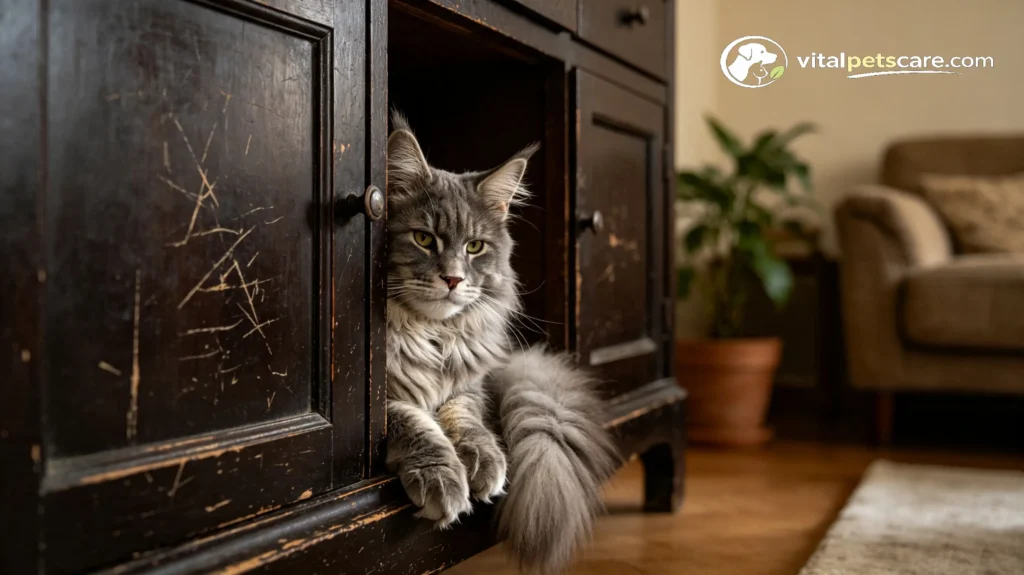
Pain or Physical Illness
Pain drives cats to seek quiet, enclosed spaces. As a result, a cat dealing with arthritis, kidney disease, or internal discomfort will often disappear for hours at a time.
In addition, hiding reduces the chance of being accidentally touched or disturbed in a sore spot. However, this protective instinct makes it harder for owners to notice that something is wrong.
Cognitive Decline and Disorientation
A confused cat seeks safety. As a result, small enclosed spaces — under beds, inside cupboards, behind furniture — feel more manageable than open rooms.
In addition, this type of hiding often increases at night when disorientation worsens. Meanwhile, our senior cat crying at night article covers how cognitive decline affects nighttime behavior in more detail.
Stress or Environmental Changes
New people, pets, or even rearranged furniture can trigger hiding in a sensitive senior cat. As a result, what looks like sudden behavioral change is often a stress response to something in the environment.
In addition, senior cats are less adaptable to change than younger ones. However, most stress-related hiding resolves once the trigger is identified and removed or reduced.
End-of-Life Instinct
This is the hardest one to acknowledge. However, cats nearing the end of their life often hide instinctively — seeking solitude and quiet in their final days.
As a result, hiding combined with complete appetite loss, extreme lethargy, and labored breathing deserves an urgent vet conversation. In addition, our senior cat quality of life article covers how to assess this stage compassionately.
When Litter Box Problems and Hiding Happen Together
These two symptoms appearing at the same time is significant. In fact, it usually means the underlying cause is affecting the whole cat — not just one behavior.
For example, a cat with kidney disease often hides due to nausea and fatigue. As a result, they also drink more, urinate more frequently, and start missing the litter box.
Meanwhile, a cat with cognitive decline may hide out of confusion and simultaneously forget where the litter box is located. As a result, accidents happen near sleeping spots or in unusual corners of the house.
In addition, arthritis can cause both behaviors at once. However, the mechanism is slightly different — pain drives hiding, while joint stiffness prevents timely litter box access.
Understanding the connection matters. As a result, treating just one symptom rarely resolves the other. In addition, identifying the shared root cause leads to more effective and lasting improvement.
Practical Solutions That Actually Help
1. Switch to a Low-Entry Litter Box
A low-entry box removes the painful step-over for arthritic cats. As a result, many owners see immediate improvement after this simple switch.
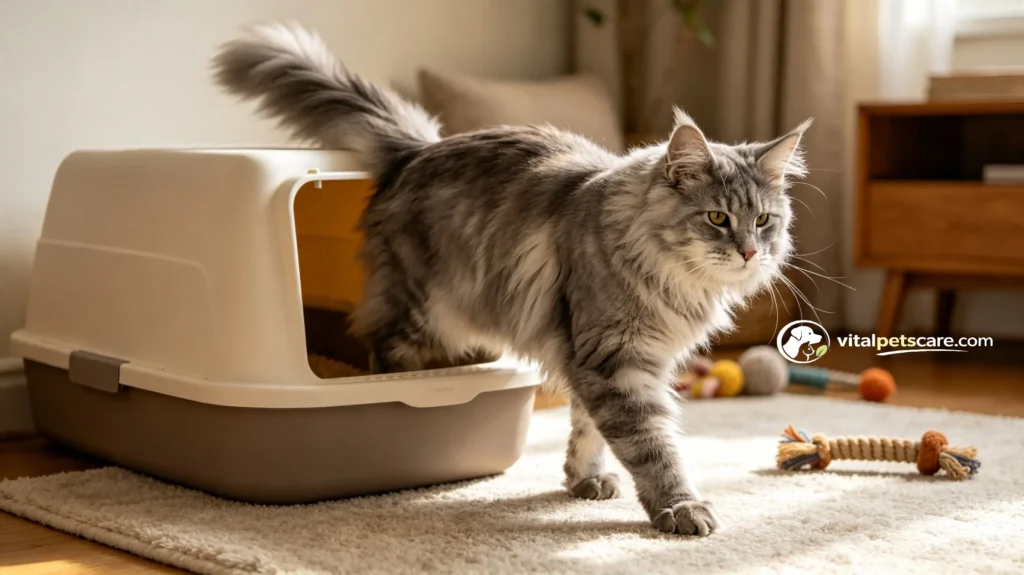
In addition, look for boxes with at least one completely open or lowered side. However, avoid boxes with hoods — these can feel claustrophobic for a cat already anxious or in pain.
2. Add Extra Litter Boxes in Multiple Rooms
More boxes mean more chances for a confused or slow-moving cat to find one in time. As a result, the general rule of one box per cat plus one extra becomes even more important for senior cats.
In addition, place boxes on every level of the home. However, avoid locations that require navigating stairs — this defeats the purpose for an arthritic cat.
3. Keep Boxes in Consistent Locations
Consistency is especially important for cats with cognitive dysfunction. As a result, moving the box — even slightly — can cause a confused cat to lose track of it entirely.
In addition, mark each box location with a subtle scent marker if needed. However, avoid strong-smelling cleaning products near the box — these often deter cats from using it.
4. Address the Root Medical Cause
None of the above solutions work long-term without treating the underlying cause. As a result, a vet visit is always the most important first step.
In addition, treating arthritis with our cat arthritis guide options, managing kidney disease through diet, or addressing cognitive decline early all reduce litter box problems significantly.
When to See a Vet
If litter box accidents have started suddenly, book a vet visit within the week. In fact, sudden changes are more likely to point to a medical cause than gradual ones.
Watch closely if your cat is sitting in the box repeatedly without producing urine. As a result of a possible urinary blockage, this needs same-day veterinary attention — especially in male cats.
In addition, hiding combined with complete appetite loss or extreme lethargy is urgent. However difficult it is to see, this combination often signals something serious that needs prompt diagnosis.
Meanwhile, blood in the urine, crying in the litter box, or straining without result all need fast attention. As a result of acting quickly, most urinary conditions respond well to early treatment.
When in doubt, don’t wait. In addition, a simple urine test often identifies the cause of litter box problems faster than any other diagnostic tool.
Frequently Asked Questions
Why is my senior cat missing the litter box?
The most common causes are arthritis, UTI, kidney disease, and cognitive decline. However, litter box design — too high, too small, or wrong litter — can also be the problem.
Is senior cat litter box problems always a medical issue?
Almost always, yes. In fact, a cat that previously used the box perfectly doesn’t develop behavioral accidents without a physical or medical reason behind it.
Why is my old cat sitting in the litter box without doing anything?
This often points to urinary straining, idiopathic cystitis, or constipation. However, cognitive confusion can also cause a cat to sit in the box as a safe, familiar space.
Is sitting in the litter box an emergency?
If your cat is sitting in the box repeatedly without producing urine, treat it as urgent. As a result of a possible urinary blockage, same-day veterinary attention is needed — especially for male cats.
Why is my senior cat hiding more than usual?
Hiding usually signals pain, illness, or cognitive confusion. However, stress from environmental changes can also trigger hiding in sensitive senior cats.
Can cognitive decline cause litter box accidents?
Yes, cognitive dysfunction can cause cats to forget where the box is located. As a result, they may eliminate in familiar resting spots instead.
What type of litter box is best for a senior cat with arthritis?
A low-entry litter box with at least one completely open or lowered side works best. In addition, avoid hooded boxes — these can feel claustrophobic for an anxious or painful cat.
How many litter boxes does a senior cat need?
The general rule is one box per cat plus one extra. In addition, place boxes on every level of the home to reduce the distance a slow-moving or confused cat needs to travel.
Can kidney disease cause litter box accidents?
Yes, kidney disease increases urination frequency significantly. As a result, cats may not reach the box in time — which looks like a behavioral accident but isn’t.
Is hiding a sign that my cat is dying?
Not always. However, hiding combined with complete appetite loss, extreme lethargy, and labored breathing can signal end-of-life changes worth discussing with your vet promptly.
Can stress cause litter box accidents in senior cats?
Yes, environmental changes — new pets, people, or rearranged furniture — can trigger both hiding and litter box avoidance. However, stress-related changes usually improve once the trigger is identified.
What is the first step if my senior cat starts missing the litter box?
A vet visit with a urine test is the most useful first step. In addition, switching to a low-entry litter box and adding extra boxes in multiple rooms helps immediately while the cause is being identified.

