
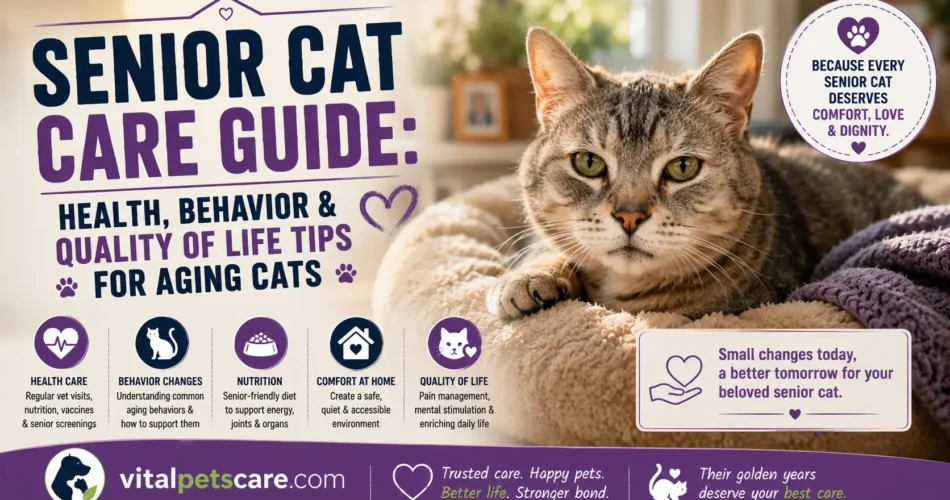
Caring for an aging cat brings a unique mix of love, worry, and a lot of questions. A senior cat care guide like this one exists because aging cats need a different kind of attention than younger ones.
Most cats are considered senior around 10-11 years old. But the signs of aging can start showing earlier, especially in cats with underlying health issues.
This guide covers everything — from weight and kidney health to behavior changes and quality of life. Each section links to a dedicated article with full detail on that specific topic.
Weight, Appetite & Metabolism in Senior Cats
Unexplained weight loss is one of the most common concerns in older cats. A senior cat sudden weight loss can point to several causes, but one of the most frequent is hyperthyroidism.
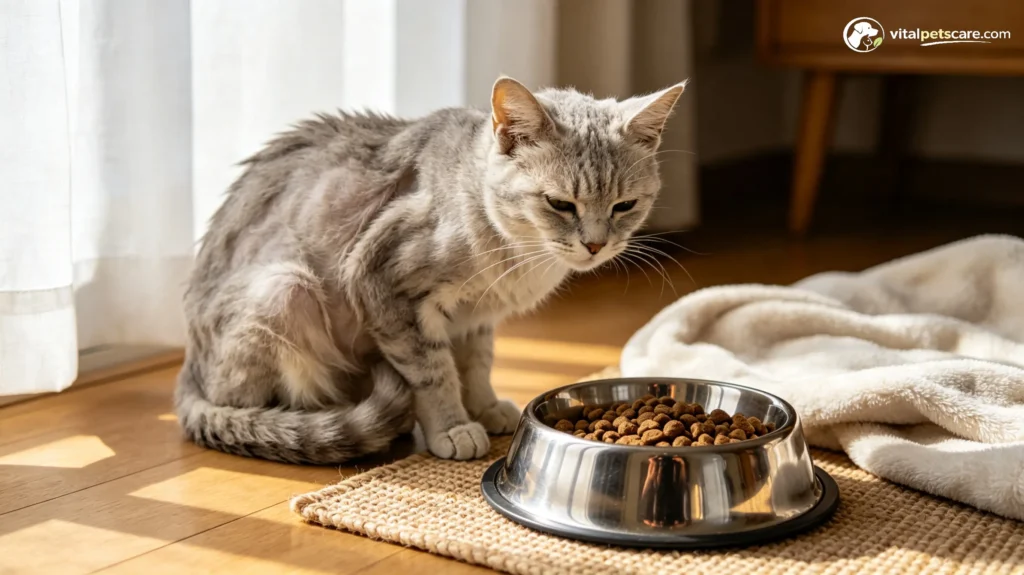
What makes this tricky is that cats with hyperthyroidism often eat more, not less. A cat losing weight despite a good appetite is a strong signal worth checking with your vet.
Other causes include diabetes, kidney disease, and poor nutrient absorption. Catching the right cause early makes treatment far more effective.
(Read More about : Senior Cat Weight Loss & Hyperthyroidism — full article Here)
Kidney Disease & Hydration in Senior Cats
Increased thirst is one of the earliest and most reliable signs of kidney disease in cats. If your senior cat is drinking more water than usual, this is worth monitoring closely.
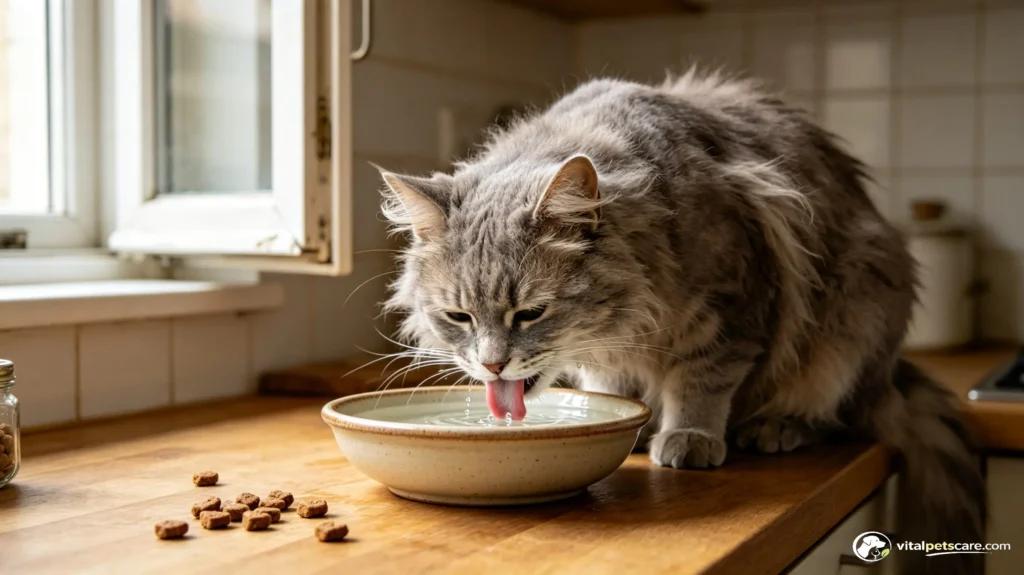
Kidney disease is extremely common in cats over 10, and diet plays a huge role in managing it. Low-phosphorus, kidney-friendly food can significantly slow progression when started early.
Other causes of increased thirst include diabetes and hyperthyroidism — which is why a full blood panel is usually the first step your vet will recommend.
(Read More About : Senior Cat Kidney Disease & Drinking More Water — full article Here)
Mobility, Joints & Grooming Difficulty in Senior Cats
Arthritis is far more common in senior cats than most owners realize. Unlike dogs, cats rarely limp or cry out — instead, senior cat arthritis signs show up as subtle changes like hesitating before jumping or avoiding their favorite high spots.
Joint pain also directly affects grooming. A cat that can’t comfortably twist and reach their back or hindquarters will gradually stop grooming those areas, leading to matting and coat deterioration.
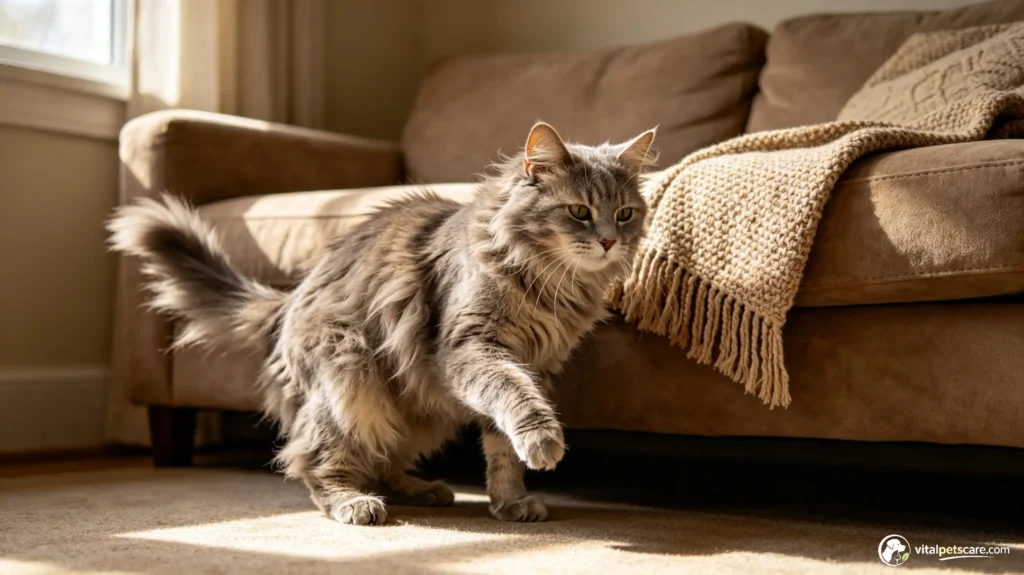
Muscle loss in the back legs often follows, since cats use those muscles less when movement becomes painful. Mobility ramps and joint supplements can make a real difference when introduced early.
(Read Full Article : Senior Cat Arthritis, Joint Pain & Mobility )
Grooming, Coat & Fur Health in Senior Cats
A cat that stops grooming is sending a clear signal. Senior cat not grooming anymore is rarely about preference — it almost always points to pain, illness, or a condition making self-care physically difficult.
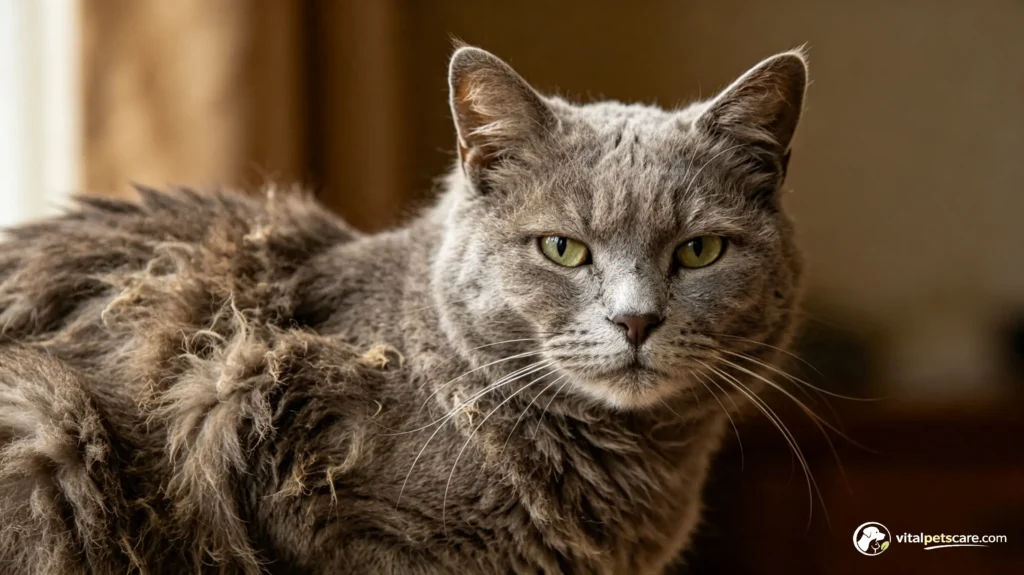
Matted fur is often the visible result. Once matting starts, it can become uncomfortable and even painful on its own, creating a cycle that’s hard to break without intervention.
The causes range from arthritis and dental pain to obesity and cognitive decline. Identifying the root cause is the first step, since treating the mat without addressing the cause rarely works long-term.
(Read More : Senior Cat Not Grooming & Matted Fur — full article Here)
Cognitive Decline, Confusion & Nighttime Behavior in Senior Cats
Nighttime yowling, confusion, and disorientation are among the most distressing changes owners notice in aging cats. Senior cat crying at night is one of the most commonly searched concerns — and it’s almost always linked to cognitive decline.
Feline Cognitive Dysfunction (FCD) is the cat equivalent of dementia. It causes confusion, disrupted sleep cycles, and increased vocalization, especially after dark when familiar visual cues disappear.
This condition is progressive but manageable. Routine, environmental support, and early vet intervention can slow progression and make evenings more peaceful for both of you.
(Read More: Senior Cat Dementia & Nighttime Behavior — full article Here)
Energy, Sleep & Appetite Changes in Senior Cats
A senior cat sleeping all day is common, but there’s a meaningful difference between normal aging fatigue and something more concerning. Low energy paired with appetite changes or vomiting usually points to an underlying illness.
Vomiting that increases in frequency is worth tracking carefully. Occasional vomiting can be normal in cats, but a noticeable uptick in an older cat often signals kidney disease, hyperthyroidism, or digestive issues.
If your cat seems consistently low energy despite eating normally, a thyroid and kidney panel is usually the most useful first step your vet will suggest.
(Read More: Senior Cat Low Energy, Sleeping & Vomiting — full article Here)
Litter Box & Hiding Behavior in Senior Cats
A senior cat suddenly missing the litter box is rarely a behavioral problem. Senior cat litter box accidents almost always point to a physical cause — arthritis making it painful to climb in, a urinary tract issue, or cognitive confusion about where the box is.
Hiding is a separate but equally important signal. Cats instinctively hide when they feel unwell, vulnerable, or in pain. A senior cat hiding more than usual is one of the clearest signs something needs attention.
Both behaviors share many of the same underlying causes — kidney disease, pain, and cognitive decline appear regularly in both patterns. Addressing one often requires investigating the other at the same time.
(Internal link placeholder: Senior Cat Litter Box Accidents & Hiding — full article coming soon)
Dental & Breathing Health in Senior Cats
Dental disease affects the majority of cats over 10, yet it’s one of the most consistently underdiagnosed conditions in senior pets. Senior cat dental disease signs include bad breath, drooling, pawing at the mouth, and reluctance to eat hard food.
Breathing changes are a separate but equally important concern. Increased respiratory rate at rest, open-mouth breathing, or labored breathing in a cat are never normal — these signs need prompt veterinary attention.
Dental disease and respiratory issues can sometimes connect too. Severe dental infection can occasionally spread and affect other body systems, making early treatment important beyond just oral health.
(Internal link placeholder: Senior Cat Dental Disease & Breathing Changes — full article coming soon)
Sensory Loss in Senior Cats
Vision and hearing loss in cats develops gradually, which makes it easy to miss until the changes are significant. Senior cat vision loss signs include bumping into furniture, hesitating in low light, and startling more easily at movement.
Hearing loss shows up differently — a cat that stops responding to their name, sleeps through loud noises, or vocalizes more than usual may be experiencing senior cat hearing loss signs rather than behavioral changes.
Cats adapt remarkably well to sensory loss with the right environmental support. Keeping home layouts consistent, adding night-lights, and using scent markers near key locations all help significantly.
(Internal link placeholder: Senior Cat Vision & Hearing Loss — full article coming soon)
Care, Quality of Life & Vet Schedule for Senior Cats
Twice-yearly vet checkups are generally recommended for cats over 10. The senior cat vet checkup schedule shifts from annual to biannual because conditions like kidney disease, hyperthyroidism, and dental disease can develop and progress quickly between visits.
Quality of life is the most important measure of all. Senior cat quality of life signs to monitor include appetite, mobility, social interaction, grooming ability, and the balance of good days versus bad days.
When good days consistently outnumber bad ones, your cat is likely managing well. When that balance shifts, it’s worth an honest conversation with your vet about next steps.
(Internal link placeholder: Senior Cat Quality of Life Guide — full article coming soon)
Frequently Asked Questions
What age is considered senior for a cat?
Most cats are considered senior around 10-11 years old. Some vets use the term “geriatric” for cats over 15.
How often should a senior cat see the vet?
Twice a year is the general recommendation for cats over 10. More frequent visits may be needed for cats managing ongoing conditions.
What are the first signs of aging in cats?
Early signs include reduced activity, changes in grooming habits, increased thirst, and weight changes. These are easy to miss since they develop gradually.
Is weight loss always serious in a senior cat
Not always, but it’s worth investigating. Unexplained weight loss in a senior cat usually points to a specific, often treatable cause rather than simple aging.
Can senior cats develop dementia?
Yes, Feline Cognitive Dysfunction (FCD) is a real and relatively common condition. Nighttime yowling and confusion are among the most recognized signs.
Why is my senior cat drinking so much water?
Increased thirst is one of the most common early signs of kidney disease or hyperthyroidism in older cats. A blood panel is usually the first step to confirm which one.
What causes litter box accidents in senior cats?
Common causes include arthritis, urinary tract issues, and cognitive decline. It’s rarely a behavioral issue in older cats.
How can I tell if my senior cat is in pain?
Signs include reduced grooming, hiding, reluctance to jump, changes in appetite, and increased irritability. Cats are skilled at masking pain, so subtle changes matter.
Is vomiting normal in senior cats?
Occasional vomiting can be normal, but frequent or increasing vomiting in a senior cat usually points to an underlying cause worth investigating.
Can arthritis affect a cat’s grooming habits?
Yes, arthritis is one of the most common reasons senior cats stop grooming their back and hindquarters. Pain makes the physical twisting required for grooming very difficult.
What is the most important thing I can do for my senior cat?
Twice-yearly vet checkups combined with close observation of daily habits — eating, drinking, grooming, and litter box use — give you the best chance of catching issues early.
How do I know if my senior cat’s quality of life is good?
Track the balance of good days versus bad days. When good days consistently outnumber bad ones across appetite, mobility, and social interaction, quality of life is generally considered acceptable.

