

Watching a dog struggling to get up is hard, especially when it happens more often. It’s easy to assume it’s just old age catching up.
But that’s not always the full story. Sometimes there’s a more specific cause behind it, one that’s easier to manage once you know what it is.
This guide walks through the real reasons, the different patterns to watch for, and what actually helps. By the end, you’ll know exactly what’s likely going on with your dog.
Why Does a Dog Struggle to Get Up?
There are a few common reasons behind this. A dog struggling to get up is often linked to arthritis, muscle loss, or joint pain that builds up over time.
Weight can also play a role, since extra pounds add pressure to already sore joints. In some cases, it’s tied to a nerve issue rather than the joints themselves.
The pattern matters just as much as the cause. The next sections break down specific situations, so you can figure out what fits your dog best.
Dog Struggling to Get Up After Lying Down or Sleeping
Dog Struggling to Get Up After Lying Down
This is one of the most common patterns owners notice. A dog struggling to get up after lying down is often linked to stiffness that builds up during rest.
This usually eases within a few minutes of gentle movement. If it doesn’t improve at all, it’s worth mentioning to your vet.
Dog Struggles to Get Up After Sleeping
This pattern is closely related, but tied specifically to longer rest periods. Joints stiffen more during a full night’s sleep than during a short nap.
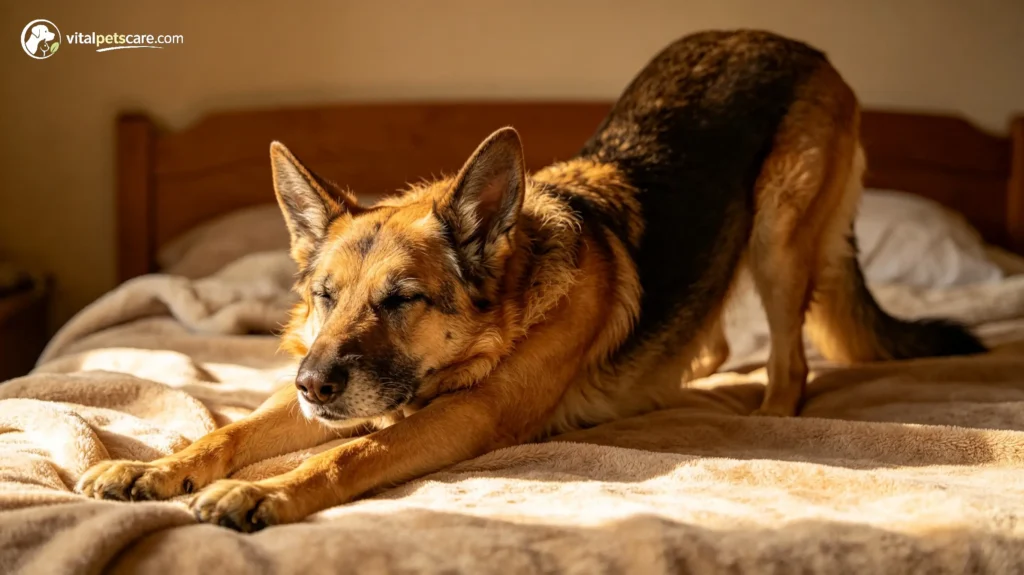
This is why mornings are often the hardest part of the day. Warming up before standing can make a real difference here.
Dog Struggling to Get Up Back Legs — What It Points To
This specific pattern usually points to the hind end, not the whole body. A dog struggling to get up back legs first often means the weakness or pain is concentrated in the hips or knees.
Arthritis in the back legs is one of the most common causes. Muscle loss can also make it harder to push up into a standing position.
If this sounds familiar, our guide on senior dog back legs giving out covers these causes in more detail. Many of the same patterns overlap directly with what’s covered there.
Dog Struggling to Get Up Stairs
Stairs require more strength and coordination than flat ground. A dog struggling to get up stairs is often one of the earliest signs of joint pain, even before it’s obvious elsewhere.
This happens because stairs put extra pressure on the hips and knees with every step. Dogs often hesitate or pause before attempting them, which is a subtle but important clue.
If you’ve read our article on senior dog stiff in the morning remedies, some of the same strategies, like non-slip surfaces and ramps, apply directly here too.
Dog Struggles to Get Up But Walks Fine When Humid — What’s Going On?
This is a specific and interesting pattern many owners notice. A dog struggles to get up but walks fine when humid because humidity can actually ease joint stiffness in some dogs.
Barometric pressure changes are thought to affect joint fluid and inflammation, similar to how some people feel achy before rainy weather. This isn’t fully understood, but it’s a commonly reported pattern in arthritic dogs.
If your dog seems better on humid or rainy days, this is a strong clue that arthritis is the underlying cause. It’s worth mentioning this pattern to your vet, since it helps confirm what’s going on.
A Less Common Cause — GOLPP in Senior Dogs
Most cases of struggling to stand come down to arthritis or muscle loss. But there’s a lesser-known condition worth knowing about too.
GOLPP (Geriatric Onset Laryngeal Paralysis Polyneuropathy) is a progressive nerve condition that affects both the airway and the hind legs. It often causes hind-end weakness alongside noisy or labored breathing.
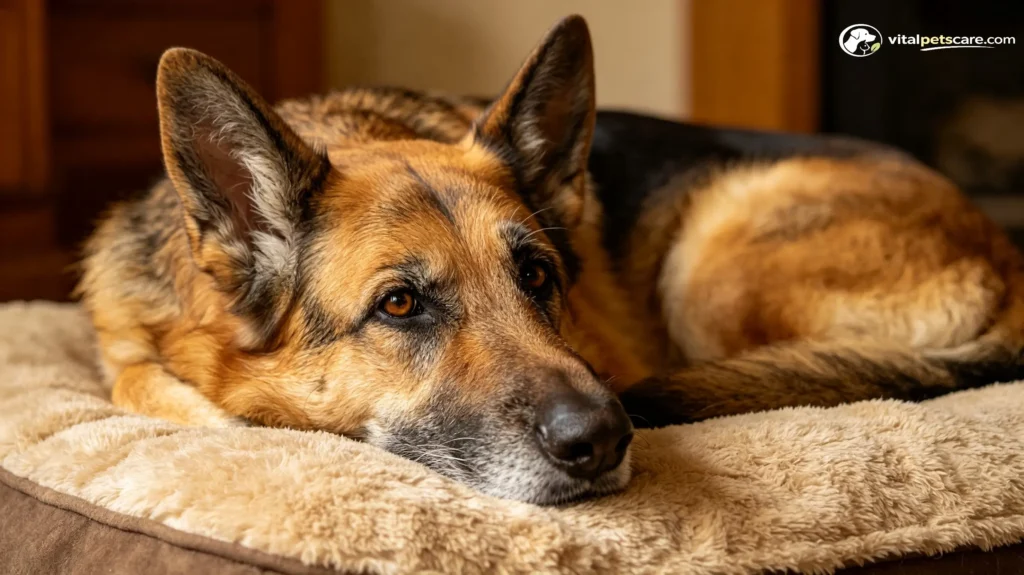
This condition is less common, but it’s frequently missed since the symptoms can look like ordinary aging at first. If your dog struggles to get up and shows changed breathing sounds, this combination is worth raising with your vet directly.
What to Do for a Dog That Struggles to Get Up
1. Add Non-Slip Flooring
Rugs or mats near resting spots give your dog better grip when standing. This is one of the simplest fixes for what to do for a dog that struggles to get up.
2. Use a Supportive Bed
An orthopedic bed reduces pressure on joints during rest. This can make the first movements after lying down noticeably easier.
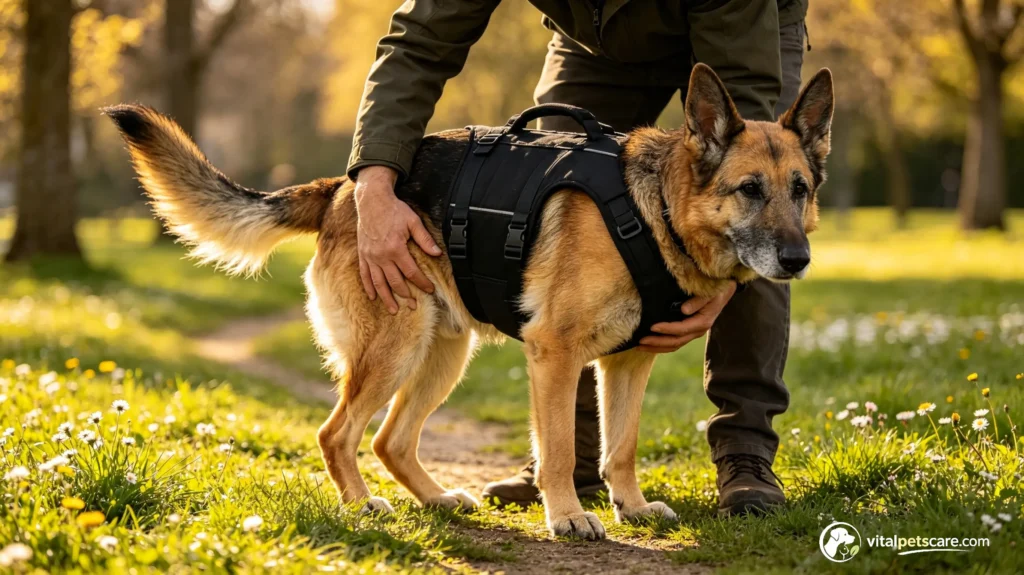
3. Try a Rear-Support Harness
A harness lets you gently assist your dog without straining their body. This works well for both back leg weakness and general stiffness.
4. Warm Up Before Standing
A warm towel on stiff joints before your dog attempts to stand can ease the process. This pairs well with the tips in our senior dog stiff in the morning guide.
5. Support Muscle Through Diet and Movement
Gentle, regular movement and adequate protein help maintain strength. If muscle loss is part of the picture, our senior dog losing muscle mass article covers this in more depth.
When to See a Vet
If your dog suddenly can’t get up at all, treat this as urgent. This is especially true if it happened within hours rather than building up slowly.
Watch closely if struggling to stand comes with changed breathing, coughing, or a raspy bark. These signs can point to GOLPP and deserve a same-week vet visit.
A gradual pattern tied to stiffness or age is different, and usually less urgent. Still, it’s worth a check-up to confirm the cause and start proper management.
Frequently Asked Questions
Why does my dog struggle to get up?
The most common causes are arthritis, muscle loss, and joint pain. A dog struggling to get up can also point to nerve-related conditions in some cases.
Is it normal for senior dogs to struggle standing up?
Some difficulty is common with age, especially right after rest. Sudden or severe struggling is not normal and should be checked.
Why does my dog struggle to get up after lying down?
This is often caused by stiffness that builds up during rest. It usually eases within a few minutes of gentle movement.
Why is it harder for my dog to get up in the morning?
Joints stiffen more during a full night’s sleep than shorter naps. This is why mornings are often the hardest part of the day for arthritic dogs.
What does it mean if my dog struggles with back legs specifically?
This usually points to hip or knee-related arthritis, or muscle loss in the hind end. It’s one of the most common patterns in senior dogs.
Why does my dog struggle with stairs but seem fine on flat ground?
Stairs require more strength and put extra pressure on the hips and knees. This is often one of the earliest signs of joint pain.
Why does my dog do better on humid days?
Humidity and barometric pressure changes are believed to ease joint stiffness in some dogs. This pattern often points specifically to arthritis.
What is GOLPP in dogs?
GOLPP is a nerve condition that affects both breathing and hind-leg strength. It’s less common but often missed since symptoms resemble normal aging.
What should I do if my dog struggles to get up?
Non-slip flooring, a supportive bed, and gentle warm-up movement all help. A vet visit is important to confirm the exact cause first.
Can a harness help a dog that struggles to stand?
Yes, a rear-support harness allows you to safely assist your dog. It works well for both temporary and ongoing weakness.
Should I be worried if my dog can’t get up at all?
Yes, sudden inability to stand should be treated as urgent. This is especially true if it happens quickly rather than building up over time.
Can diet help a dog that struggles to get up?
Yes, adequate protein supports muscle strength, which can ease the effort needed to stand. This works best alongside proper vet-guided care.

