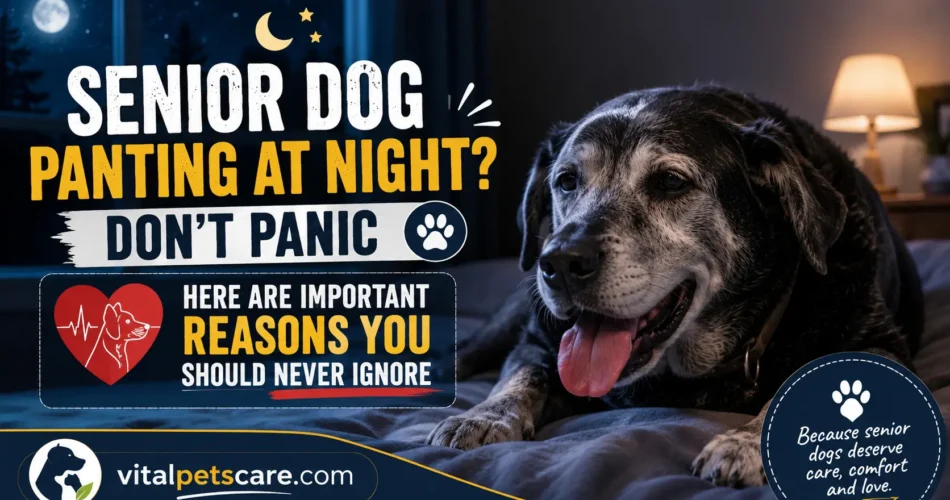
A senior dog panting at night is unsettling to notice, but it usually has a clear reason behind it.
Some causes are minor and easy to manage. Others need a closer look from your vet.
This guide walks through the most common reasons, one by one. You’ll also learn what specific symptom combinations mean, and when it’s time to call the vet.
Why Is My Senior Dog Panting So Much?
Panting is normal after a walk or on a hot day. But when it happens out of nowhere, it’s natural to worry.
If you’re asking why is my senior dog panting so much, the answer usually comes down to a few common things. It could be pain, stress, or a health issue that needs a closer look.
The good news? Once you know the cause, it’s usually easy to help. Let’s go through the most common reasons next.
Common Causes of Excessive Panting in Senior Dogs
1. Pain or Discomfort
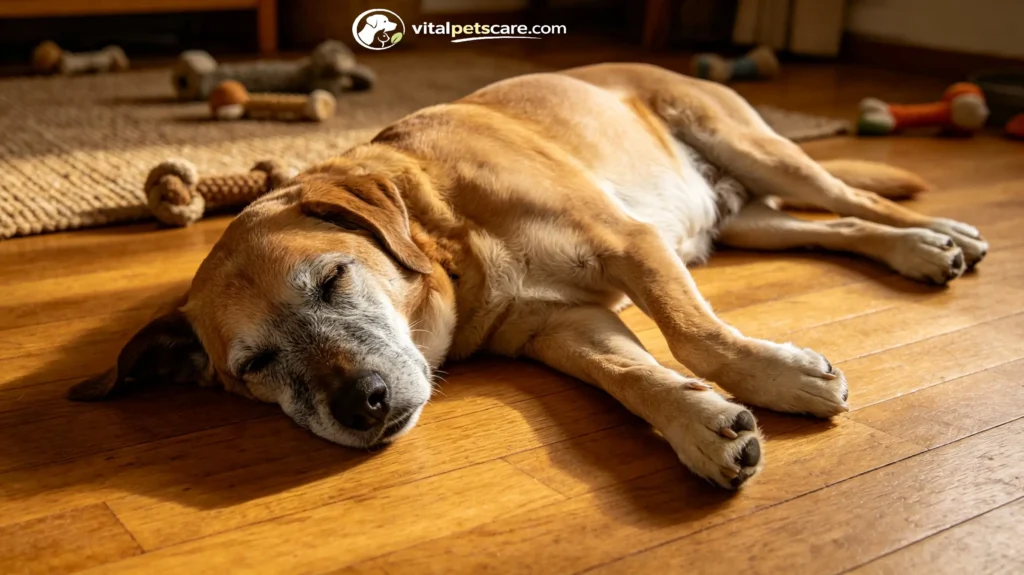
Pain is one of the biggest reasons behind excessive panting in senior dogs. It’s their body’s way of coping with discomfort.
This is often linked to arthritis or joint pain. If your dog also seems stiff or slow, pain is likely the cause.
2. Heart or Respiratory Issues
Heart problems can make breathing harder, even at rest. This often shows up as panting that doesn’t match the activity level.
If panting seems heavier than usual, or paired with coughing, mention it to your vet soon.
3. Cushing’s Disease
This condition is common in older dogs and often causes senior dog excessive panting. It also comes with increased thirst and appetite.
A vet can confirm this with a simple test. It’s very manageable once diagnosed.
4. Anxiety or Cognitive Decline
Just like people, dogs can pant when they’re anxious. This is common at night, especially in dogs showing signs of confusion.
If panting happens with pacing or restlessness, this could be the cause.
5. Overheating or Medication Side Effects
Some medications cause panting as a side effect. Overheating, even indoors, can also be a simple explanation.
Check your dog’s environment first. Sometimes the fix is as easy as cooling the room down.
Senior Dog Panting at Night — What It Means
Nighttime panting can feel more alarming since it’s quiet and unexpected. But it’s often linked to the same causes as daytime panting.
Pain tends to feel worse at night, since there are fewer distractions. Anxiety and confusion can also increase once it gets dark.
A senior dog panting at night is worth watching over a few nights. If it happens every night, it’s a good idea to mention it to your vet.
Senior Dog Panting at Night and Drinking Lots of Water
This specific combination is worth paying close attention to. Senior dog panting at night and drinking lots of water together often points to Cushing’s disease.
Kidney issues can also cause this same pattern. Increased thirst paired with panting is not something to ignore.
If you notice both happening regularly, book a vet visit soon. A simple blood test can usually confirm the cause.
Senior Dog Trembling and Panting — Is It Serious?
Trembling paired with panting can mean a few different things. Pain is one of the most common causes behind this combination.
Cold temperatures or anxiety can also cause trembling in older dogs. Senior dog trembling and panting together is usually your dog’s way of showing distress.
If this happens suddenly, or doesn’t stop after a few minutes, it’s best to call your vet. This combination shouldn’t be brushed off as “just aging.”
Senior Dog Pacing and Panting Together
Pacing paired with panting is a pattern many owners notice at night. It often points to discomfort your dog can’t quite settle into.
Senior dog pacing and panting together can also be a sign of cognitive decline. Dogs with confusion sometimes struggle to find a comfortable resting spot.
If this happens often, try creating a calm, quiet space for sleep. If it continues, a vet visit can help rule out pain or anxiety.
Senior Dog Breathing Fast But Not Panting — What’s the Difference?
This is a different pattern worth understanding. Panting involves an open mouth and visible effort, while senior dog breathing fast but not panting means quick breaths with a closed mouth.
This distinction matters because rapid breathing without panting can point to heart or lung issues. It’s often less obvious, which makes it easy to miss.
If you notice this pattern, especially at rest, don’t wait it out. This is one combination that’s worth a same-week vet visit.
Senior Dog Panting While Resting — Should I Worry?
Panting after activity is expected. But senior dog panting while resting is a different story.
This usually points to pain, heart issues, or a condition like Cushing’s disease. It’s one of the clearer signs that something beyond normal aging may be going on.
If this happens more than once or twice, treat it as a signal to check in with your vet. Catching it early often makes treatment easier.
How to Help a Senior Dog Panting at Night
1. Keep the Room Cool and Comfortable
A cooler room can ease panting caused by heat or discomfort. Try lowering the temperature slightly before bedtime.
2. Stick to a Calm Bedtime Routine
A predictable routine helps reduce anxiety-related panting. Keep lighting soft and avoid loud activity before sleep.
3. Check for Signs of Pain
If panting comes with stiffness or trouble settling, pain may be the cause. A supportive bed can sometimes ease this.
4. Rule Out Recent Medication Changes
If panting started after a new medication, mention it to your vet. This is a common and often overlooked cause.
5. Track the Pattern Before Your Vet Visit
Note when panting happens, how long it lasts, and what else you notice. This makes it easier for your vet to find the cause quickly.
When to See a Vet
If panting happens every night, don’t wait it out. This is especially true if it comes with trembling, pacing, or drinking more water.
Sudden panting that starts out of nowhere deserves quick attention. This is different from panting that’s been building up slowly.
Breathing fast without panting is one pattern that needs faster care. This can point to heart or lung issues that shouldn’t wait.
When in doubt, a vet visit brings peace of mind. It’s always the safer choice for an aging dog.
Frequently Asked Questions
Why does my senior dog pant so much?
Panting in senior dogs often points to pain, anxiety, or a health condition like Cushing’s disease. A vet visit can help confirm the cause.
Why does my senior dog wake up panting?
This can happen due to pain that feels worse at night, or anxiety linked to cognitive decline. It’s worth tracking how often it happens.
Is panting at night normal for older dogs?
Occasional panting can be normal, especially in warm rooms. Frequent or nightly panting is not something to ignore.
What does it mean if my dog pants but doesn’t move much?
This combination often points to pain or heart-related issues. It’s different from panting after activity, which is expected.
Can anxiety cause a senior dog to pant at night?
Yes, anxiety and confusion are common causes of nighttime panting. This is especially true in dogs showing other signs of cognitive decline.
Is heavy panting a sign of pain in dogs?
Yes, panting is one of the more common signs of pain in senior dogs. It’s often paired with stiffness or reluctance to move.
Can Cushing’s disease cause panting and thirst together?
Yes, this is a classic combination linked to Cushing’s disease. A vet can confirm it with a simple test.
Should I be worried if my dog pants while resting?
Yes, panting during rest is different from normal panting after activity. It’s worth mentioning to your vet, especially if it repeats.
What’s the difference between panting and rapid breathing in dogs?
Panting involves an open mouth, while rapid breathing often happens with a closed mouth. Rapid breathing can point to heart or lung issues.
Can medication cause a senior dog to pant more?
Yes, some medications list panting as a side effect. Mention any new medication to your vet if panting increases afterward.
How can I help my senior dog stop panting at night?
Keeping the room cool, sticking to a calm routine, and checking for pain can all help. If panting continues, a vet visit is the next step.
When should I take my senior dog to the vet for panting?
If panting happens nightly, comes with trembling or thirst, or seems unrelated to activity, it’s time for a vet visit. Early care often leads to easier treatment.

