
Noticing senior dog weight loss can be hard to judge at first. A little change might be normal, but how do you know when it’s too much?
The good news is there’s a simple way to tell the difference. It comes down to how much weight, how fast, and what else is going on.
This guide walks through the real causes, a simple way to judge severity, and what to do next. By the end, you’ll know exactly what to watch for.
What Causes Senior Dog Weight Loss?
There are several possible reasons behind it. Senior dog weight loss often comes down to a slower metabolism, reduced muscle mass, or an underlying illness affecting how the body processes food.
Poor nutrient absorption is another common factor. As dogs age, their digestive system may struggle to pull enough nutrition from the same amount of food.
Dental pain, organ disease, and hormonal changes can all play a role too. Identifying the right cause starts with understanding the pattern, which we’ll cover next.
How Much Weight Loss Is Normal in Senior Dogs?
A simple rule vets often use: losing more than 5% of body weight within a month is worth investigating. For a 50-pound dog, that’s about 2.5 pounds — easy to miss just by looking.
Minor fluctuations are normal and often tied to activity or seasonal appetite changes. This is different from a steady, ongoing decline in body condition.
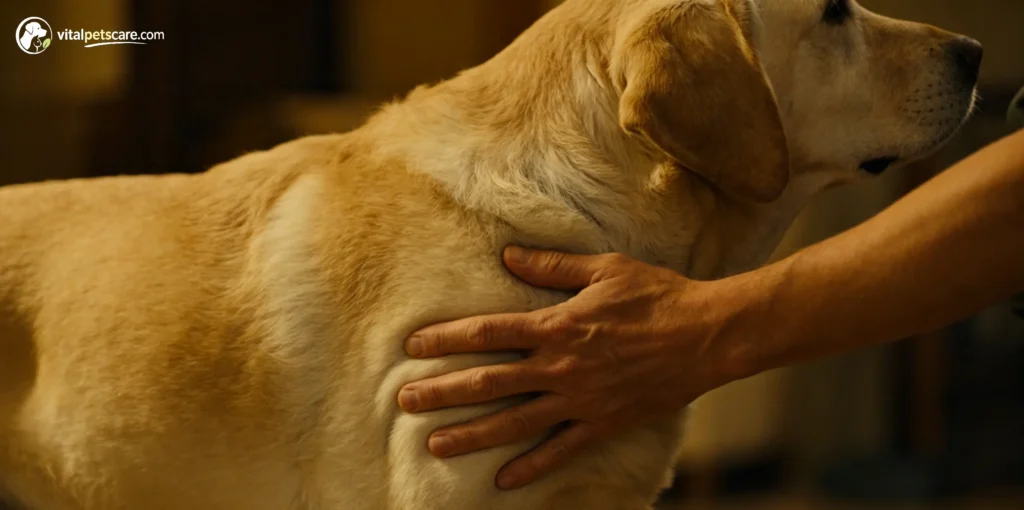
Checking your dog’s body condition score — feeling for ribs, spine, and waistline — is more reliable than weight alone. A vet can also track this over time using consistent scale measurements.
Old Dog Losing Weight Suddenly — Why Speed Matters
Speed tells you a lot about the underlying cause. An old dog losing weight suddenly, over just a few weeks, is more likely tied to an acute illness than to normal aging.
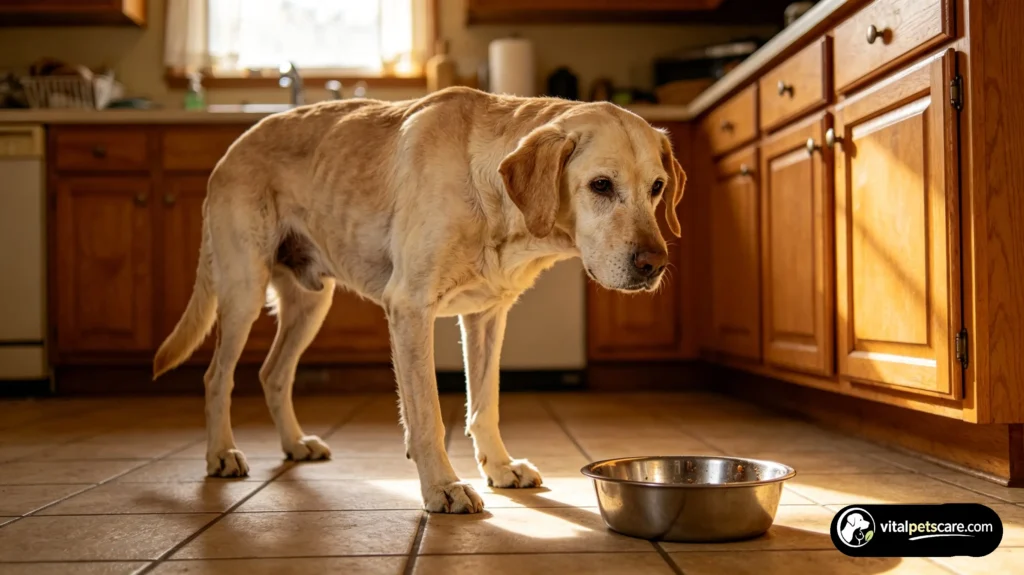
Gradual weight loss over many months often points to slower processes, like reduced muscle mass or a mild metabolic shift. Sudden loss, on the other hand, can signal something more serious, like organ dysfunction or a condition affecting nutrient absorption.
Tracking the timeline helps your vet narrow things down faster. Bring notes on when you first noticed the change, and whether it’s been steady or sudden.
Senior Dog Losing Weight But Eating Well — What It Means
This pattern often confuses owners, since eating well usually feels reassuring. But senior dog losing weight but eating well can point to the body burning more calories than it takes in.
This can happen with conditions like hyperthyroidism, diabetes, or intestinal issues affecting nutrient absorption. In these cases, food goes in normally, but the body can’t use it efficiently.
This combination deserves attention even without appetite loss. A vet can run bloodwork to check thyroid function, blood sugar, and overall metabolic health.
Senior Dog Weight Loss with No Appetite — A More Urgent Combo
This combination is more concerning than weight loss alone. Senior dog weight loss paired with reduced appetite often points to pain, nausea, or an illness affecting the digestive system.
If you’ve read our guide on senior dog not eating much anymore, many of the same causes overlap here — dental pain, nausea, and organ-related issues are common threads.
When both weight and appetite decline together, it’s rarely something to wait out. This pairing is one of the clearer signs that a vet visit shouldn’t be delayed.
Senior Dog Losing Weight and Muscle Together
Weight loss and muscle loss don’t always happen together, but when they do, it’s worth extra attention. This combination often reflects the body breaking down muscle tissue for energy when calorie intake isn’t enough.
For a deeper look at this specific pattern, our article on senior dog losing muscle mass causes covers the full breakdown, including how sarcopenia and illness-driven muscle wasting differ.
Addressing nutrition early can help slow this process. Adequate protein intake becomes especially important once both weight and muscle are declining together.
Senior Dog Weight Management Tips
1. Choose Calorie-Dense, Nutrient-Rich Food
Senior dogs losing weight often benefit from food with higher caloric density per cup. Look for options with quality protein sources to support both energy and muscle maintenance.
2. Feed Smaller, More Frequent Meals
Splitting meals throughout the day can improve digestion and nutrient absorption. This is especially helpful for dogs with a reduced appetite.
H3: 3. Address Dental Issues Early
Sore teeth can quietly reduce how much a dog eats over time. Treating dental disease often leads to noticeable improvement in eating habits.
4. Support Digestive Health
Probiotics and easily digestible ingredients can improve how efficiently nutrients are absorbed. This matters more as digestive efficiency naturally declines with age.
5. Track Weight Consistently
Weigh your dog every 2-4 weeks using the same scale for accuracy. This makes it easier to catch senior dog weight loss early, before it becomes severe.
When to See a Vet
If weight loss exceeds 5% of body weight within a month, book a vet visit. This threshold is a reliable signal that something needs investigating.
Watch closely if weight loss comes with appetite changes, lethargy, or digestive symptoms. These combinations point to an underlying condition rather than normal aging.
Sudden weight loss deserves faster attention than a slow, gradual decline. The speed of change is often just as important as the amount lost.
Bloodwork, a physical exam, and a body condition score check are usually the first steps. Early diagnosis makes treatment far more effective in most cases.
Frequently Asked Questions
What are the most common senior dog weight loss causes?
Common causes include reduced muscle mass, dental pain, organ disease, and poor nutrient absorption. A vet visit helps identify which one applies to your dog.
How much weight loss is considered serious in a senior dog?
Losing more than 5% of body weight within a month is generally worth investigating. This threshold helps distinguish normal fluctuation from a real concern.
Why is my old dog losing weight suddenly?
Sudden weight loss often points to an acute illness rather than normal aging. It’s different from the slow, gradual decline linked to muscle loss over time.
Can a senior dog lose weight while still eating normally?
Yes, this can happen when the body burns more calories than it takes in. Conditions like hyperthyroidism or diabetes are common causes of this pattern.
Is weight loss with no appetite more serious?
Yes, this combination is more urgent than weight loss alone. It often points to pain, nausea, or an underlying illness that needs prompt attention.
Can muscle loss and weight loss happen at the same time?
Yes, this often happens when the body breaks down muscle for energy. Adequate protein intake becomes especially important in this situation.
What is a body condition score, and why does it matter?
It’s a hands-on way to assess weight by feeling for ribs, spine, and waistline. It’s often more accurate than tracking weight numbers alone.
Can dental problems cause weight loss in senior dogs?
Yes, sore teeth can make eating uncomfortable, leading to reduced food intake over time. Treating dental issues often improves appetite and weight.
How often should I weigh my senior dog?
Weighing every 2-4 weeks on the same scale helps catch changes early. Consistency makes small trends easier to notice.
What foods help a senior dog maintain healthy weight?
Calorie-dense, protein-rich foods generally support weight and muscle maintenance. Your vet can recommend an option suited to your dog’s specific needs.
Can digestive issues cause weight loss in older dogs?
Yes, poor nutrient absorption can lead to weight loss even with normal eating habits. Probiotics and digestible ingredients may help support this.
When should I take my senior dog to the vet for weight loss?
If weight loss is sudden, exceeds 5% in a month, or comes with other symptoms, it’s time for a vet visit. Bloodwork often helps identify the underlying cause.

